


8 basic hobby tools
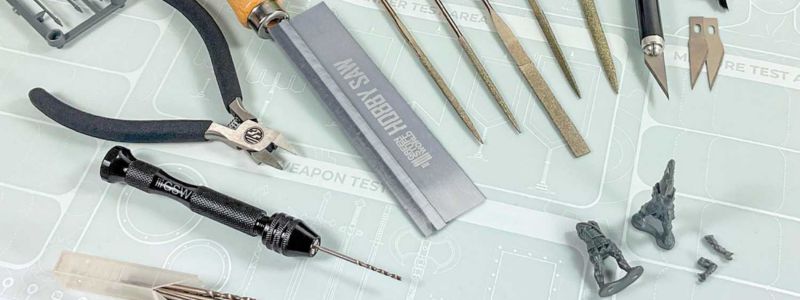
Modeling and miniature creation are disciplines that require patience, skill, and, above all, the right tools to transform raw materials such as plastic, resin, or metal into detailed replicas. If you are taking your first steps in this hobby, it is normal to feel overwhelmed by the large number of tools available on the market. To help you equip your workspace without making the wrong choice, we have prepared this guide where we show you the 8 basic hobby tools, focusing on those essential items that you will definitely use in your first project.
In general terms, basic hobby tools are used to handle, separate from sprues, clean, assemble, and texture pieces made from different materials. Having a quality basic tool kit not only makes it easier to handle small parts, but also protects your physical workspace and optimizes the performance of your materials. Below, we take a detailed look at the eight essential instruments from the Green Stuff World catalog that should not be missing from any workbench.
1. Cutting mat
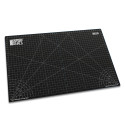
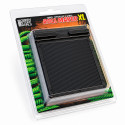
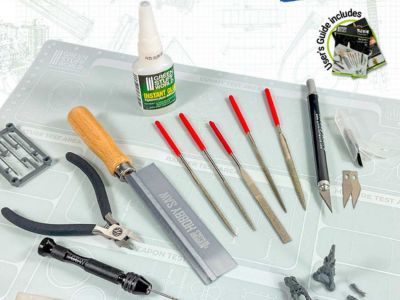
Within the category of basic hobby tools intended for protecting and preparing materials, the cutting mat, or cutting mat, is the foundation on which any workbench is built. Its main function is twofold: on the one hand, it protects the surface of your table from the inevitable scratches, cuts, and adhesive stains; on the other, it provides a stable base that prevents materials from slipping while you make incisions. One of the features of Green Stuff World cutting mats is their multilayer construction based on flexible polyvinyl chloride (PVC), where the outer layers are softer to absorb blade impacts and allow the material to seal naturally, while the central core is more rigid to provide structural consistency.
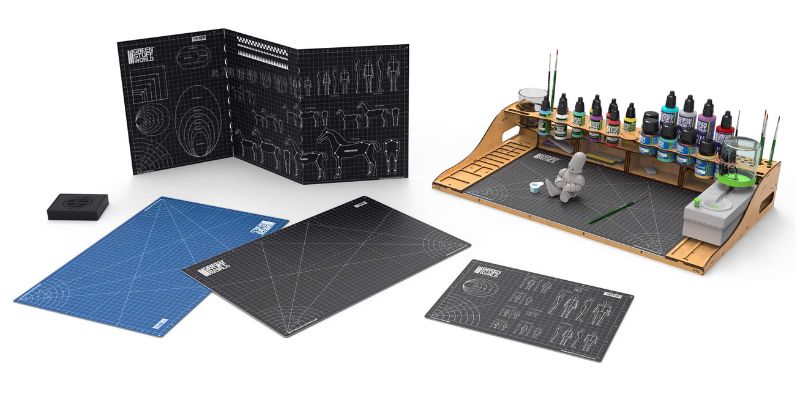
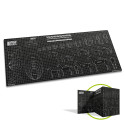
In addition, these cutting bases include a printed grid with scales, linear measurements, and common angles that are very useful at different stages of your modeling project. GSW offers a wide variety of formats in its catalog, from the classic A4 size to A3 size, also available in foldable or extended-format versions, and even XXL dimensions of 50 x 120 cm for large-scale projects. The grids and markings with proportions and guidelines will help you align your materials with precision and sculpt human figures and creatures that are perfectly balanced in height and limb length.
Maintaining a cutting mat is simple but necessary to extend its usefulness. It is recommended to clean it regularly with a soft cloth or sponge dampened with warm water and mild soap to remove surface dirt. In case of difficult stains or particles embedded in the cuts, you can soak the mat in cold water with mild detergent for 15 or 20 minutes and gently scrub it with a soft-bristle brush. To prevent it from warping, you should let it air-dry naturally on a flat surface and away from direct heat sources or sunlight. Likewise, rotating the mat regularly will distribute wear across its entire surface, preventing deep grooves from forming in a single cutting area.
2. Manual hobby drill
When you need to join metal or resin pieces, make conversions, or create articulation points using pins, a technique known as pinning, the hobby hand drill is the tool that will give you the mechanical precision you need. Unlike motorized tools, which can overheat and melt delicate materials such as plastic or resin due to high RPMs, a manual hobby drill gives you complete and direct control over the speed and depth of the drilling, minimizing the risk of damaging the piece you are working on.
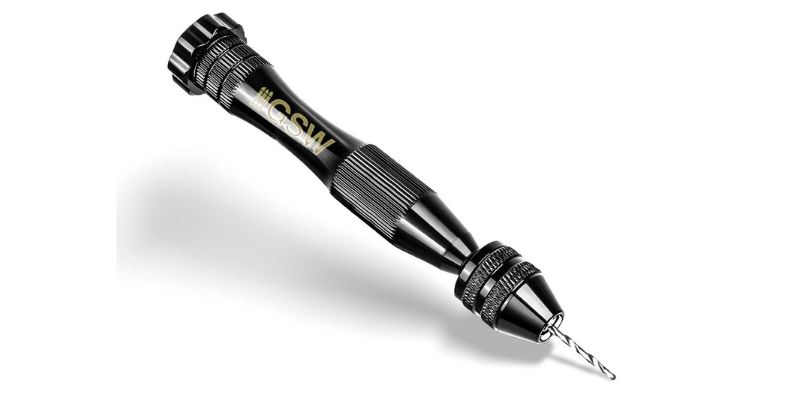
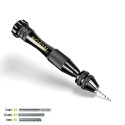
The Green Stuff World model stands out for its lightweight and durable aluminum body, designed with a pen-like shape that makes it comfortable to grip. At its upper end, it has a free-spinning head that ensures smooth rotation of the drill bit when rested against the palm of your hand, allowing you to apply constant pressure with one hand while turning with the other. Its adjustable chuck offers an opening range from 0.3 mm to 3.2 mm, making the hand drill compatible with a very wide variety of drill bits and even other specialized tips.
This tool is sold in a set that includes ten steel hobby drill bits, distributed across three commonly used standard diameters: five 1 mm drill bits, three 1.5 mm drill bits, and two 2 mm drill bits. To drill safely, it is recommended to mark the exact point beforehand with an awl or engraving tip; this small initial hole will serve as a guide to prevent the bit from slipping across the smooth surface of the resin or metal, allowing you to make holes cleanly and with control without damaging the material.
3. Hobby saw
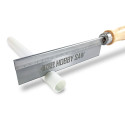
There are times when the pieces on your sprues or scenery components are too thick to be cut with nippers without applying excessive force that could crack or deform the material. For these cases, the single-edge hobby saw is the right option among all the basic hobby tools intended for heavier segmentation and cross-cutting work. This tool allows you to make precise cuts in materials as diverse as polystyrene, resins, balsa wood, fiberglass, and even soft metals.
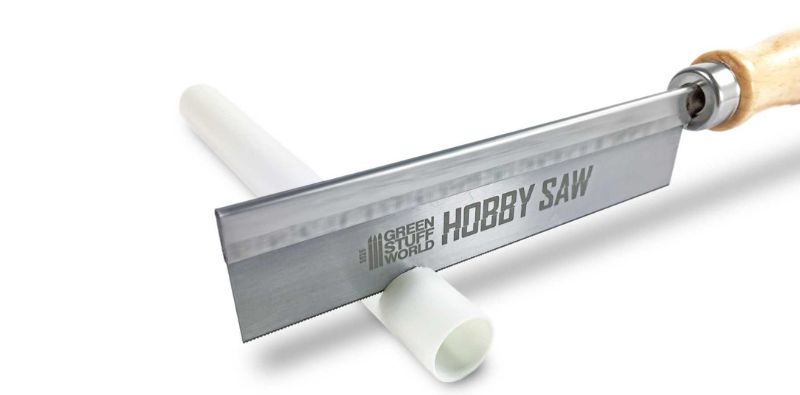
The design of the Green Stuff World saw features an ultra-thin blade with a thickness of only 0.2 mm, 0.008 inches, a blade length of 115 mm, and a blade width of 15.87 mm. The saw has a total of 180 finely distributed teeth along the cutting edge, an essential technical feature that guarantees extremely clean cuts and minimizes material loss in the incision area.
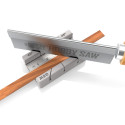
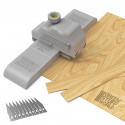
The use of this hand saw is common when modifying metal or resin miniatures and when building scenery structures for dioramas. The low friction generated by such a thin cutting edge prevents plastic materials from suffering heat deformation. To make perfectly angled cuts systematically, it is recommended to combine this saw with the GSW mitre box.
4. Craft knife
If we had to choose the most versatile option among all the basic hobby tools focused on detailed cutting, it would be the craft knife. Also known as a precision knife, hobby scalpel, or craft knife, it is used in practically every stage of the project: from separating small components from their sprues, removing burrs and mold lines from plastic, to cutting airbrushing stencils or carrying out delicate engraving and texturing work on modeling putties.
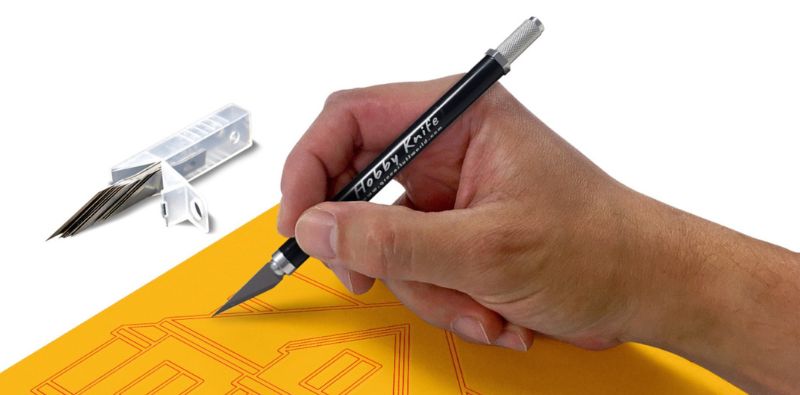
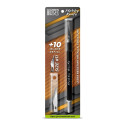
The Green Stuff World craft knife is made with all-metal components in its internal structure and blade-locking system, which prevents the looseness and breakages common in plastic handles. It has a diameter of 10 mm and a length of 12.5 cm, dimensions designed to simulate the comfortable grip of a pen. The handle includes a rubbery, textured area that provides comfort and a non-slip grip.
The GSW set contains the precision scalpel equipped with a size #11 cutting blade, extremely sharp and with a triangular tip, a protective cap to protect the edge, and a pack of 10 high-quality steel replacement blades. Changing the blade periodically is essential: a dull or chipped blade requires more pressure to cut, which permanently damages the surface of the cutting mat and dramatically increases the risk of the tool slipping.
5. Cyanoacrylate glue
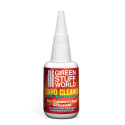
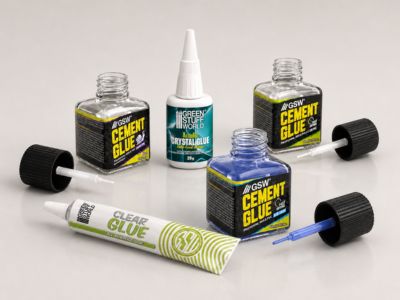
Cyanoacrylate glue, commonly known as super glue, is the ultimate fast adhesive in modeling. Unlike solvent glue for plastic, which works by melting the two polystyrene parts to weld them together, cyanoacrylate is a one-component liquid adhesive based on a family of synthetic acrylic resins that polymerizes when it reacts with the ambient moisture present in the air and on the surfaces of the pieces.
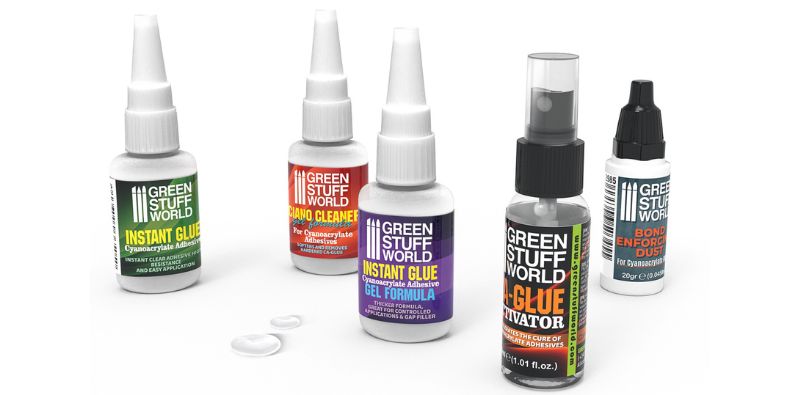
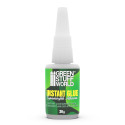
This makes it the ideal solution for multi-material projects, allowing you to effectively glue plastic to metal, resin, cork, balsa wood, rubber, ceramic, or foam in an interval of only 5 to 10 seconds. Green Stuff World’s 20-gram cyanoacrylate glue bottle stands out for its volume and functional design. While other bottles often dry out after the first use due to nozzle blockage, the GSW bottle is designed with a cap that incorporates a metal needle inside.
This metal needle enters the outlet channel every time you close the bottle, preventing cured glue from blocking the nozzle and ensuring that you can use it down to the very last drop. The viscosity of this version is liquid, which means it flows very easily by capillary action, entering the narrowest joints between parts that need to fit together. Once dry, cyanoacrylate glue can be sanded with a fine abrasive to remove any excess adhesive from visible joints on the model kit. In case you need to fill small gaps or require extra time to position the pieces precisely, the recommended alternative is GSW’s gel version.
6. Diamond files
Another one of the undeniable basic hobby tools is the diamond file set. Once you have separated the pieces from their sprues and removed the excess material, the next step to achieve a clean finish is to eliminate small imperfections, injection marks, and mold line remnants. You should not confuse common metal files with diamond files; the latter have fine-grit industrial diamond particles adhered to their surface, allowing them to abrade hard materials, such as dense resins and white metal miniatures, effectively and without suffering premature wear.
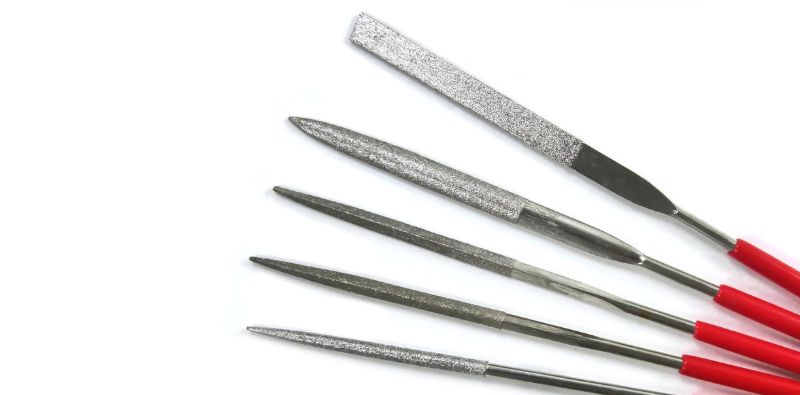
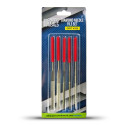
The Green Stuff World pack contains five hobby files with a very fine 150 grit, a balanced measure that offers good material removal capacity without damaging the fine adjacent details of the figures. Each of the five files has a different cross-section to adapt to any geometry: one round section for internal curves, one triangular section for narrow corners and recesses, one flat, one square, and another half-round or semicircular file for concave surfaces.
They have a total length of 140 mm, with an active diamond-coated area of 50 mm and coated handles to improve grip. Their use is very helpful for preparing surfaces before gluing; by filing the joining faces of two components, you increase the surface roughness, which expands the real contact area and improves the adhesion of cyanoacrylate glue.
7. Flat precision nippers
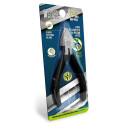
Nippers are basic tools for separating plastic components from their injection channels without breaking the most delicate attachment points. Green Stuff World’s flat precision nippers are specifically designed to make flat, clean cuts flush with the surface of resin or plastic parts up to 4 mm thick.
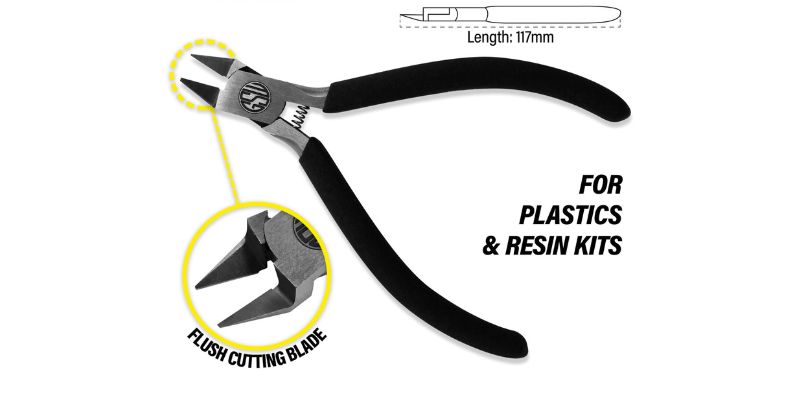
Their body is forged from high-strength CRV60 chrome-vanadium steel and subjected to a tempering process to ensure that the cutting edges remain operational through thousands of cuts. Both blades have low, flat cutting profiles, which means that one side of the blade is completely smooth. When making the cut with the flat face oriented toward the piece, the force is applied perpendicularly and evenly, separating the injection channel without tearing the plastic or leaving that annoying protrusion that would later force you to carry out laborious sanding work.
The nippers have a length of 117 mm, include a smooth return spring that reduces hand fatigue during long sessions, and have an ergonomic handle covered with a fully comfortable non-slip synthetic material sleeve. They are optimized to work with polystyrene (PS), polypropylene (PP), ABS, polyethylene (PE), resins, and soft metal wires. Do not use these precision nippers to cut hard steel wires or thick metal profiles, as you could nick the flat edge and ruin their precision.
8. Anti-magnetic precision tweezers
The anti-magnetic precision tweezer set is one of the basic hobby tools most valued by modelers for delicate tasks such as assembling small components, placing waterslide decals, or positioning photo-etched brass parts.
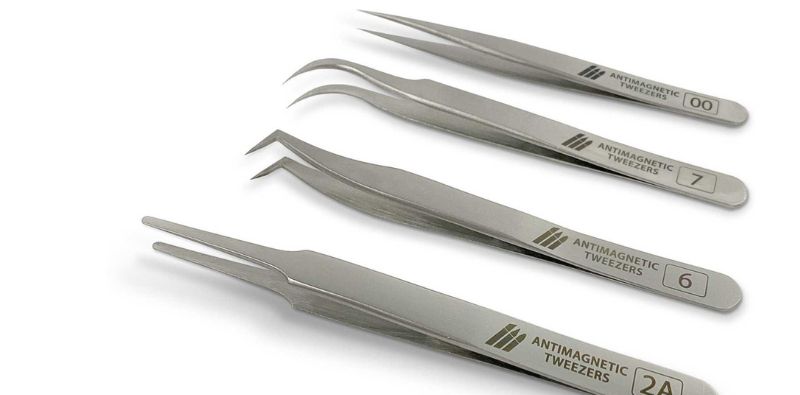
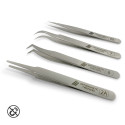
The Green Stuff World precision tweezer set includes four 12 cm tweezers made from high-quality stainless steel. Their main feature is that they are 100% anti-magnetic, a very useful factor if you work with small metal components that would otherwise stick to the tips because of static magnetism, interfering with your work. In addition, their steel construction makes them resistant to acids and corrosion, allowing you to clean them with solvents or alcohol without fear of damaging them.
The GSW set includes four different types of tips, straight, curved, and of different thicknesses, to provide you with the right angle in every situation. Curved tweezers will allow you to access hard-to-reach recesses without obstructing your line of sight, while fine, straight-point tweezers will give you proper control when placing decals in their final position. As with the rest of the instruments, the quality of the tweezers is essential; low-quality options bend easily or do not align their tips perfectly, which compromises assembly results.
Other useful hobby tools
Once you have mastered the essential items, the Green Stuff World catalog offers you an extensive range of products that will allow you to explore advanced and specialized techniques to take your projects to a higher level. Here are some of the most interesting ones that we recommend exploring:
• Leaf punches. These are specialized mechanical tools designed to punch realistic miniature leaves from paper, dried natural leaves, or thin plastic. GSW introduced these innovative tools to the market in October 2015 and today has the world’s largest variety of leaf punches, compatible with multiple scales and realistic leaf designs.
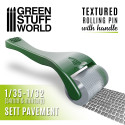
• Textured rollers. Ideal for creating repetitive and detailed patterns on bases, dioramas, and walls. These rollers, sculpted with detailed designs, are rolled over wet modeling putties to generate quality textures quickly and effortlessly.
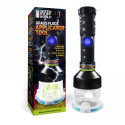
• Static grass applicators. A specialized machine for scenic flocking. GSW’s portable manual applicator and electrostatic applicator box generate a static current that forces the artificial grass fibers to stand upright on the flocking glue, achieving realistic meadows and terrains with three-dimensional volume.
• Thermoforming machines. These vacuum machines for thermoplastics allow you to duplicate parts or create custom and resistant plastic components. They are very popular in cosplay projects and complex model kits, allowing thermoplastic sheets to be shaped using heat and vacuum suction over an original mold.
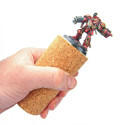
• Sculpture and pinning supports. A category that brings together ergonomic hand supports such as cork columns, universal table vises, and metal pinning rods. They are essential for holding your figures or pieces firmly and immovably during the sculpting process or painting stages.
• Engraving tools. Carving sets, rivet engravers, panel scribers, and fiberglass or brass brushes. These are essential tools for marking panel lines on scale vehicles, engraving rivet details, or creating weathering effects on plastic surfaces or dioramas.
Building a good workbench is a progressive process based on experience. Starting with a solid set that includes these eight basic hobby tools will help you avoid frustration and ensure that you can take on the assembly, cleaning, and gluing of any miniature with the confidence that you are using the correct tools designed specifically for the hobby.
Share this content