
Reference: 8435646536408ES
Brand: Green Stuff World
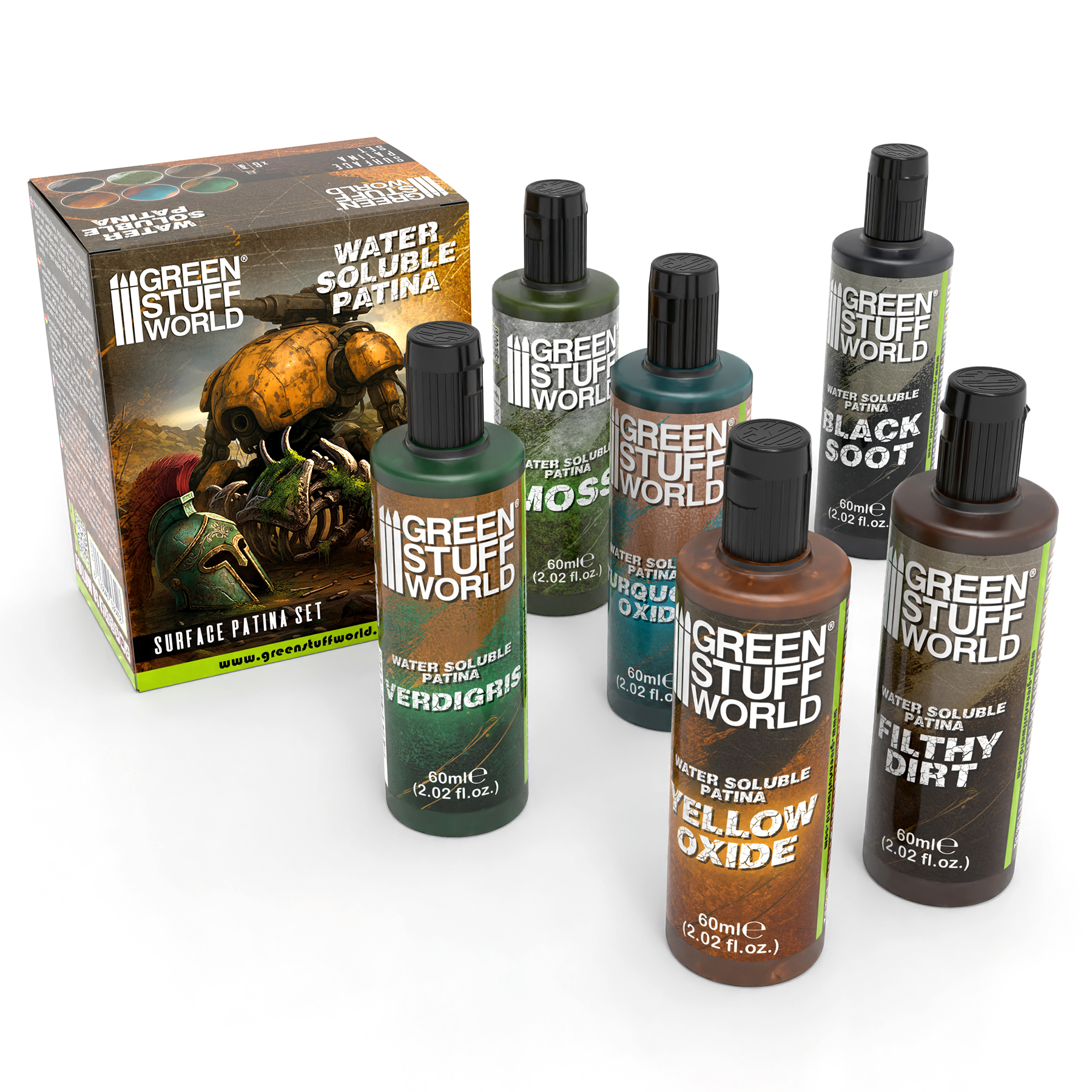
Water soluble patina set
Review(s): 0
Water-soluble patinas to make miniatures, scale models, terrain, and props look dirty and worn down.
Price €45.00 Regular price €50.00
Out of stock

There are 13 products.
Reference: 8435646536408ES
Brand: Green Stuff World
Water-soluble patinas to make miniatures, scale models, terrain, and props look dirty and worn down.
Reference: 8435646532615ES
Brand: Green Stuff World
Water-soluble patinas to make miniatures, scale models, terrain, and props look dirty and worn down.
Reference: 8435646530697ES
Brand: Green Stuff World
Water-soluble patinas to make miniatures, scale models, terrain, and props look dirty and worn down.
Reference: 8435646530680ES
Brand: Green Stuff World
Water-soluble patinas to make miniatures, scale models, terrain, and props look dirty and worn down.
Reference: 8435646530673ES
Brand: Green Stuff World
Water-soluble patinas to make miniatures, scale models, terrain, and props look dirty and worn down.
Reference: 8435646530635ES
Brand: Green Stuff World
Water-soluble patinas to make miniatures, scale models, terrain, and props look dirty and worn down.
Reference: 8435646530628ES
Brand: Green Stuff World
Water-soluble patinas to make miniatures, scale models, terrain, and props look dirty and worn down.
Reference: 8435646532677ES
Brand: Green Stuff World
Water-soluble patinas to make miniatures, scale models, terrain, and props look dirty and worn down.
Reference: 8435646532660ES
Brand: Green Stuff World
Water-soluble patinas to make miniatures, scale models, terrain, and props look dirty and worn down.
Reference: 8435646532653ES
Brand: Green Stuff World
Water-soluble patinas to make miniatures, scale models, terrain, and props look dirty and worn down.
Reference: 8435646532646ES
Brand: Green Stuff World
Water-soluble patinas to make miniatures, scale models, terrain, and props look dirty and worn down.
Reference: 8435646532639ES
Brand: Green Stuff World
Water-soluble patinas to make miniatures, scale models, terrain, and props look dirty and worn down.
Reference: 8435646532622ES
Brand: Green Stuff World
Water-soluble patinas to make miniatures, scale models, terrain, and props look dirty and worn down.
Water Soluble Patina is a practical way to make miniatures look dirty and worn down, creating realistic rust, grime, and ageing effects with a natural ultra-matte finish. The formula is designed to flow into recesses, alter tone, and texture surfaces, helping miniatures, terrain, props, and crafts look authentically worn, dirty, and aged. On miniatures, terrain, dioramas, and display pieces, this type of product can be used to age surfaces with organic-looking rust, corrosion, moisture stains, grime, and age marks that are difficult to achieve with standard acrylic paints. Instead of looking flat or artificial, the pigments settle naturally into recesses and textured areas in a way that closely mimics real-world wear.
Green Stuff World Water Soluble Patina has been developed to offer these effects with a safer, non-toxic water-soluble formula designed for hobbyists who want professional-looking results without harsh fumes. This makes it much more comfortable for long painting sessions indoors, whether you are working on fantasy miniatures, military vehicles, scale models, or tabletop scenery. The formula is easy to manipulate during application, which gives painters more control over the final look.
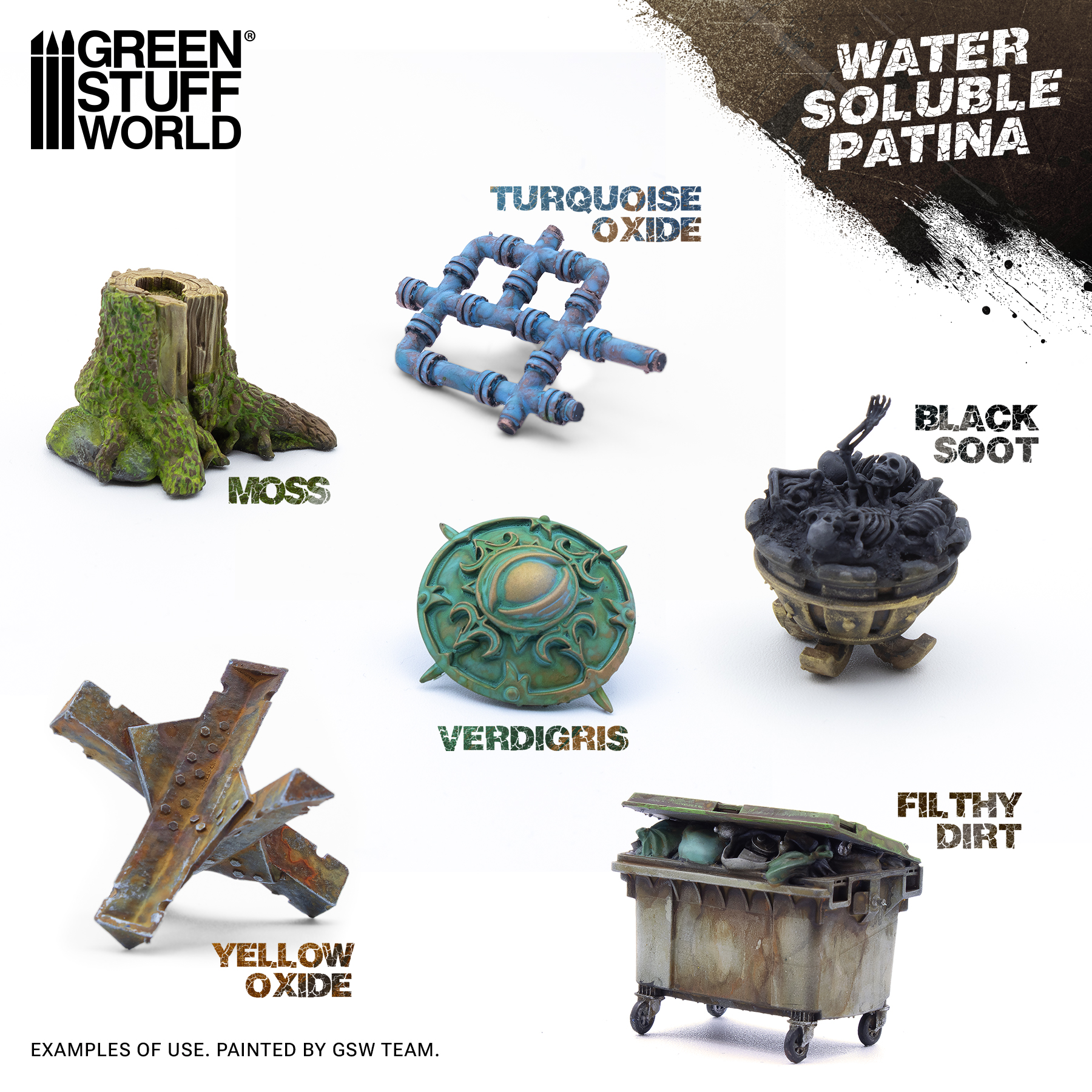
The range is available in both 60 ml and 240 ml bottles, making it suitable for casual painters and high-volume hobbyists alike. Green Stuff World has launched six carefully selected colors that cover the most requested weathering effects: Verdigris, Turquoise Oxide, Yellow Oxide, Filthy Dirt, Moss, and Black Soot. A six-color 60 ml starter pack is also available for painters who want to explore the full collection and experiment with layered weathering techniques from the start. It is also an excellent ageing product for breaking down costumes and props, making them look dirty, old, and worn down, which makes it useful well beyond the world of miniatures. In addition, it is a perfect choice for scrapbooking and crafts, especially for artists looking to add vintage, distressed, or worn finishes to mixed media projects, decorative pieces, and handmade creations.
In most cases, yes, sealing the final result with varnish is strongly recommended. Water-soluble patina paints are designed to remain workable during the painting process, which allows artists to soften edges, blend transitions, and remove excess product with water before the finish is locked in. This flexibility is one of the biggest reasons why these paints have become so popular for realistic weathering.
Because the effect remains water-reactive until sealed, heavy handling or accidental moisture exposure can alter the finish. If you use miniatures for gaming, transport display pieces, or work on terrain that will be touched often, applying a matte varnish is the best way to preserve the result. A good protective coat helps keep pigment in place while maintaining the natural flat finish that makes these effects look so convincing.
Many painters prefer to work in stages, especially when they want to dirty-down a model in a controlled and realistic way: first, they apply the weathering effect, then they let it settle and adjust the finish if needed, and finally, they seal the surface before continuing with additional layers or details. This workflow gives them better control and reduces the risk of disturbing or damaging earlier work. In practical terms, varnish helps turn a flexible weathering process into a durable, long-lasting finish.
Choosing the right color depends on the type of miniature, the material you want to simulate, and the atmosphere you are trying to create. The Green Stuff World range has been designed to cover the most common weathering scenarios in miniature painting, from oxidized metal to damp ruins and industrial soot. Each tone behaves differently and can help tell a more believable visual story.
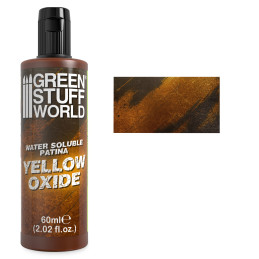
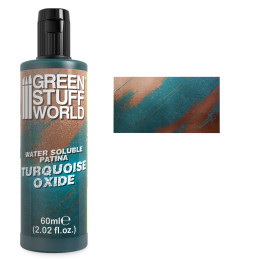
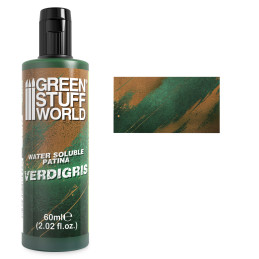
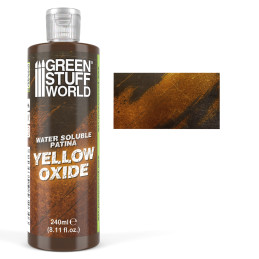
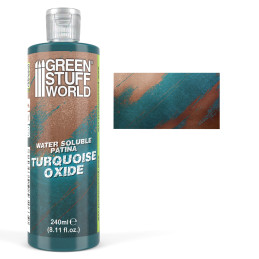
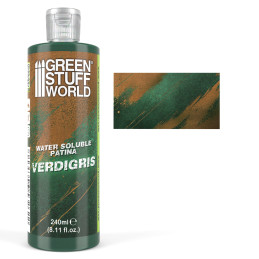
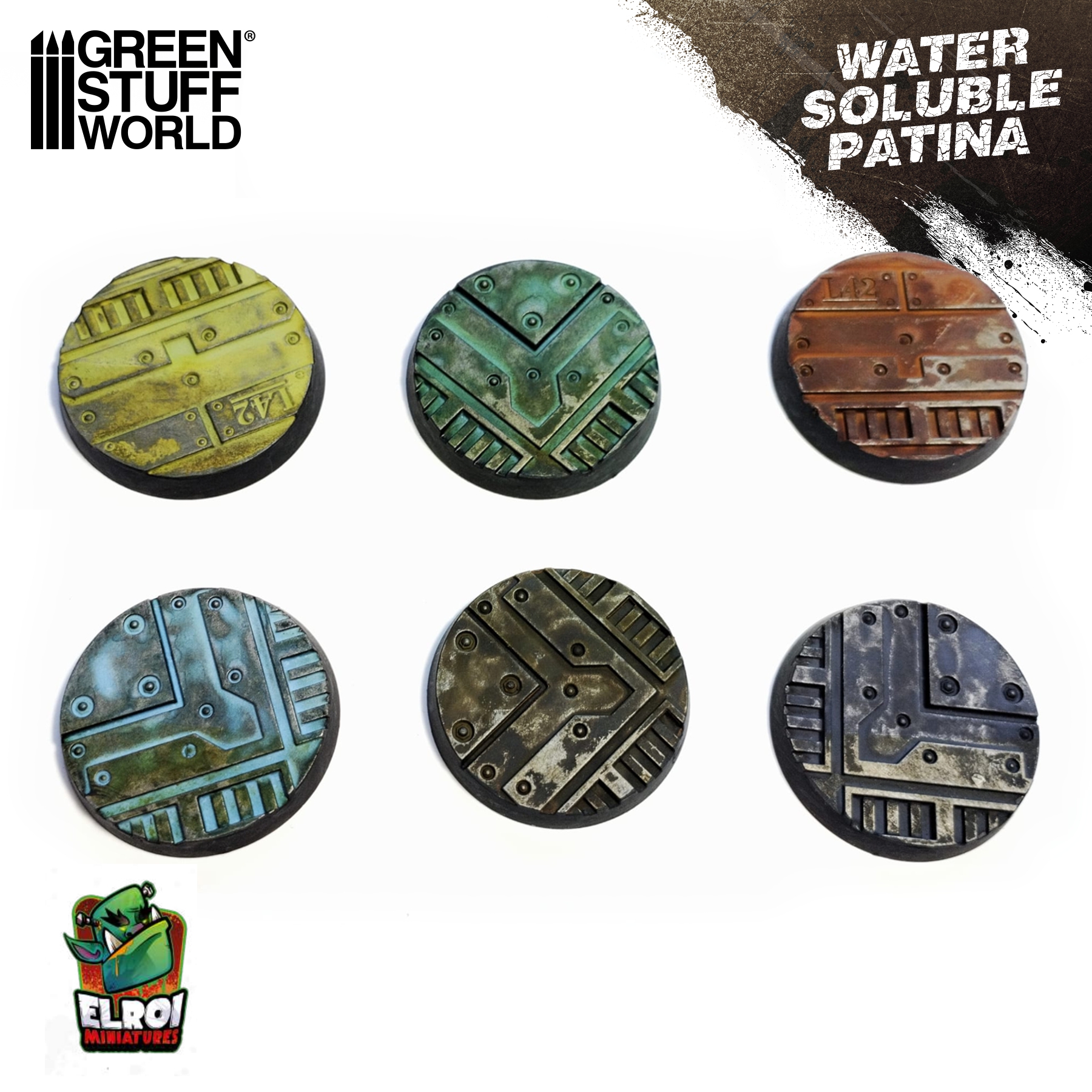
Verdigris is perfect for aged copper, bronze statues, magical relics, and antique metal surfaces that need that classic green patina look. Turquoise Oxide creates stronger blue-green corrosion and works especially well on fantasy armor, mechanical parts, and decorative pieces. Yellow Oxide is ideal for warm rust tones and creates convincing old metal damage on tanks, machinery, pipes, and sci-fi scenery.
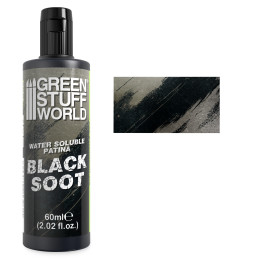
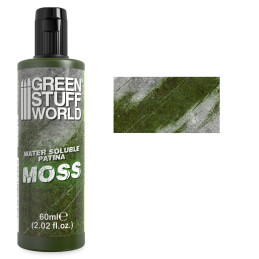
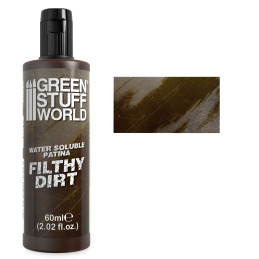
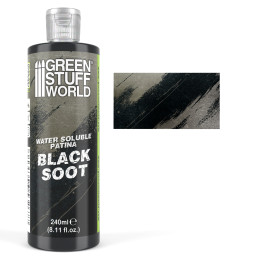
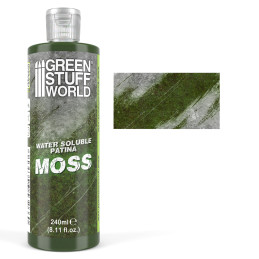
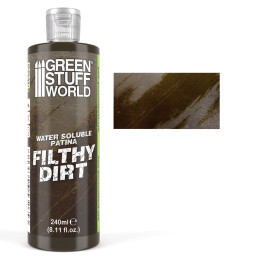
Filthy Dirt is designed for earth, dust, grime, and dried mud effects, making it especially useful for bases, boots, tracks, and lower vehicle panels. Moss works beautifully on stone ruins, damp terrain, and forest scenery, where natural moisture buildup makes the piece feel more alive. Black Soot adds smoke stains, burn marks, exhaust residue, and dark industrial wear, making it perfect for engines, chimneys, gothic scenery, and grimdark miniatures.
Yes, Water Soluble Patina can be used with an airbrush, and this opens up many creative possibilities for painters who want softer transitions and large-scale effects. While miniature paint brushes are excellent for targeted details and controlled accumulation, an airbrush allows smoother blends, broader weathering zones, and more subtle atmospheric staining.
On large terrain pieces, armored vehicles, or display dioramas, airbrushing helps create natural dirt fades, smoke deposits, and environmental wear without leaving visible brush marks. This is particularly useful for users who want to build realistic layers gradually rather than applying heavy concentrated effects in one step. The soft application also helps integrate weathering with the rest of the paint scheme more naturally.
Before spraying, it is important to shake the bottle thoroughly so the pigments are evenly distributed. As with any effect paint, testing pressure and flow on a spare surface is recommended before applying it to the final model. Since the formula is water-soluble, cleanup is generally easier than with harsher solvent products, but proper cleaning after use will keep the airbrush performing well.
To use GSW Yellow Oxide to dirty-down miniatures with realistic rust effects, start by shaking the bottle thoroughly so the pigments are fully mixed and ready to react properly. For the most convincing finish, apply the product straight from the bottle onto clean, dry surfaces, especially over textured details such as rivets, panels, armor edges, cracks, and rough terrain. Like natural oxidation, Yellow Oxide works best when it can settle into recesses and raised textures, creating depth and variation instead of a flat painted look.
For a stronger and more believable rust effect, build the color gradually in thin layers rather than applying too much at once. A light coat creates subtle staining and weathering, while heavier applications produce richer rust tones and more intense aged metal effects. You can also use a damp brush, sponge, or soft cloth to soften edges, create streaks, or lift excess product from raised areas. This helps simulate the random way rust naturally forms over time and adds more realism to vehicles, machinery, weapons, and industrial scenery.
Temperature and drying conditions also affect the final result. For best performance, use the product at room temperature and allow it to dry naturally so the pigments can settle and develop their full effect. While a hair dryer may speed up drying, natural air drying usually gives smoother transitions and more authentic weathering. Once you are happy with the finish, sealing the miniature with a fine matte varnish can help protect the effect and make it more durable for handling or display.
One of the biggest advantages of the Green Stuff World range is its safer, non-toxic formula. Many hobbyists paint in bedrooms, home studios, shared rooms, or hobby corners where ventilation is limited. In those situations, using harsh-smelling weathering products can quickly become unpleasant. A water-soluble formula makes the whole experience much more comfortable and practical.
This product has been developed for hobbyists who want realistic weathering effects without compromising comfort during long painting sessions. Since it is easier to handle and less aggressive than many traditional effect liquids, it is especially useful for people who paint regularly or work in smaller spaces. This also makes it more accessible to beginners who may feel hesitant about using stronger chemical products.
Even with safer formulas, good hobby habits still matter. Painting in a ventilated room, closing bottles properly after use, and keeping tools clean are always sensible practices. With basic care, Water Soluble Patina becomes a convenient and enjoyable weathering solution for indoor miniature painting, terrain building, costume ageing, prop distressing, and creative craft work.
Drying time plays a big role in how the final weathering effect looks. One of the reasons water-soluble patina products are so highly valued is that they dry quickly enough to keep your workflow moving, while still giving enough open time to adjust and shape the effect before it fully settles. This balance makes them highly flexible.
On thin applications, surface drying often happens within a few minutes, allowing you to inspect the result and decide whether you want to intensify the weathering or soften it. In thicker applications or in recessed areas where the product pools naturally, drying takes longer, which gives more time to manipulate streaks, stains, and buildup. This is especially useful when creating rust drips, moss growth, or dirt accumulation.
Using a hair dryer can definitely help speed up the drying process, and in many cases, it works well when you need faster results. However, because Water Soluble Patina develops part of its character as it settles naturally, forced heat or stronger airflow can sometimes alter the final appearance, affecting how the pigments move, gather, or dry on the surface. For that reason, although a hair dryer can be used, we generally recommend letting the product dry naturally whenever possible to achieve the most consistent and realistic effect.
Environmental conditions also matter. Humidity, room temperature, and airflow all influence how quickly the paint stabilizes. Understanding drying behavior helps painters work more intentionally, especially when layering multiple effects. With practice, drying time becomes another creative tool rather than a limitation.
Yes, combining multiple colors is one of the best ways to achieve truly realistic weathering. In real life, wear and aging rarely appear as one flat color. Rust changes over time, dirt settles differently depending on the surface, and moisture creates layered textures. Using several tones together adds richness, depth, and realism.
For example, Yellow Oxide can be used as the main rust tone on metal armor or industrial terrain, while Black Soot adds darker staining around exhausts, vents, or damaged areas. On ruined statues or magical scenery, Verdigris and Turquoise Oxide can be layered together to simulate aged copper oxidation. On forest terrain or damp ruins, Moss combined with Filthy Dirt creates a very believable wet-earth effect.
The water-soluble nature of the paint makes blending easier because transitions can be softened before sealing. This means you can create stains, gradients, and overlapping effects that feel more natural. For hobbyists who enjoy storytelling through paint, layering these colors is one of the strongest features of the range.
The best bottle size depends on how often you paint and the type of projects you usually work on. The 60 ml bottles are ideal for miniature painters who want flexibility, who work on small batches, or who simply want to test specific colors before committing to larger sizes. This format is practical, affordable, and easy to store, making it a strong choice for hobbyists, crafters, and prop makers who need controlled amounts for detailed work.
The 240 ml format is designed for users who work on larger terrain projects, gaming tables, scenery commissions, or high-volume production. It is also especially well-suited for professionals working in film, TV, theatre, and costume departments, where ageing and distress effects are often needed on props, set pieces, wardrobe elements, and scenic surfaces. If you regularly build armies, terrain sets, professional display pieces, or work in production environments that require larger quantities, the bigger bottles offer better long-term value and reduce the need to restock frequently.
The six-color 60 ml starter pack is an excellent choice for anyone who wants the full weathering toolkit from day one. It allows you to explore different effects, learn how each tone behaves, and combine products creatively across a wide range of applications. Whether you are building a rusty industrial board, a moss-covered ruin, a soot-stained gothic scene, an aged prop, a distressed costume accessory, or a vintage-style scrapbooking project, having the full range opens up far more possibilities.
Some hobbyists and professionals look for dirty and worn down finishes that feel natural rather than overdone, and this range is specifically designed to help create that subtle, worn look without making surfaces appear messy or artificial. If you want weathering effects that flow and settle naturally, the pigments are made to move down into recesses and textured areas in a way that feels realistic, controlled, and easy to use for miniatures, scenery, crafts, and professional stage or screen applications.