

What is Warhammer 40k?
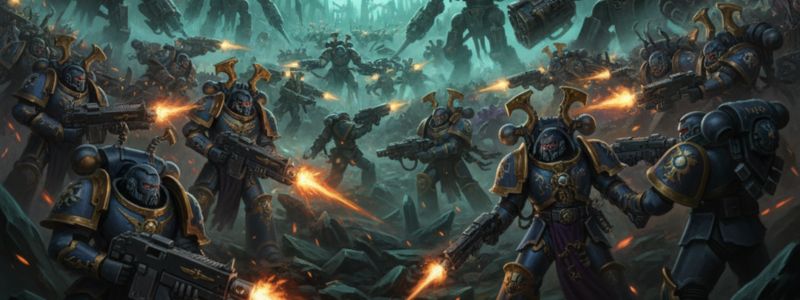
Miniatures of futuristic warriors or the phrase “In the grim darkness of the far future, there is only war” have led more than one person to wonder what Warhammer 40k is (often abbreviated as WH40k or 40k). There are many different ways to define it, but one of the most common is as the massive hobby practiced by millions of people that combines artistic modeling, collecting, science fiction literature, and a tabletop strategy game included in the wargame category: a type of game that simulates a military, historical, or conflict situation, where participants make strategic and tactical decisions to face an opponent.
Although it is primarily this strategy tabletop game with miniatures, several video games inspired by this universe have appeared in recent years and have gained fans around the world.
Warhammer 40k: Definition
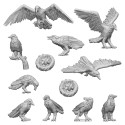
Warhammer 40k is a type of wargame; that is, a tabletop game that simulates battles between armies. Unlike traditional board games with tokens, in this field, miniature figures made of plastic or resin are used, which the players themselves must assemble and paint.
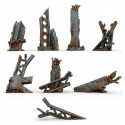
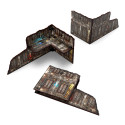
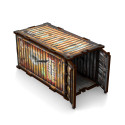
Each player is responsible for building their own army during their free time to present it at the time of the game. It can be made up of dozens of infantry soldiers, imposing tanks, flying vehicles, or gigantic monsters. Although normally the different components of the figure are immobile, the figures move physically over a battlefield (board or gaming table) that the player decorates with scenery (buildings, ruins, stones, dirt, etc.).
The rules dictate how units move, how they resolve shooting and melee attacks (generally using dice), and how objectives are completed. Therefore, the hobby related to Warhammer 40k is divided into three fundamental pillars:
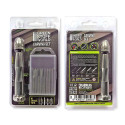
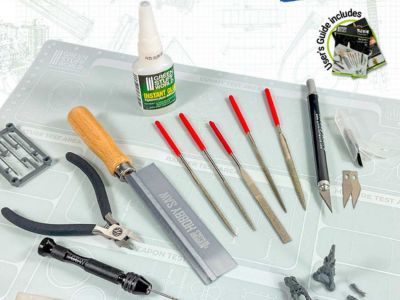
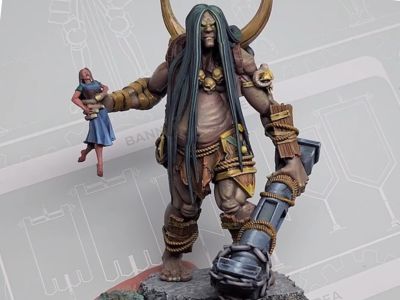
1. Collecting and modeling: assembling, customizing, and painting the miniatures and dioramas that will be used in the games. For this, there is a wide variety of materials and utensils that allow any design an artist can imagine to be carried out: putties, glues, resin bits, modeling tools, resins, water effects, snow effects, pigments, fantasy scenery elements, etc.
2. Lore and narratives: studying the extensive science fiction universe that serves as the backdrop for the battles.
3. Strategic gaming: carrying out games within the Warhammer 40k universe using all the resources and rules available to players to defeat the opponent.
When did warhammer 40k come out and who created it?
The franchise was created by the British company Games Workshop, although before putting this game on sale, the three founders began by selling board games by mail, opening the first official physical store in London shortly after. It was in 1983 when Warhammer appeared on the scene and, a few years later, 40k. Although this is not all, as the company has more than 42 years of history.
The first version of Warhammer 40k was launched in 1987 under the full title of Warhammer 40,000: Rogue Trader. It was primarily conceived by Rick Priestley, who, along with other designers like Andy Chambers and Jervis Johnson, provided the game with a decadent futuristic aesthetic and a unique setting.
Since that first release, the game has evolved through numerous editions. Each new edition refines the rules of the game and expands the lore, maintaining the essence of endless war, but adapting to modern wargaming trends. This constant process of renewal ensures that the question “what is Warhammer 40k?” remains relevant for a constantly growing community.
Who owns Warhammer 40k?
The intellectual property (IP) of the entire Warhammer franchise, including 40k and its fantasy brother Age of Sigmar, belongs to Games Workshop Group PLC. This corporation not only manufactures and distributes the miniatures and the rules, but also manages the licenses for the wide range of derived products: from the Black Library novels to the large number of video games that explore its factions. Its strict quality and narrative control is what has allowed the universe to maintain its characteristic cohesion and darkness throughout the decades.
This universe has its own characteristics: game rules, original characters, lore, size of the figures, etc. In fact, the question “what is Warhammer 40k?” is not repeated as much on the internet as “what scale is warhammer 40k?” Like the Warhammer game, it uses a scale of 28 mm to 32 mm (approximately 1:48 to 1:56) as the standard for infantry units. Additionally, they have a special scale known as 1:48 heroic, invented so that certain characters appear bulkier than normal or some objects larger than they should be so that they contrast within the rest of the elements of the universe.
How to play warhammer 40k
Knowing how to play Warhammer 40k requires a combination of detailed rules, strategy, and a pinch of luck with the dice. A mat or board, a collection of miniatures, and a good amount of scenery are needed. The general objective is not always simply to kill the entire enemy army (although that is always satisfying), but to complete tactical objectives that vary in each mission. A turn is divided into five phases:
1. Command: It is divided into Command and Battle-shock. The Command Phase serves to consolidate positions, plan actions, and use command points for stratagems, with a limit of one additional point per turn. During Battle-shock, wounded units must pass a Leadership test; if they fail, they fall into shock, remaining inactive for performing strategies and unable to control or contest objectives.
2. Movement: It allows moving units individually: moving, normally advancing by adding a D6, remaining stationary, or falling back if they are in combat, taking into account that advancing or falling back limits shooting or charging. The second part, Reinforcements, allows deploying units from reserve according to their rules, respecting minimum distances from the enemy; those that remain in reserve at the end of the game are considered destroyed.
3. Shooting: In the Shooting Phase, units perform ranged attacks against visible enemies, deciding how to distribute their weapons and resolving hits, wounds, and saves according to the characteristics of each weapon and unit. Some rules allow shooting in combat or causing special wounds, and abilities like Feel No Pain or invulnerable saves allow certain miniatures to reduce or ignore the damage received.
4. Charge: A unit at 12 inches (30 cm) or less from an enemy can declare a charge, rolling 2D6 and moving that amount of distance toward the enemy unit to come into base-to-base contact, respecting the height of the terrain; flying units can charge through the air over other units.
5. Fight: All units in melee combat fight by alternating turns between players; units that charged use "Fight First", and miniatures can perform a Pile-in move to get into contact with the enemy. After attacking, the attacking unit can consolidate by moving up to 3 inches (7.5 cm) to get closer to the nearest enemy unit or an objective if there are no nearby enemies.
The strategic depth is enormous. Each faction has unique special rules that dictate its playstyle, which makes a Space Marine army (few, but powerful) play completely differently from an Ork army (many, but chaotic).
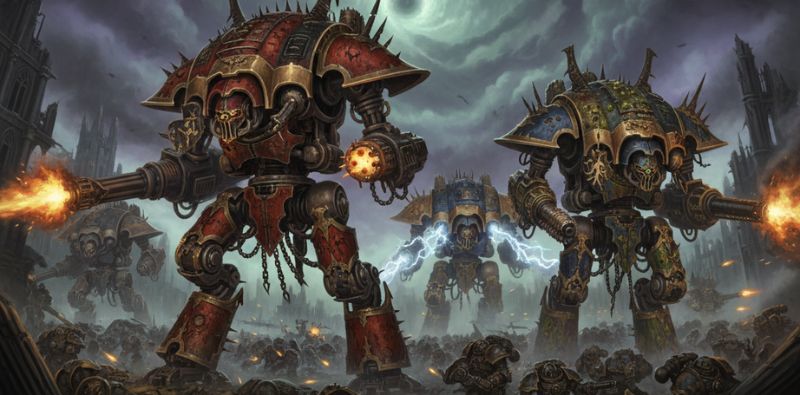
The objective is not only to eliminate the enemy, but also to fulfill the mission objectives, such as controlling markers in "Only War" and obtaining victory points. The most enriching part of the game is the narrative and strategy: creating army lists, combining units, and experimenting with their abilities, enjoying both the tactical approach and watching how the battles unfold on the table, where the one with the most powerful weapons does not always win, but the one who best takes advantage of the rules and the terrain.
The answer to what is Warhammer 40k is a grimdark science fiction universe, where civilization has collapsed into a militarized theocracy, but there are many specific terms and lore with which beginners must become familiar.
Where to buy Warhammer 40k
To start, fans buy starter sets (which include miniatures, basic rules, and dice) in specialized hobby stores or directly from the official store.
However, to participate fully in the hobby, the purchase of modeling materials is as vital as that of the miniatures. The real appeal of Warhammer 40k is not just playing with them, but making them your own. The bases and scenery details, the pigments to simulate rust or mud, and the cutting and assembly tools are what truly allow a fan to create a thematic and unique army. This is why it is recommended to go to a specialized store where you can buy all the material you need, as is the case with the Green Stuff World website. This company also sells most of its products on platforms like Etsy and eBay, as well as in physical retail stores spread throughout the world.
Is 40k dark fantasy?
Yes, in fact, Warhammer coined the term “grimdark” to describe this dark fantasy reflected in the motto “In the grim darkness of the far future, there is only war,” which refers to a setting where hope does not exist, institutions are corrupt, violence is constant, and suffering is a structural part of the world. Warhammer 40k reflects this deeply dark fantasy essence: decadent empires reminiscent of medieval kingdoms, fanatical religions, demonic beings, magic disguised as psychic powers, and a humanity on the brink of collapse.
There are many factors in which this dark fantasy is reflected: there are no pure heroes, only factions driven by survival, power, or destruction; even the “good guys” commit atrocities to persist one more day. The exaggerated aesthetics, Gothic iconography, the Chaos gods, and the constant presence of supernatural forces reinforce this sense of total darkness.
That is why Warhammer 40k is not just a dystopian future, but the perfect example of grimdark: a world where war is eternal, death is trivial, and destiny is inevitably tragic. It is this mixture of science fiction with horror, fatalism, and Gothic symbolism that makes it one of the most recognizable and extreme dark fantasy universes in existence.
How many factions are in Warhammer 40K?
Currently, there are around 30 main factions with their own rules that are continuously updated. These factions can be grouped into four categories:
Space Marines
The Space Marines are genetically enhanced superhuman soldiers who protect humanity and constitute the most iconic faction of Warhammer 40,000. Their army includes both classic Marines and the more recent Primaris Marines, who are taller, stronger, and better sculpted, representing the most modern version of the army in miniature and game. For new players, Primaris Marines are the most recommended option, as they combine a better visual appearance with superior performance in the game.
Each Space Marine army is organized into Chapters, sub-factions with their own aesthetics, characters, and specializations. Some of the best known include the Ultramarines, who represent the classic vision of the Imperium; the Imperial Fists, experts in sieges; the Dark Angels and Blood Angels, who stand out for their unique rules and thematic units; and the Salamanders, who combine fire and defense. Other chapters such as the Space Wolves, White Scars, Raven Guard, Deathwatch, Iron Hands, and Grey Knights bring very differentiated styles and tactics, from fast attacks to stealth skills or xenos hunting.
Each Chapter has specialized miniatures that reflect its combat style, from melee assault units and snipers to mechs and heavy vehicles. Primaris miniatures have unified much of the army in a consistent scale and aesthetic, although the older Chapters still retain iconic characters that bring history and tradition to the game. This allows players to customize their armies, creating unique and thematic detachments within the Warhammer 40k universe.
Armies of the Imperium
The Armies of the Imperium group together all the human forces that serve the Imperium, excluding the Space Marines, offering a great diversity of playstyles and visuals. These factions reflect different foundations of the Empire: faith, technology, military discipline, and nobility. They are an excellent starting point for players looking to explore a wide range of aesthetics within the same large "imperial" faction.
The Astra Militarum (Imperial Guard) represents the most "human" side of the Empire. It is a mass army composed of ordinary soldiers, heavily supported by tanks, artillery, and vehicles, with a modern military aesthetic. Its strength lies in numbers and firepower, allowing players to experience how the Empire fights on a planetary scale, where millions of humans face galactic threats.
The Adepta Sororitas (Sisters of Battle) are the military arm of the Imperial Church, warrior nuns whose strength emanates from their absolute faith. Their aesthetic is markedly Gothic and their playstyle focuses on devotion and moral resilience. On the other hand, the Adeptus Custodes are an almost invincible military elite; they are the golden supersoldaders and the personal guard of the Emperor. Their low miniature count makes them attractive to collectors looking for a small but high-powered army.

Finally, the Adeptus Mechanicus embodies the technology of the Empire, with bionic soldiers and exotic machines that combine archaic science and mechanical mysticism. By contrast, the Imperial Knights are gigantic war mechs, piloted by feudal nobles. Although they are visually spectacular and powerful pieces, they are often integrated as individual support units in other imperial armies instead of being collected as complete armies.
Armies of Chaos
The Armies of Chaos represent the opposing force to the Imperium in the Warhammer 40,000 universe, formed by traitor Space Marines and demons born from the corruption of the Chaos Gods. These armies emerged after the Horus Heresy, when several Space Marine legions rebelled against their primarchs and allied with the powers of Chaos in the Eye of Terror. Since then, they have been a constant threat to humanity and its forces of the Imperium.
Each Chaos army follows the influence of one or more of the four great gods: Khorne, god of war and blood; Nurgle, god of disease and decay; Tzeentch, god of magic and change; and Slaanesh, god of excess and obsession. This diversity of deities grants Chaos armies a wide variety of styles and tactics, from bloodthirsty berserkers to psychic masters and demonic hordes acting according to the will of their patrons.
Among the best-known factions are the Chaos Space Marines, which are corrupted versions of the loyal Space Marines; the World Eaters, berserkers who worship Khorne; the Death Guard, followers of Nurgle who thrive on resilience and putrefaction; and the Thousand Sons, experts in psychics and Tzeentch magic. Additionally, there are Chaos Daemons, pure manifestations of each god that act in both 40k and Age of Sigmar, and Chaos Knights, mechanical giants that reflect the Imperial Knights but in the service of Chaos.
Xenos Armies
The Xenos (alien) army group offers a rich variety of species, each with a unique combat style and background. The Aeldari are an ancient sophisticated civilization, similar to elves, who stand out for their discipline, strategy, and specialized sub-factions (such as the Drukhari and Harlequins). In contrast, the Tyranids represent a purely instinctive biological threat; they operate as an immense swarm that consumes all galactic biomass and is preceded by Genestealer Cults, which are hybrid human infiltrators that prepare the ground for invasion.
Other fundamental Xenos threats are the Necrons and the Orks. The Necrons are an ancient and immortal race of metallic bodies whose tactics focus on the constant reanimation of their fallen warriors and a ruthless dynastic organization. On the contrary, the Orks are chaotic and boisterous creatures who find joy in war; their danger lies in their brute strength, their immense numbers, and their totally unpredictable nature in melee combat.
Finally, the T'au and the Leagues of Votann represent the most technological and structured Xenos factions. The T'au are masters of technology and long-range strategy, prioritizing cooperation to achieve the "Greater Good." The Leagues of Votann (or Kin) combine technical precision and great resilience, using heavy transports and specialized units. This diversity ensures that each Xenos army offers a completely different narrative and tactical challenge.
Who are the good guys?
The general consensus in Warhammer 40,000 is that there are no "good guys." The universe is a science fiction dystopia, operating under the principle of total war and inescapable darkness. Although the Imperium of Man is the protagonist faction, its struggle for survival is based on a totalitarian, fascist, and fundamentalist regime that demands an incalculable daily sacrifice. The Inquisition and the Space Marines act with ruthless cruelty to maintain dogma, making the Imperium the "lesser evil" at best.
The debate of morality is addressed through relativity. Some mention the Orks because of their inherent "happiness" in being able to dedicate themselves solely to warring. Others point to the T'au Empire for its promotion of the "Greater Good," being the most idealistic and least openly brutal faction, although its society is authoritarian. In essence, Warhammer 40,000 functions as a dark satire of militarism and extreme religion, where all factions are irredeemably corrupt or inherently evil. The conflict, therefore, is not between good and evil, but between different forms of galactic horror.
The Warhammer 40k universe: books, video games, and TV series
Although the tabletop game is the most iconic Warhammer 40k product, it is highly linked to rulebooks and stories that allow following the lore of the game and understanding the events that have been moved to the gaming table. Additionally, the unique and well-differentiated peculiarities of this universe have aroused great interest in thousands of people for stories related to 40k, which has opened the way to creating related video games and TV series.
How many Warhammer 40k books are there?
Under the Black Library label, hundreds of novels and rulebooks have been published, with a number that far exceeds five hundred titles, and continues to grow every month. The Horus Heresy series alone consists of dozens of volumes, detailing the civil war that shaped the 41st Millennium. This immense narrative database is essential because it provides players with the context for their battles. A player is not just moving a figure; they are recreating a legendary charge of a famous regiment or defending a crucial planet mentioned in the novels.
Video games
The Warhammer 40,000 universe has generated a prolific library of video games that explore the brutality of the 41st Millennium in almost every genre. Historically, strategy has been dominant, highlighting the Warhammer 40,000: Dawn of War series (Real-Time Strategy or RTS), which captures the epic scale of war with the management of large armies. Additionally, titles like Chaos Gate - Daemonhunters offer a more squad-focused and detailed combat turn-based tactical experience.
The franchise has also successfully ventured into the action and RPG genres. Warhammer 40,000: Space Marine provides a third-person perspective, emphasizing the brutal combat of a single Space Marine. On the other hand, games like Warhammer 40,000: Darktide focus on first-person cooperative action, throwing players into the fight against hordes in claustrophobic environments. This diversity demonstrates the adaptability of the universe for players to experience the desperation and grandeur of the Imperium from multiple angles.
TV series
Official Warhammer 40,000 audiovisual content has historically been scarce, but has grown recently. Much of the current animated development is concentrated on Games Workshop's own platform, "Warhammer+". This platform offers serialized animation series like Hammer and Bolter and Pariah Nexus, in addition to the acclaimed fan-made production Astartes, which was acquired and serves as a benchmark for the desired visual quality level. The largest-scale project is the live-action television series.
Games Workshop announced a partnership with actor Henry Cavill's production company to bring the 40K universe to big-budget television. Although it is still in the early stages of development, this project represents the most ambitious effort to introduce the epic scale and darkness of the 41st Millennium to a massive audience, elevating the franchise to the level of other great science fiction sagas.
Legal Notice
All trademarks, logos, and product names mentioned, including but not limited to Warhammer 40k and any other titles, are the property of their respective owners. The use of these names in this text is for informational and descriptive purposes only, with no intention of infringing intellectual property rights, copyrights, or registered trademarks.
This content is not sponsored, authorized, endorsed by, or affiliated with any of the owners of the trademarks mentioned, nor does it imply any commercial relationship with them. Any reference is made solely to facilitate the reader’s understanding within the context of informational content for miniature wargaming enthusiasts.
Furthermore, Green Stuff World is not associated with, licensed by, affiliated with, or authorized by the creators or owners of Critical Role or any other trademark mentioned. The mention of Green Stuff World is provided solely as an example of a general supplier of accessories and materials for modeling and wargames.
This text is provided for informational purposes only and is not intended to replace, replicate, or compete with the official products or services of any registered trademark.
Share this content