


How old is Warhammer?
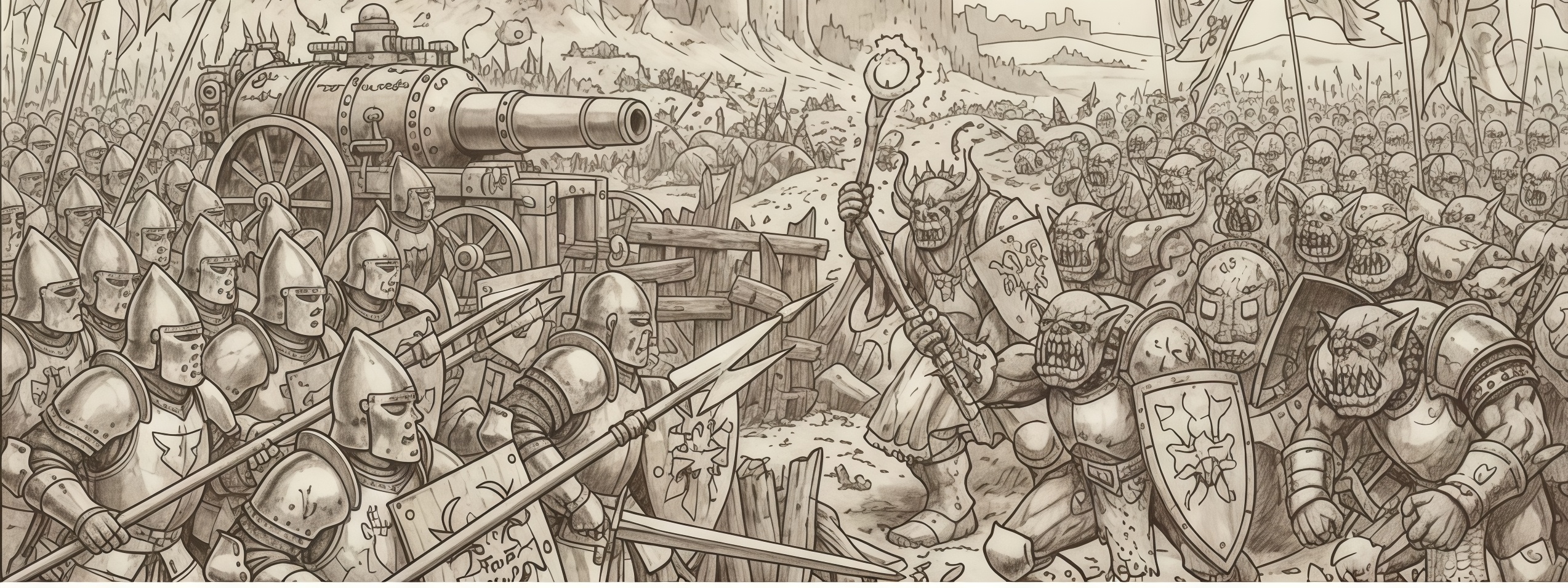
Warhammer is a franchise of tabletop strategy games with miniatures and a vast fictional universe, owned by the British company Games Workshop. Its origins date back to the 1980s, when they began to pave their way towards achieving the global phenomenon of collecting and hobby that they are today. The Warhammer experience is based on three pillars: collecting, assembling, and painting detailed miniatures; learning the game rules to simulate battles on the tabletop; and immersing oneself in the rich narrative of its worlds. This phenomenon began at the end of the last century, but how old is Warhammer?
The Warhammer universe is divided into two major timelines that share an origin and a dark, epic fantasy focus. The first, Warhammer Fantasy Battle, was the original wargame launched in 1983, a traditional fantasy game but with a darker tone, arcane magic, and different races. Although this game line was discontinued, it has been recovered in Warhammer Age of Sigmar (2024), which is the current incarnation of the fantasy universe, more focused on the immortal realms and apocalyptic battles.
The second and more successful line is Warhammer 40,000 (Warhammer 40k), launched in 1987. In this case, the game mechanics are transferred to a dystopian future, the 41st Millennium, where the galaxy is plunged into an eternal war. Its setting is a unique blend of gothic science fiction and heroic fantasy. Next, we will look in detail at the beginnings of Warhammer and what the game's antecedents are.
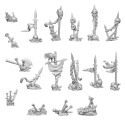
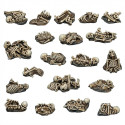
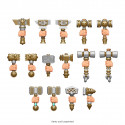
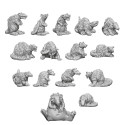
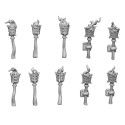
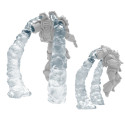
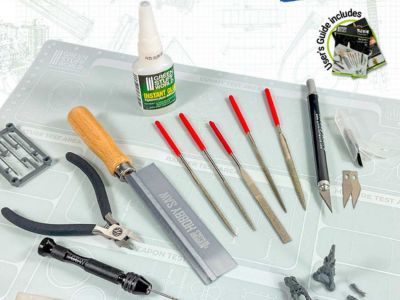
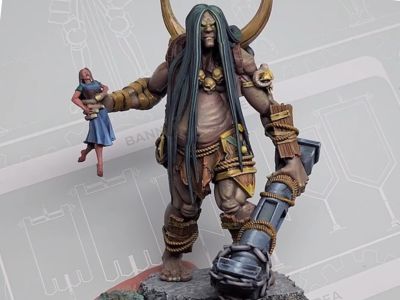
For this hobby, Warhammer aficionados must acquire Citadel miniatures (the Games Workshop brand), or compatible elements like those from Green Stuff World, which measure around 28 mm. They must then dedicate time to assembling and painting them professionally to achieve the most realistic look possible to make the games equally realistic. Battles take place on scenic boards, which are usually decorated with all kinds of miniature objects also painted by the aficionado, and which use rules based on movement measured in inches. Dice are used to measure the amount of movement and the relevant attacks in each turn.
The game requires not only military tactics and arithmetic skill, but also a considerable investment of time and creativity, cultivating an active community that participates in global tournaments and events. Some also consume the wide range of novels, role-playing games, and video games derived from the two franchises.
According to this summary, in answer to the question, "how old is Warhammer?", the answer is that Warhammer has a 42-year trajectory in 2025; however, Games Workshop appeared a few years earlier with a somewhat different purpose. Next, we explore these 42 years of history of this fascinating game.
Origin of Warhammer
The Warhammer universe might never have existed if three friends hadn't decided to create a mail-order company dedicated to their hobby. Based in the United Kingdom, they imported tabletop and role-playing games. This company received the name of “Games Workshop.” This is how this famous company was born, founded by Ian Livingstone, Steve Jackson, and John Peake (who left the company in early 1976) and which would later put the first version of the Warhammer game on sale.
A year later they created the magazine “White Dwarf,” which quickly supplanted its predecessor “Owl and Weasel,” becoming the most popular magazine in the United Kingdom for followers of role-playing and tabletop games in general. In 1978, the first official Games Workshop store arrived at number 1 Dalling Road, in Hammersmith, London. Over time, the brand's stores would multiply and reach the entire world.
The final component before publishing the famous Warhammer role-playing game is the appearance of the original Citadel miniatures in 1979. Although they were not yet related to a specific game, they were simple collector's items or pieces to be used in other role-playing systems. Everything changed in 1983, when Bryan Ansell, Richard Halliwell, and Rick Priestley created the first Warhammer game, which Games Workshop also published, giving birth to a new hobby. Specifically, it was released under the name Warhammer: Fantasy Battle.
It consisted of a box with three black-and-white books explaining the rules of this novel game, all illustrated by Tony Ackland.
• Volume 1: Tabletop Battles. Explains the basic rules, including the turn sequence, potion recipes, and creature lists. It also features an introductory battle translated as “The Ziggurat of Doom.”
• Volume 2: Magic. Contains all the information regarding wizards. The sorcery system is articulated around a hierarchical structure that defines the capacity and arcane arsenal of the casters. They are classified into four fundamental ranks, culminating in the elite of the “arch-mages” who dominate the magical arts of a superior order. Sorcerers have spells of different potencies depending on the level they are at. It also explains the initial preparation of enchantments (normally Amulets) and the cost of using each sorcery.
• Volume 3: Characters. Explains how characters advance through experience points and statistical gains, equipment costs, alignments, and random encounters, etc. It includes the campaign example “The Redwake River Valley.”
This first version lacked the complexity of the races and the world lore that is now so characteristic of the game.
Evolution of Warhammer: Fantasy Battle
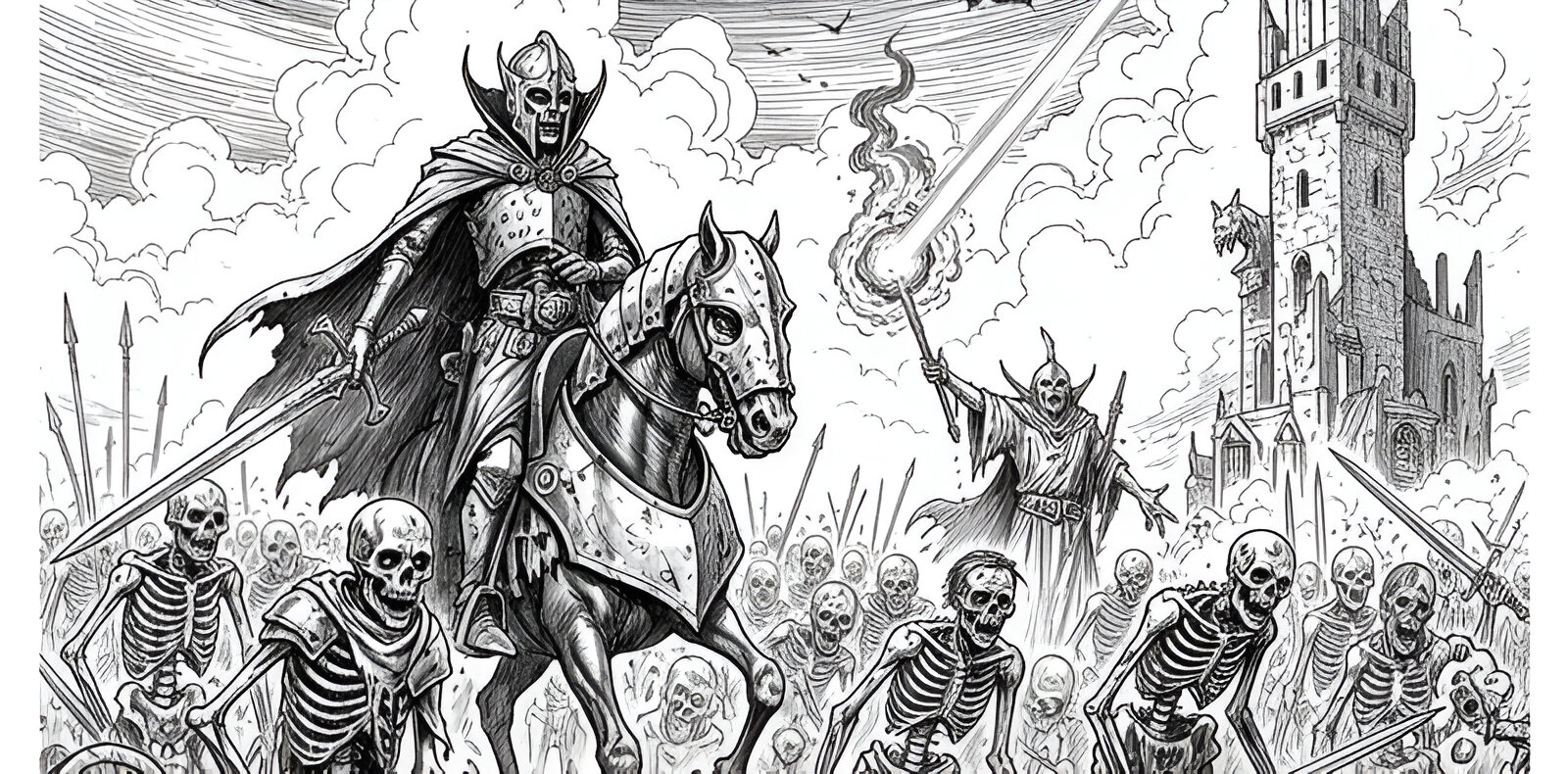
The following publications of Warhammer brought its form and content closer to the game it is today. With the second edition in 1985, a broad clarification of the rules for the effects and uses of standards and musicians, fire, artillery, fortifications, flight, chariots, reserve units, poisonous sorcerers, and specialists also arrived. All of this was compiled in three rule books: Magia de Batalla (Battle Magic), Bestiario de Batalla (Battle Bestiary), and Combate (Combat), hand in hand with the illustrations by John Blanche. Furthermore, the development of “The Known World” also continued in this new edition.
You already know how old Warhammer is, but do you know when our beloved Space Marines arrived? Well, just a year later, in 1986, Citadel created some new miniatures: galactic heroes in armor, which they called Space Marines. And the rest is history.
Third Edition (1987)
The Third Edition of the game was published as a single hardback book in December 1987, Warhammer 40,000, which would become the most famous wargame in the world. It featured the deepest and most complex movement and maneuver system of all editions. In addition to these, it introduced other novelties: it incorporated new classes of specialized troops, detailed rules for war machines, and redefined the system of representing heroes and wizards.
The core of the magic and the freedom in army design remained identical to the previous two editions. However, the push towards using structured army lists increased significantly. These were compiled in the book Ejércitos de Warhammer (Warhammer Armies), published separately in 1988. This launch marked a commercial turning point, being the last edition before Games Workshop changed its business model, later facing competition from former employees with the game Fantasy Warlord.
The third edition had several expansions:
• Tomo 1: El Reino del Caos (Realm of Chaos)
• Tomo 2: Esclavos de la Oscuridad (Slaves to Darkness)
• Los Perdidos y los Condenados (The Lost and the Damned)
• Libros Warhammer Asedios (Warhammer Siege Books)
• Realm of Chaos and Siege: rules and lore for Warhammer 40k and WFB.
4th Edition (1992) and 5th Edition (1996)
The Fourth (1992) and Fifth (1996) editions represented a significant change from previous versions, being sold in boxes that included not only the rules, but also the essential miniatures to be able to play straight away. Both editions imposed the use of mandatory army lists, published in separate books (Ejércitos de Warhammer), which standardized the composition of the different racial factions by imposing point limits on characters, troops, and monsters. The Fifth Edition, in particular, was disparagingly nicknamed "Herohammer" because heroes, monsters, and wizards were disproportionately powerful compared to basic troops.
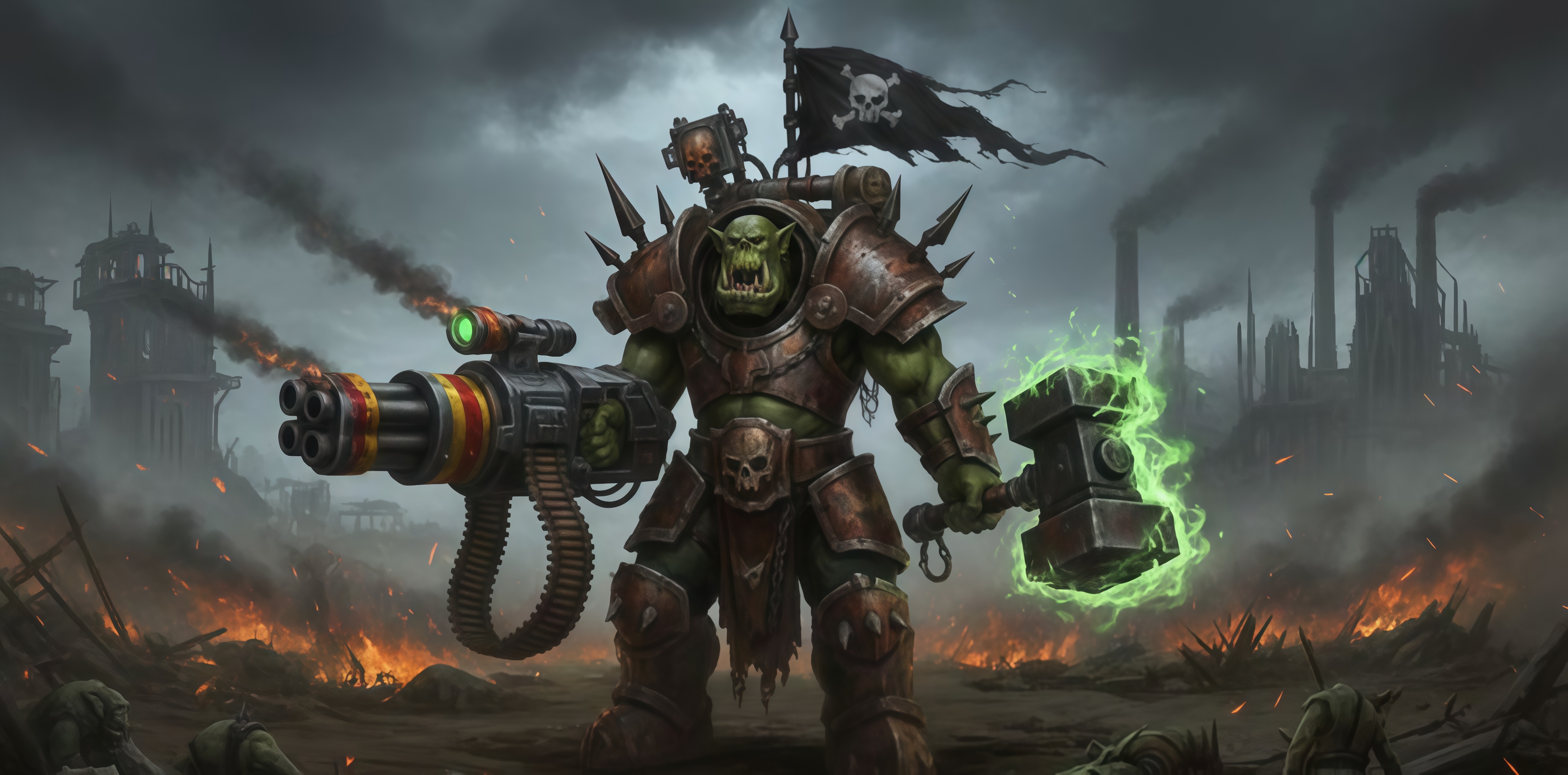
The magic system was completely overhauled in these editions. The selection of spells was abandoned for a card-based system where spells were drawn at random and the magic phase became a kind of game within the game governed by these cards (although it was revised and simplified in 1996 to limit the casting of spells to the player's turn). The Starter Box of the Fourth Edition pitted High Elves and Goblins against each other, while the Fifth re-introduced the Bretonnians and heavily reworked the Slann to create the Lizardmen. This stage also included the release of several boxed campaign packs that provided thematic scenarios and additional content. The Fifth Edition was recognized with the Origins Award for Best Fantasy or Science Fiction Miniature Rules of 1996.
In later years, one of the major business changes at Games Workshop occurred, confirming that it had ceased to be a national company to become a global phenomenon: they moved the Games Workshop headquarters to central England, where they created the Warhammer World visitor center. During the same year, they created the Black Library, a publishing imprint dedicated exclusively to publishing novels and audiobooks set in the different Warhammer universes.
6th Edition (2000), 7th Edition (2006) and 8th Edition (2010)
The 6th Edition (2000) marked a return to emphasis on troop movement and combat, reducing the ability of heroes and wizards to decide the game themselves, a reaction to the "Herohammer" of the previous edition. It also introduced a new dice-rolling magic system. Like its predecessor, it was sold in a starter box that included a softcover rulebook and miniatures (Orcs and Empire).
Before the next edition, in 2001, Games Workshop allied with The Lord of the Rings brand, for which it published a game totally differentiated from Warhammer: The Lord of the Rings Strategy Battle Game. This coincided with the first film adaptation of the saga, The Fellowship of the Ring, for which it produced related miniatures. Later it would do the same with The Hobbit. Furthermore, the versions have followed one another with the rest of the films. These games were The Hobbit Strategy Battle Game and the most current one, Middle-earth Strategy Battle Game.
In 2004, Warhammer 40,000 made the jump to video games with a real-time strategy (RTS) game, Dawn of War, developed by Relic. The video game franchise continued with direct sequels, Dawn of War II in 2009 and Dawn of War III in 2017, as well as expansions for the original game. Even today, the series remains active with the announcement of Dawn of War IV for 2026.
The 7th Edition (2006) was offered in two formats: a hardcover rulebook for experienced players and a boxed set that included plastic miniatures (Dwarfs and Goblins) with a reduced softcover rulebook and less background material. Despite the difference in format and length, the core and advanced rules sections in both books were textually identical.
In 2007, an event took place that changed the history of miniatures forever: Games Workshop managed to produce previously unthinkable miniatures thanks to advances in technology. Plastic began to be used to reproduce figures and they began to be mass-produced. It also allowed new miniatures to exist, such as the iconic super-heavy tank Baneblade, and changed the scales.
Finally, the 8th Edition (2010), launched with the Isle of Blood starter set (with High Elves and Skaven), maintained the trend of condensed sets. This edition was notable for its major subsequent expansions, such as Storm of Magic (which introduced rules for more destructive magic and monsters), Blood in the Badlands (siege warfare and special scenarios), and Triumph and Treachery (multiplayer games). The cycle of this edition culminated with the five-book series The End Times (2014-2015), which definitively narrated the destruction of the Warhammer world.
The Ninth Age or The 9th Age (2015)
There was never an official ninth edition of Warhammer supported by Games Workshop; it was actually created by WHFB fans following the controversy and widespread dissatisfaction among players after the game’s demise via the “The End Times” event and the changes introduced in Age of Sigmar. They went on to develop an unofficial game system called “The 9th Age (T9A)" or "The Ninth Age".
For them, T9A is the true successor to the 8th Edition of WHFB, which they designed with the competitive focus that many felt was missing from later official editions. Therefore, it concentrates on simulating massive fantasy battles and is characterized by:
• Square Bases and Regiments. It maintains the regiment battle style, where miniatures are grouped in blocks on square bases to facilitate tactical movement, flanking, and charges.
• Balance and Competitiveness. One of its core goals is game balance. For this reason, a team of volunteers subjects the rulebook to regular revisions.
• Open and Free Rules. All game material, including the Rulebook (Slim Books) and the Army Books (formerly Temporary Army Compendium or TAC), is available for free in PDF format and in several languages online.
• Miniature Independence. As a fan project, it does not sell miniatures. The game is designed to be compatible with any fantasy miniature the player owns, whether they are old Warhammer Fantasy collections or newer models.
Furthermore, lacking affiliation with Games Workshop, T9A had to create its own lore and rename the factions to avoid copyright issues. For example, the Dread Elves were renamed Dark Elves (or, literally, Black Elves in some translations), and the Saurian Ancients became Lizardmen.
Warhammer: The Old World (2024)
Warhammer: The Old World (ToW) is the 2024 relaunch of Games Workshop's original fantasy line, recovering the spirit of Warhammer Fantasy Battle. A large percentage of people in the sector do not consider it a ninth edition, but an evolution of the classic system, retaining much of the fundamental mechanics of the Eighth Edition, although with important adjustments in areas such as individual miniature combat, scenery rules, and notably, magic, whose effects are now integrated into the regular phases instead of having their own phase. Furthermore, the size of the bases is enlarged, going from 20 mm (original Warhammer) to 25 mm, an aspect that changes part of the gameplay.
The setting of The Old World is a prequel to the previous universe, placing the narrative 252 years before the apocalyptic "End Times" that concluded the Fantasy line in 2015. The game takes place in the year 2276, with an empty Emperor's Throne, allowing players to participate in an era of internal conflict and incipient threats, offering a vast canvas for tactical battles. Games Workshop launched it without a traditional starter box, opting for individual sets focused on the two armies highlighted at the beginning: the Tomb Kings of Khemri Edition and the Kingdom of Bretonnia Edition. The armies are divided into "Core Factions" (with new models and narrative support) and "Legacy Factions" (whose rules are offered digitally and without new initial miniatures). The game system focuses on blocks of regiments, making the positioning and movement of units crucial and highly tactical elements.
The Case of Warhammer Age of Sigmar (AoS)
Warhammer Age of Sigmar (AoS) is the direct successor and replacement of Warhammer Fantasy Battle starting in 2015, designed by Games Workshop to simulate strategic conflicts, although it has more narrative, skirmish, and different format game modes. The game, which combines medieval weaponry with intense magic and fantastic creatures, focuses on players taking turns to execute actions such as movement, charging, shooting, and casting spells, the results of which are determined by dice rolls. A fundamental part of the experience continues to be the hobby of collecting, assembling, and painting the miniatures in detail. The decision to create this new universe arose after the narrative event of the "End Times" that destroyed the old world, and it was taken as a commercial strategy, since the previous fantasy game had shown a notable decrease in sales in recent years.
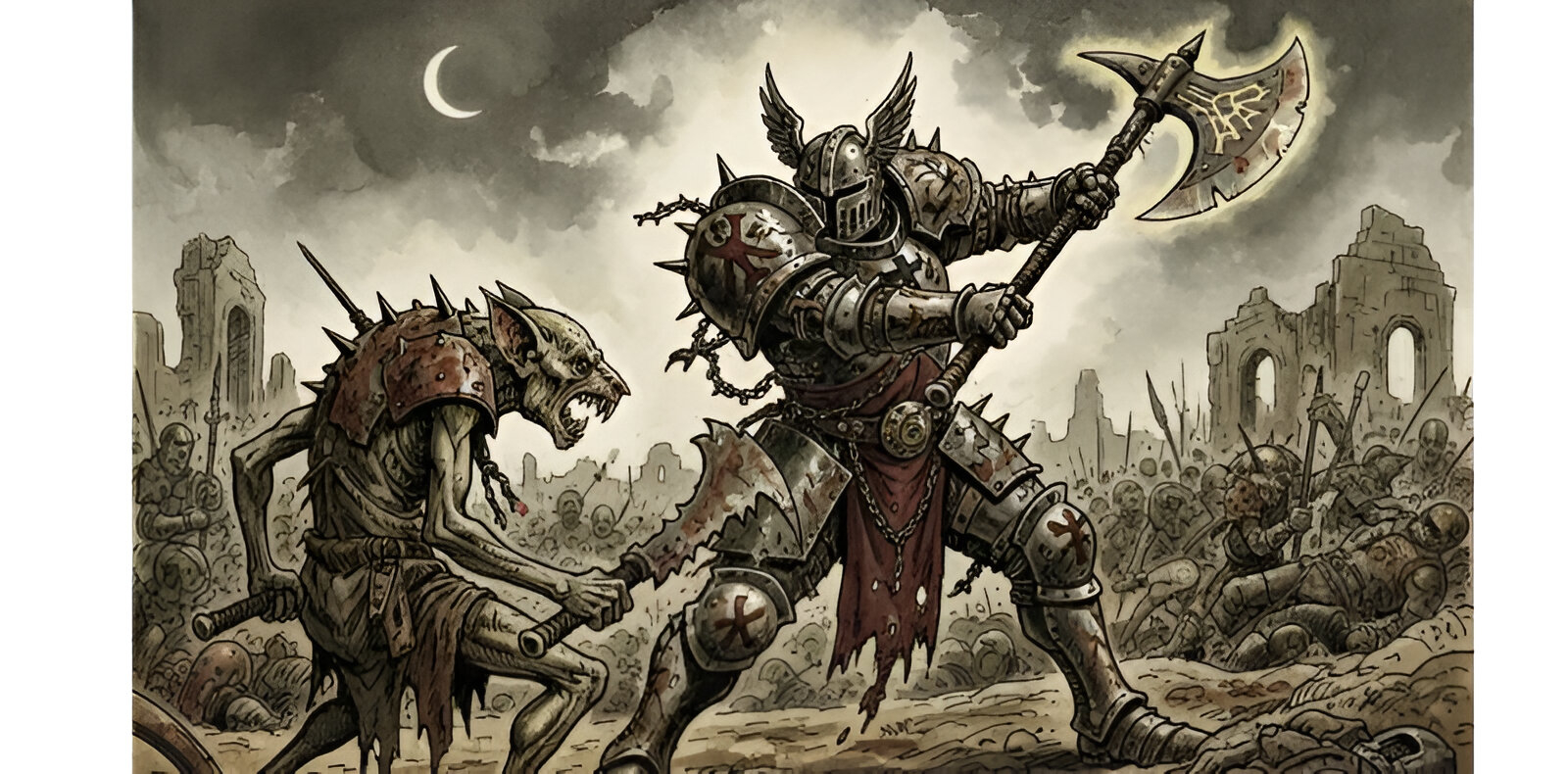
The lore of Age of Sigmar takes place in the Mortal Realms, a set of eight interconnected worlds formed from the remains of the destroyed planet, found and revitalized by the ancient god-emperor Sigmar. The narrative is divided into three eras: the Age of Myths (creation), the Age of Chaos (invasion of the dark gods), and the current Age of Sigmar (where Sigmar leads the war with his celestial warriors, the Stormcast Eternals). The game has evolved through four editions. The first, in 2015, generated controversy due to the initial omission of unit cost values and the inclusion of rules seen as absurd or ridiculous by the community (such as those that depended on the player's mustache), although this was softened in later editions. The most recent editions (2nd in 2018, 3rd in 2021, and 4th in 2024) have improved reception by refining the gameplay, reintroducing mechanics like points, and focusing on a narrative structure through the four Grand Alliances: Order, Chaos, Death, and Destruction. The success of AoS is sustained by its easy-to-learn gameplay and its emphasis on narrative play, keeping the basic rules accessible for free.
Now, you know how old Warhammer is and how it has managed to remain the most influential role-playing game throughout all these years. Remember that you can acquire all the resin bits and compatible materials you need to carry out all your games with the best minis and the best setting.
Legal Notice
All trademarks, logos, and product names mentioned, including but not limited to Warhammer 40k, Warhammer: Fantasy Battle, Warhammer: The Old World, Warhammer Age of Sigmar, and any other titles, are the property of their respective owners. The use of these names in this text is for informational and descriptive purposes only, with no intention of infringing intellectual property rights, copyrights, or registered trademarks.
This content is not sponsored, authorized, endorsed by, or affiliated with any of the owners of the trademarks mentioned, nor does it imply any commercial relationship with them. Any reference is made solely to facilitate the reader’s understanding within the context of informational content for miniature wargaming enthusiasts.
Furthermore, Green Stuff World is not associated with, licensed by, affiliated with, or authorized by the creators or owners of Critical Role or any other trademark mentioned. The mention of Green Stuff World is provided solely as an example of a general supplier of accessories and materials for modeling and wargames.
This text is provided for informational purposes only and is not intended to replace, replicate, or compete with the official products or services of any registered trademark.
Share this content