
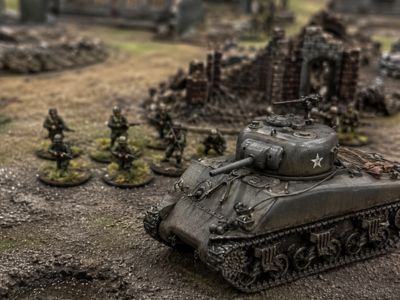
What is a scale model?
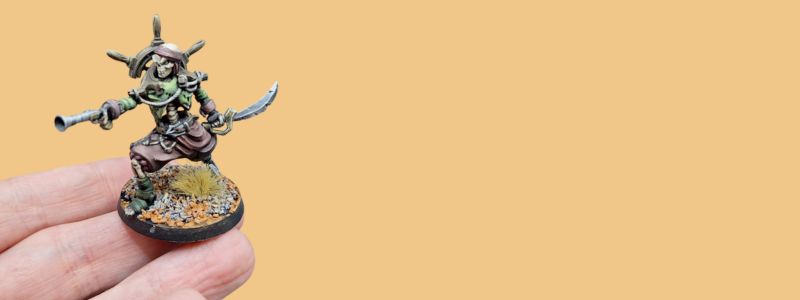
Scale modeling is a hobby that has captivated millions of people around the world. From historical recreations to futuristic vehicles, the magic lies in taking an object from the real world (or fiction) and reproducing it in a reduced size while maintaining astonishing accuracy. But do you know exactly what is a scale model?
A scale model is a physical replica of an object, whose size has been reduced or enlarged proportionally to the original object's real dimensions. The key to this discipline is not just making something smaller, but doing so while respecting the scale, the mathematical factor that defines the size relationship between the model and the real object. This relationship is what allows a 1:87 scale train piece to be perfectly compatible with a wagon from another manufacturer.
To fully understand what is a scale model, we must focus on the concept of scale itself.
What is a scale?
Scale is, in its simplest definition, the constant mathematical relationship that exists between the real dimensions of an object (the prototype) and the dimensions of its representation (the blueprint). It is the universal language that allows modelers, architects, and engineers to communicate size. It is expressed as a ratio (a fraction or proportion), for example, 1:48, 1:144, or 1:87.
This proportion is read as "one to forty-eight," and it means the following:
• One unit of measurement on the model is equivalent to 48 units of the same measurement on the real object (or "prototype").
• If a real airplane is 48 meters long, its 1:48 replica will measure exactly 1 meter long. If a real car wheel has a diameter of 48 centimeters, the model's wheel will have a diameter of 1 centimeter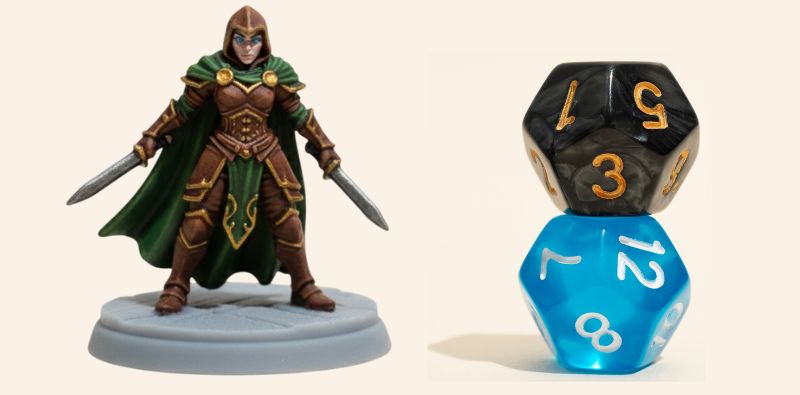
When working with a miniature, we ensure that every part, from the length of a wing to the thickness of a cable, has been reduced by this exact factor. This proportion is what guarantees the visual and dimensional fidelity of the replica.
The utility of these miniatures transcends the hobby: they are essential tools in architecture, engineering, product design, and cinema, as they allow people to visualize, study, and manipulate objects too large, expensive, or complex to be examined at full size.
In essence, the answer to what is a scale model is: a faithful representation of reality defined by a constant and universal reduction factor marked by the scale.
How do you make a model?
The method of building this type of miniature can vary enormously depending on whether one builds a commercial kit (like a Tamiya airplane) or creates a model from scratch (like an architectural building).
General steps for construction (commercial kit):
1. Preparation: Analyze the instructions, clean the workspace, and organize the parts (or sprues).
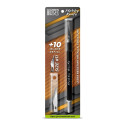
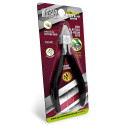
2. Cutting and cleaning: Carefully remove the parts from the plastic runners with ultra-flush cutters. It is crucial to clean the "flash" (excess plastic) with a sharp craft knife and fine-grit sandpaper to ensure a perfect fit.
3. Assembly (sub-assemblies): Assemble the parts in sections (cockpit, wings, landing gear) using specific plastic glue.
4. Filling and sanding: Apply putty (like Milliput or Green Putty) to the joints where gaps or seam lines remain. Once dry, sand until the surface is completely smooth and uniform.
5. Painting and finishing: Apply a primer (base coat) to prepare the surface. Then, apply the base color coats and the details.
6. Decals: Apply the waterslide decals (logos, numbers), if necessary, with the aid of decal softener and decal fixer.
7. Weathering: Apply techniques such as washes, filters, and dry-brushing to simulate the wear, rust, or dirt from real-world use.
8. Sealing: Apply a layer of protective varnish (matte, satin, or gloss) to seal the paint, decals, and weathering.
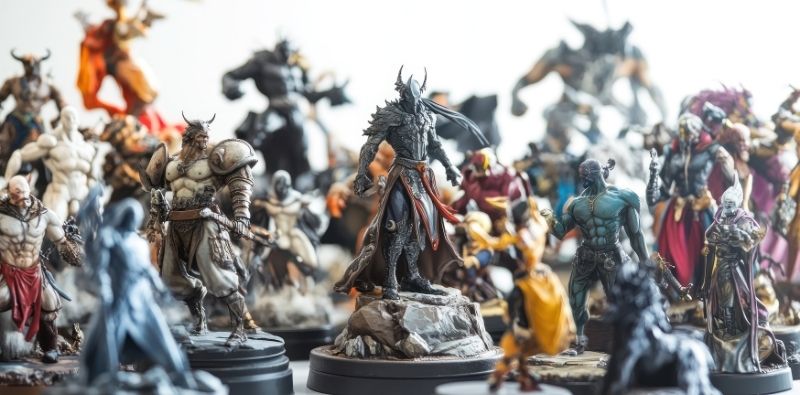
The secret to successfully creating what is a scale model lies in the meticulous process of each step to obtain a realistic result.
How to scale your model. Calculating the reduction
If you are building a miniature from scratch (a "scratch-built" model), the question "What is a scale model?" translates to "How do I calculate the new dimensions?"
Scaling a model correctly is a simple exercise in division:
1. Define the measure: Choose the scale you are going to use (example: 1:50). This means the real object is 50 times larger than your model.
2. Measure the prototype: Obtain the measurements of the real object (the prototype).
3. Apply the Formula: To get the measurement of your miniature, simply divide the real measurement by the scale factor (SF).
Model measurement = Real measurement / SF
A classic project is to make a model of a house. To make it at 1:50 scale, you'll first need to know the real-world measurement of the house's width. If it were 1000 cm and the SF were 50, you would just apply the formula using these data: 1000 / 50 = 20 cm.
Therefore, the house in the diorama should be built with a 20-centimeter wall. The same must be done for the length of the dwelling, the windows, the stairs if any, the garden, etc.
This method ensures that every element of the diorama or model, from the thickness of a wall to the size of a door, is reduced uniformly, maintaining the visual and dimensional fidelity of the real object. This perfectly defines what a scale model is.
Why do we use scale models?
The use of it extends far beyond personal enjoyment, being critical tools in several fields:
• Architecture and design: They allow architects and their clients to visualize the spatial impact of a building, its relationship with the environment, and to evaluate the final aesthetics before starting expensive construction.
• Engineering and aeronautics: They are crucial for testing in wind tunnels, simulating the aerodynamics of airplanes or cars at high speeds without the risk or cost of a real prototype.
• History and education: Models of ships, warplanes, or historical buildings are invaluable teaching tools that allow the study of structures and machines that no longer exist or are inaccessible.
• Educational exhibition: Many museums feature miniature recreations of vehicles, buildings, objects, specific scenes, iconic animals, and people that help explain history or inform about a specific topic.
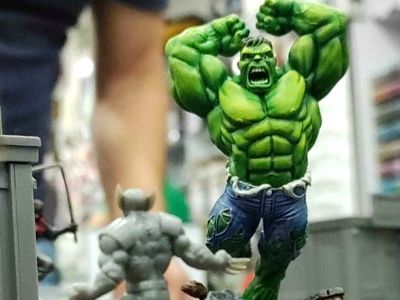
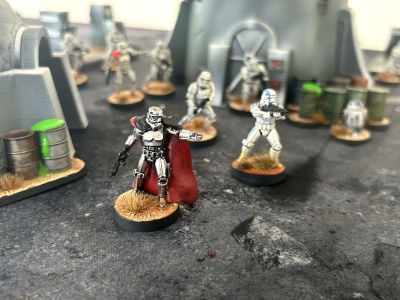
• Wargames and hobby: In the case of games like Warhammer, the models are the game pieces. Modeling becomes a form of artistic expression before the game, customizing and bringing the units to life.
For most hobbyists, however, the main motivation is the satisfaction of creation. It is a challenge that combines history, art, manual skill, and mathematical precision.
Wargaming modeling: Warhammer scale
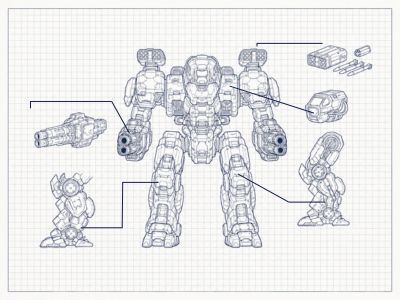
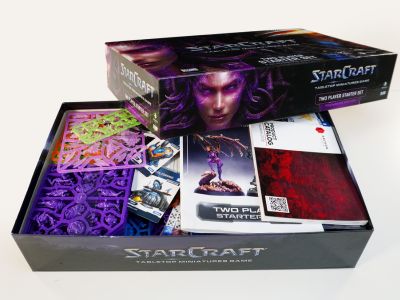
Wargames or miniature modeling, which includes famous games like Warhammer or Battletech, uses scales that are often less strict or expressed differently from traditional models (which use 1:35 or 1:48). Instead of using a ratio (1:X), a nominal measuere based on the height of a standard human figure is often used.
What scale are Warhammer figures?
The modern scale used by Games Workshop for Warhammer Age of Sigmar (Fantasy) and for most of its infantry miniatures is approximately 28 mm to 32 mm in height, measured from the feet to eye level (the usual way to measure these miniatures). Additionally, there is also a special scale known as "heroic" within the 1:48 range where the proportions of heads, hands, and weapons are exaggerated to make them more dramatic by employing this extra bulk.
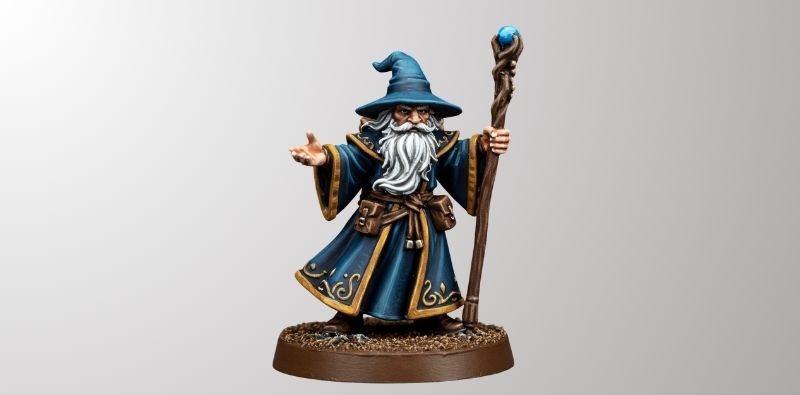
It is difficult to translate directly into a ratio (1:X), as it varies depending on the posture and faction (Orks are larger than humans). However, in terms of "scale models," the size of 28 mm to 32 mm approximates a range of 1:46 to 1:56 if a human is assumed to be 1.8 meters (5 feet 11 inches) tall.
What scale are Warhammer 40k models and figures?
Warhammer 40,000 infantry miniatures use the same measure of 28 mm to 32 mm. This is the standard measure for infantry units (Space Marines, Imperial Guards, etc.).
However, larger models (vehicles, tanks, "Titans") do not always maintain that scale strictly. They are often slightly adjusted to make the miniatures playable on the tabletop. This is the case with tanks (Land Raider, Rhino), designed to look impressive next to the miniatures, maintaining a playable scale of 28 mm ≈ 1:56.
For a hobbyist asking what is a scale model in this context, the answer is that it is a model based on playability (tabletop game), where the scale is adjusted by aesthetics and the gaming experience rather than strict dimensional fidelity to a real prototype.
Railway modeling: The world of train scales
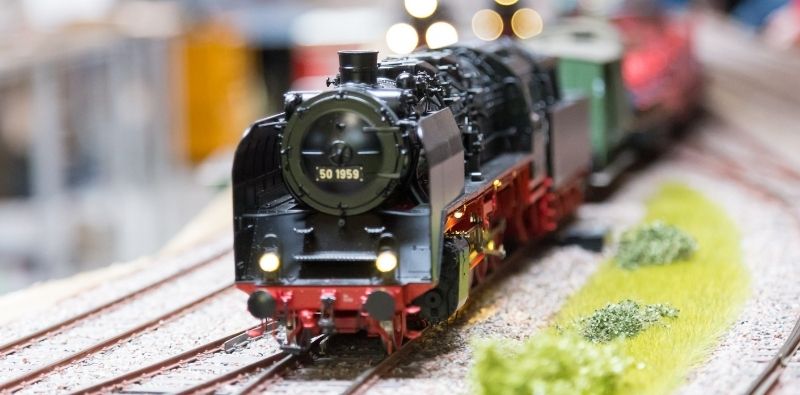
Railway modeling is one of the most rigorous fields in the use of scale. Compatibility between manufacturers is vital, which has led to the global standardization of scales defined by NEM (Normes Européennes de Modélisme) and NMRA (National Model Railroad Association).
What are the different scales for model trains?
Train scales are famous for having letter names and a focus on the track gauge, the distance between the rails. The most popular are:
| Scales (Letter) | Ratio (Scales) | Standard Track Gauge | Note |
|---|---|---|---|
| 1 | 1:32 | 45 mm | Popular for outdoor or garden modeling (Garden Railway). No Spanish material exists. |
| 0 (Zero) | Between 1:43.5 and 1:48 depending on the country | 32 mm | It was one of the most popular scales at the beginning of the 20th century. No Spanish material exists. |
| 00 | 1:76 | 16.5 mm | The most popular in the UK. Uses the same track as the H0, although the miniature ratio (1:76) is different. No Spanish material exists. |
| H0 | 1:87 | 16.5 mm | The most popular and widespread in the world. |
| N | 1:160 - except in Japan (1:150) and the UK (1:148) | 9 mm | Very popular for its balance between detail and space saving. |
| TT | 1:120 | 12 mm | A good compromise between H0 and N, popular in Eastern Europe. |
| Z | 1:220 | 6.5 mm | One of the smallest scales. |
| G | 1:22.5 | 45 mm | Large one. For the garden, for outdoor use. |
What is the smallest scale for model trains?
Currently, the smallest commercially available for model trains is Z (1:220), although there is the even smaller T (1:450), with a track gauge of only 3 mm, which is an ultra-specialized niche market.
The Z (1:220) is already incredibly small, with a locomotive that can fit in the palm of your hand.
What is the largest?
The largest for trains that is still considered scale modeling (not full-size replicas) is G Scale (1:22.5).
This it is mainly used for gardens or outdoors due to its robust size. A G locomotive can measure more than a meter in length, allowing it to withstand the weather and offering an exceptional level of detail.
How to build a miniature of a building?
Building an architectural miniature is one of the most purist uses of modeling, as it requires almost perfect geometric precision.
1. Plans and measurement: Work directly from CAD plans or technical drawings of the building.
2. Structural materials: Use easily cut and stable materials, such as foam board, expanded PVC, balsa wood, or acrylic, cut with a laser or manually with precision cutters.
3. Layered cutting: Walls and structures are often cut in layers (base layer, window layer, detail layer) to give three-dimensional depth.
4. Assembly: Assembly must be precise, using strong adhesives (cyanoacrylate, contact glue) and ensuring all angles are 90º to prevent distortion.
5. Surface finish: Textures (textured papers, small stones, sand) are used to simulate bricks, roofs, or pavement. The goal is to maintain the illusion of scale when observed.
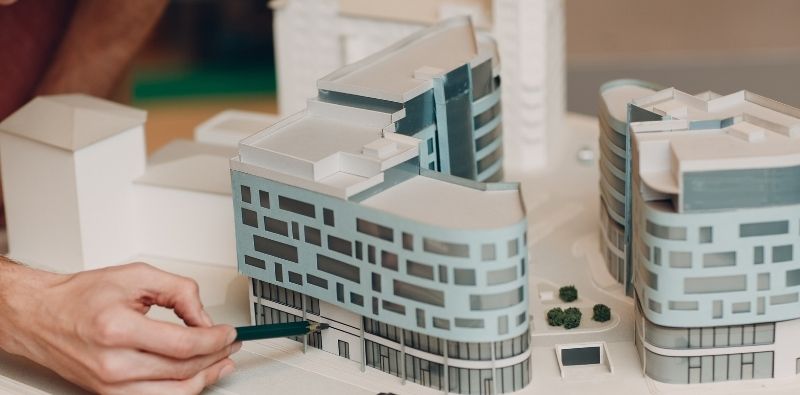
Architectural models usually prioritize conceptual clarity over weathering, aiming for a clean look that shows the design intent.
How to build a scale model of a car?
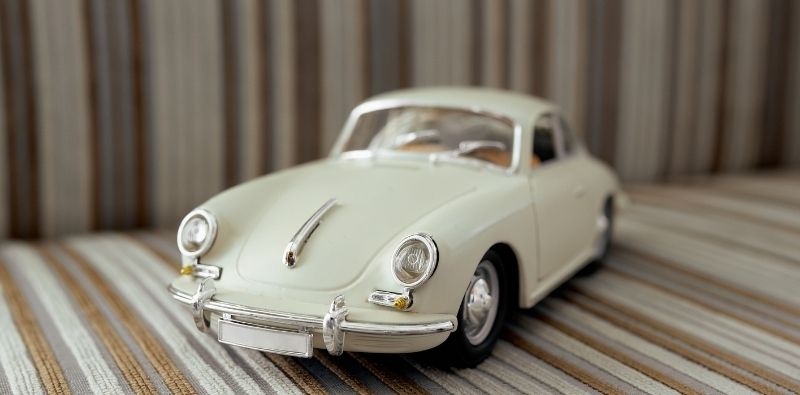
Car modeling is one of the most popular subgenres of plastic modeling. Most kits come in measueres like 1:24 (the standard) and 1:12 (for extreme detail, especially of engines). Although to build a miniature of a car, the best option is to follow the manufacturer's instructions:
1. Engine and chassis detail: The process often begins with the assembly of the engine and chassis, paying special attention to the wiring and piping, which are often added with aftermarket parts.
2. Body shell preparation: The most critical part. The body shell requires exhaustive cleaning of mold lines and fine polishing before painting.
3. High-quality painting: Special automotive paints and airbrushes are used to achieve a high-gloss finish ("mirror effect"). Multiple layers of color and clear varnish are often applied.
4. Polishing: Once the paint is dry, it is polished with extremely fine grit pastes to remove imperfections and achieve the showroom look.
5. Final assembly: Detailed parts (interior, tires, windows, photo-etch) are mounted on the polished body shell.
The goal is to replicate the immaculate appearance of a vehicle fresh out of the factory or an exhibition contest, prioritizing the glossy finish over the realism of wear.
After this exhaustive breakdown explaining what is a scale model and its main branches, it can be understood that it is more than just a toy or figure; it is a form of art and engineering.
It doesn't matter if your passion is an N measure train, a World War II tank, or a 28 mm Space Marine; the satisfaction of taking reality and reducing it to a perfect fraction is the essence of this art.
Share this content