

Green Stuff World wet palettes: review
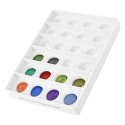
One of the main obstacles when painting miniatures or scale models in general is how quickly acrylic paints dry, especially in warm environments or during the summer months. The market offers tools designed to solve this problem, with the aim of keeping paint moist during long sessions or even for months. We are talking about the wet palette, an airtight box that contains a sponge and special paper, which slows down the natural drying process of acrylics through the controlled transfer of water by capillary action. This allows you to make the most of color mixes and carry out techniques such as glazes or gradients without wasting time or product.
Below, we analyze the different GSW wet palettes and how they work to help you make your purchasing decision and so that you know exactly what they include and how to use them if this is your first palette.
Types of palettes and how they differ
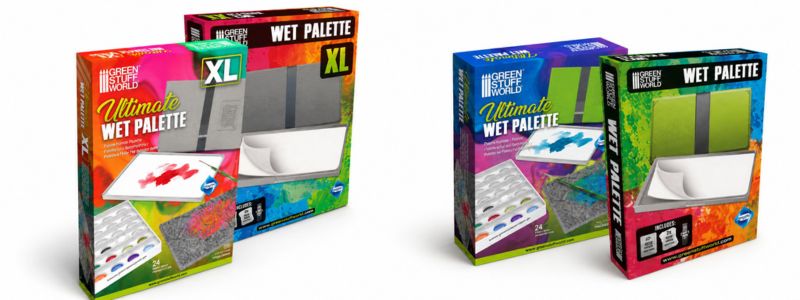
Green Stuff World has designed several versions of this product to adapt to the dimensions of the work area and the needs of each user, while maintaining the same highly durable impact polystyrene outer material and the characteristic airtight seal in all of them, secured by an elastic band that wraps around the box. The fundamental difference between the variations lies in the size of the usable hydration surface and in the accessories included in the special editions.
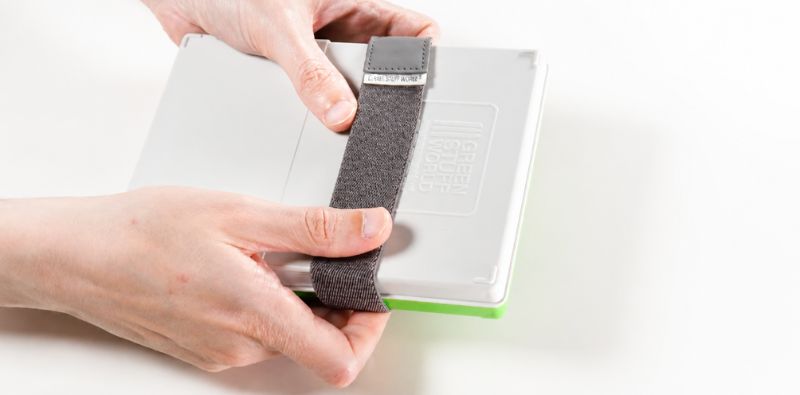
When purchasing a GSW wet palette, there are four main options in the brand’s catalog:
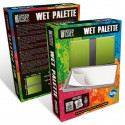
• Standard version. It has a usable work area of 182 x 132 mm. It is the most popular option because it is compact, easy to transport, and very simple to store on any desk after painting.
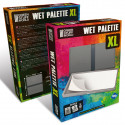
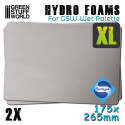
• XL version. It significantly expands the surface area to 190 x 280 mm, designed for longer sessions, for managing huge color gradients, or for painting entire armies in series without running out of workspace.
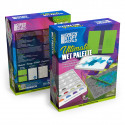
• Ultimate edition. It keeps the base size of the standard version, but adds two extra 130 x 180 mm trays inside: an injected plastic palette designed for the drybrush technique, the Drybrush Texture Palette, and another one with flexible silicone wells, the Push-Pop Mixing Palette, made for clean mixing.
• Ultimate XL edition. It offers the large-size box, the XL version, together with the two exclusive additional trays mentioned above, one for drybrush textures and one for mixing.
How it works: semi-permeable paper and hydrophilic sponge
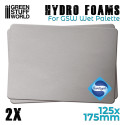
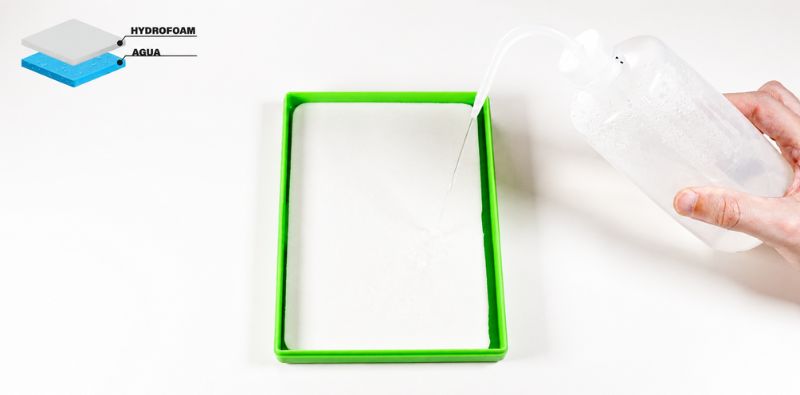
To understand how the GSW wet palette operates while in use, you need to look at its two main internal components: the hydropaper and the hydrosponge. The initial preparation consists of placing the sponge in the lower tray of the plastic box and adding water, preferably distilled, until the foam is completely soaked. It is advisable to help it slightly with your fingertips to ensure even absorption throughout the material, without allowing the water to overflow or form puddles.
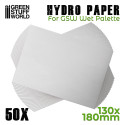
Once the foam base has been properly hydrated, the semi-permeable parchment paper sheet is placed on top. This sheet has a highly resistant weight, a semi-translucent finish, and corners cut at right angles to fit exactly into the measurements of the tray. This specialized paper allows water to rise toward the paint without letting acrylic pigments flow downward, remaining very stable in constant humidity and without breaking down under the repeated friction of miniature brush bristles.
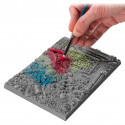
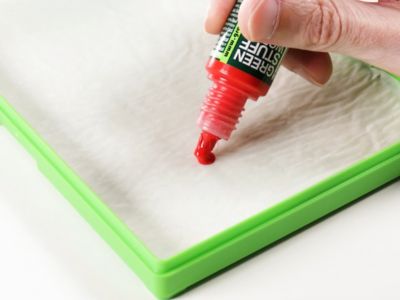
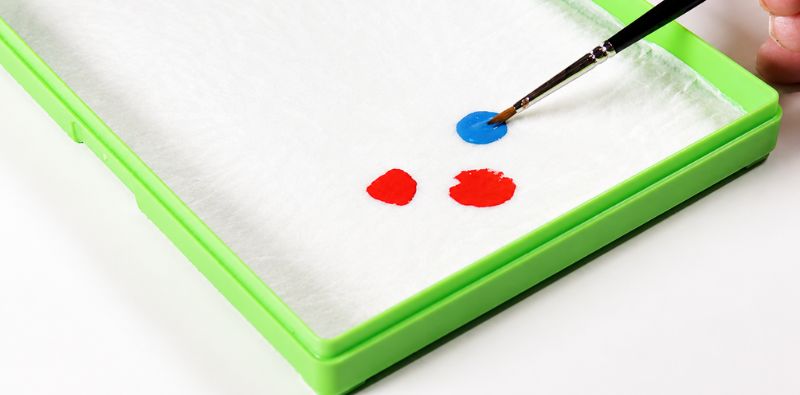
When a drop of paint is placed directly on the paper of the Green Stuff World wet palette, it can maintain optimal consistency for 4 to 6 months. In fact, the system itself provides a constant level of hydration by capillary action that can even dilute the acrylic very slightly. Although at first this may seem like an alteration of the paint, in practice it significantly helps prevent the very common beginner mistake of applying layers of paint that are too concentrated and end up hiding the fine details of the sculpts.
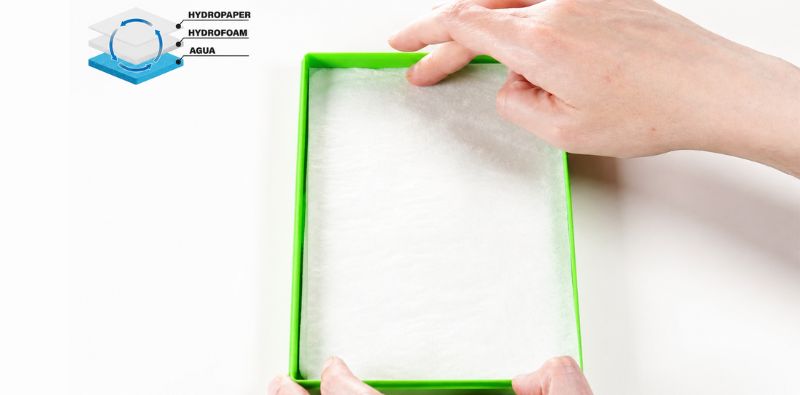
Throughout a continuous painting session, it is not necessary to refill the water supply, not even if the cut corners of the paper begin to curve slightly upward along the sides. If the modeler needs to adjust the consistency of their colors to create glazes and fine transparencies, they can always continue freely adding extra drops of distilled water or a specific acrylic medium directly onto the mixes resting on the surface of the tool.
Limitations to keep in mind
When frequently using a GSW wet palette, certain situations may arise that are due to simple and logical physical principles and are easy to solve. One of the most commonly mentioned is the appearance of abundant water condensation on the inside of the lid after leaving it hermetically closed for a long time. This invariably happens because when a container with liquid is sealed, some air always remains trapped inside, and due to the inevitable changes in ambient temperature, where warm air comes into contact with cold areas, droplets form. The solution is as simple as draining the excess condensation toward a side corner of the sponge when opening the box, or directly storing the closed container inside a cool place such as the refrigerator to prevent temperature changes inside it.
On the other hand, the paper is cut to the exact size of the inner hydrophilic tray, which can cause the edges to curl slightly upward when it begins to dry. This can look visually unattractive when it rubs against the plastic side walls, but far from ruining a paint job, the user can continue painting perfectly using the large central hydration surface. This detail can also be solved definitively by cutting just a few millimeters from the outline of the paper with common scissors before beginning to moisten it, although this should not happen if it is placed and moistened correctly.
Finally, the mechanism has an undeniable compatibility limitation when working: it is not suitable for use with enamels, oils, contrast-style fluid paints, or dipping inks. Additionally, direct humidity makes it a useless environment for unloading the drybrush directly onto the wet paper. This is an unavoidable reality of material chemistry, since the GSW wet palette is formulated solely and exclusively for traditional acrylic colors, and the excess water would dissolve the properties of the other paints. This explains the existence of the dry accessory palettes included in the Ultimate variants.
Maintenance and prolonging the anti-mold treatment
The long-term maintenance of this tool is strongly linked to the condition of its hydrophilic sponge, which stands out for its high thickness, manufactured explicitly so that it does not develop structural wrinkles when it dries completely. The most noteworthy feature of these white foams is that they include a very advanced antibacterial biological treatment called Sanitized®, whose preventive purpose is to actively repel the proliferation of mold, fungi, and biological bad odors.
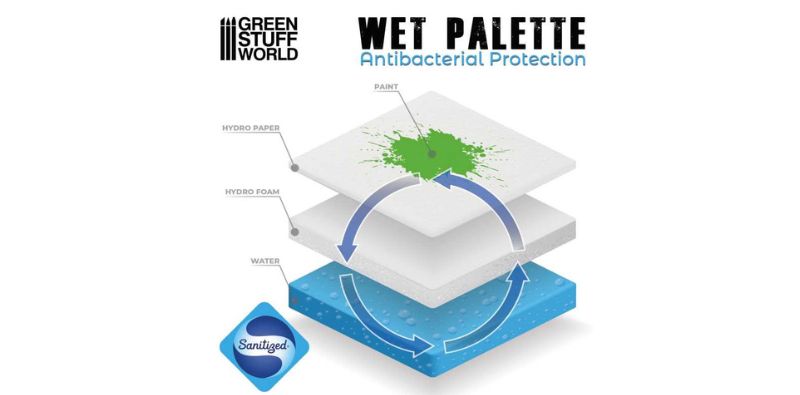
Despite this promising biological barrier, it should be noted that the antifungal effect integrated into the GSW wet palette is not infinite. Its protective chemical effectiveness inevitably decreases over the months and with the multiple water changes the material undergoes, and above all, with recurring exposure to high summer temperatures, providing useful protection for between 6 and 12 months.
To extend this margin of resistance against microorganisms, hobbyists often adopt conventional tricks proven by the community and extremely inexpensive to apply at home. Placing a small, completely clean copper coin, or a filament of wire made of this metal underneath the treated foam physically helps delay the growth of bacteria and unwanted guests, maximizing the usage time before needing to order new official replacements.
Specifically regarding the use of paints that include metallic flakes to shine, handling them in this format requires considerably more care and caution for general maintenance. If this metallic paint retains excessive dilution in water, the metallic mica can seep through, causing permanent and deep stains in the sponge that could even accidentally contaminate new tones if the user is careless.
Hygiene after completing an extensive scale modeling project does not require abrasive or hard-to-find liquids. To recondition and temporarily disinfect a GSW wet palette, the most direct way to proceed is to wash all the casings and foams by hand under the sink using simple lukewarm running water and a little mild soap, wringing them out without breaking them. If any paint has been spilled and has hardened on any of the parts of the polystyrene container, it can be removed using any scraping tool.
Share this content