


Gundam Assemble: The New Gundam Miniatures Game
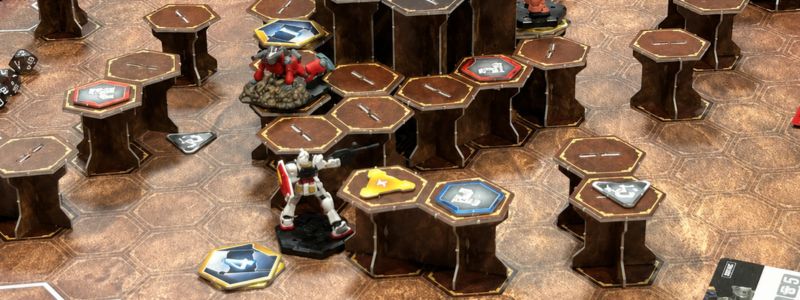
For decades, the worlds of scale modeling and tactical wargaming have seemed like two separate spaces. You either spent weeks perfecting a Master Grade model kit for your display cabinet, or you settled for pre-painted, warped resin miniatures just to get your fix of giant robots on the gaming table. Bandai has finally broken that barrier with its latest major release. Gundam Assemble bridges the gap between traditional model kit assembly and deep, hex-based tactical combat. Designed to appeal equally to veteran wargamers, dedicated hobbyists, and mecha collectors, this new system offers a highly customizable tabletop gaming experience.
The main appeal here is the ability to build, paint, and field personalized units with a fast snap-fit assembly system, completely avoiding the multi-day work required by a traditional large-scale model kit. Whether you are a competitive skirmish player looking for a new meta to master, or a miniature painter searching for a fresh canvas, the Gundam Assemble tabletop game offers a fully developed 3v3 combat system that will pull you in.
A Wargaming Experience on the Gundam Assemble Hex Grid
Bandai has made the decision to move away from its larger 1/144 High Grade (HG) and 1/100 Master Grade (MG) formats to introduce a line of true tabletop miniatures of approximately 50 mm, designed specifically for this game. These are not pre-assembled PVC toys with warped weapons; they are Gunpla-style miniatures around 5 cm tall that require assembly and painting, designed specifically for the tabletop game. They demand the same basic hobby skills as any premium wargame, offering factory-injected plastic with no 3D-printing layer lines to worry about.
Within the broader miniature ecosystem, this product line fills a very specific gap. Although collectible figures and casual Gashapon lines already exist, Gundam Assemble has been created for competitive play and full customization. Bandai highlights the possibility of assembling different parts and painting the miniatures to your own taste, although it is still worth waiting to see exactly how far the system will allow advanced conversions or kitbashing.
The Hobby Desk: Sprues, Hard Plastic, and Clean Assembly
The miniatures, around 50 mm tall, are molded in hard plastic. Since these are smaller figures than a traditional Gunpla kit, cutting, cleaning, and assembling a unit such as the RX-78-2 Gundam or Char’s Zaku II should be faster and more accessible than usual.
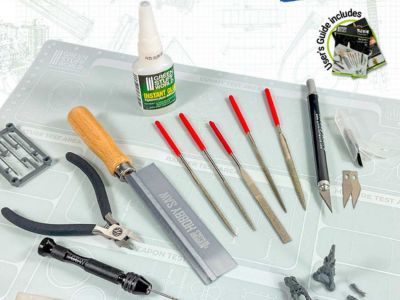
However, cleanly removing parts from thick gates without causing white stress marks requires the right tools. You should use a pair of single-blade precision nippers. Tools such as Green Stuff World hobby pliers are essential for cutting this hard plastic effortlessly, ensuring that the armor plates remain untouched. Once the parts are off the sprue, gently scrape away the remaining mold lines with a hobby knife and prepare the surface for the next step.
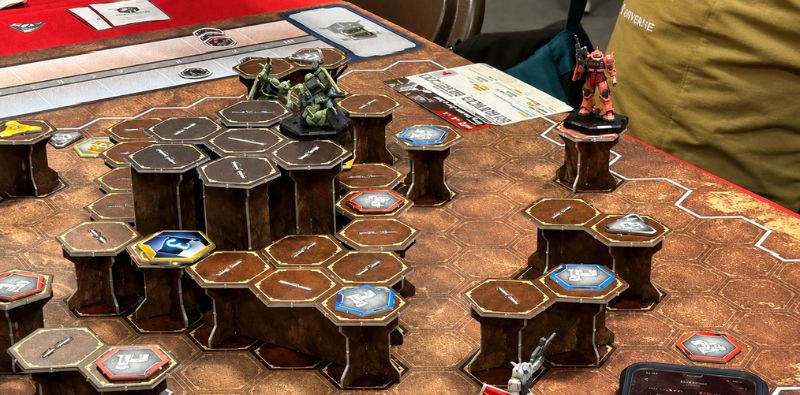
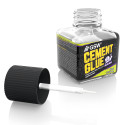
Although the kits are technically snap-fit and can be pressed together without adhesive, any experienced tabletop player knows the demands of this type of game: constantly checking Line of Sight (LoS), moving models across hexes, and rolling D10s near your miniatures can lead to accidents. To ensure maximum structural integrity and eliminate unsightly seam lines on the armor, applying a thin layer of plastic cement is recommended. Using plastic cement glue to fuse the torso, weapon joints, and hex base connections will permanently lock your dynamic poses in place.
Painting and Cinematic Bases for the Battlefield
Unlike traditional Gunpla, which relies heavily on color-separated plastic to avoid painting the figures, Gundam Assemble miniatures are supplied unpainted, offering miniature painters a blank canvas. Standing around 50 mm tall to the top of the head, they occupy a unique “mini-scale” space, slightly larger than standard 28 mm or 32 mm infantry. This scale is very forgiving, allowing panel lines and mechanical details to stand out sharply without overcrowding the gaming board.
To achieve a professional finish, it is advisable to prime the miniature, apply basecoats with acrylics, work on the details, and finish with a protective varnish. Applying paints from ranges such as GSW acrylic paints will give you the smooth, matte finish that Gunpla parts require. To truly bring the 50 mm mechanical details to life, applying a Panel Wash into the recesses provides instant depth and scale realism.
In addition, the game uses hex bases to integrate with the grid-based movement board. Instead of gluing your beautifully painted Barbatos Lupus Rex onto a flat, undecorated black hex, you can build a small cinematic diorama to elevate your entire army. Using materials such as basing textures, cork rubble, or urban debris allows you to simulate a ruined city or an asteroid surface, perfectly complementing the tactical terrain elements printed on the game board.
The Gundam Assemble Timeline System
One of the most interesting aspects of Gundam Assemble lies in its mechanics. According to the quick guide and the information shown so far, it completely abandons the “I go, you go” turn structure in favor of a highly dynamic “Timeline System.”
The game is played across two phases, and each phase consists of 10 rounds tracked on a Timeline board. When you build your squad of three Mobile Suits, each unit card indicates where on the Timeline it starts the game. Faster, more agile suits may begin on Timeline 1 or 2, allowing them to activate early, while heavy-hitting units such as the Wing Gundam Zero may not activate until Timeline 3.
When a unit activates, it can perform an Advance movement of up to 3 hexes, play a Tactics card, use Command abilities, and perform a Primary Action. Every Primary Action you take, such as Attacking, making a Dash for extra movement, or Energizing to generate resources, costs Timeline points, or TL. For example, a basic movement Dash costs 2 TL, while firing a heavy beam rifle can cost 4 TL.
If your unit is on round 2 and fires a weapon that costs 4 TL, its activation token moves along the track to round 6. You will not be able to activate that unit again until the round marker reaches 6. This creates a strong balancing mechanic and a risk-reward economy. Do you commit to a massive, devastating attack that leaves your best unit out of the fight for half a phase, or do you rely on smaller 2 TL skirmish attacks to keep your unit activating frequently, moving between hexes, and controlling objectives?
If several units end up on exactly the same Timeline round, the tokens are stacked. The unit whose token is at the bottom of the stack, meaning the player who committed to that round first, activates its unit first when the round resolves, rewarding advance planning.
D10 Rolls and Tactical Combat Resolution
When it comes to actual combat resolution, Gundam Assemble completely abandons traditional six-sided dice and uses a D10 system, meaning ten-sided dice, which allows for a wider range of results. When your Mobile Suit declares an attack, you check the weapon profile and roll a number of attack dice equal to its Strength characteristic. The baseline for scoring a successful hit is 4+. However, rolling a natural 9 or 10 triggers a Critical Hit. Critical Hits not only guarantee damage, but also activate devastating weapon-specific effects written on your unit card, such as adding extra damage or inflicting status effects so the target suffers additional damage from later attacks.
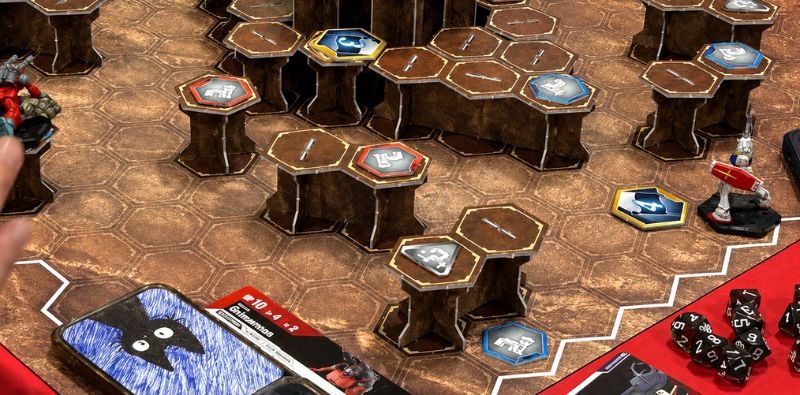
Tactical positioning on the hex grid is everything. Elevated terrain gives you a commanding line of sight and imposes a -1 accuracy penalty on enemies attempting to fire upward at your units. Conversely, if you fire from an elevated position down at an enemy below, you gain a +1 bonus to your accuracy. However, keep in mind that maneuvering into these privileged sniper nests costs additional movement points for every level of elevation you climb. Even moving through water features changes the tactical math of combat, spending additional movement for both the attacker and the defender.
Perhaps the most refreshing mechanic for veteran wargamers is the way the game handles destroyed units. In many skirmish games, losing your most expensive model early creates an unrecoverable snowball effect. Here, when a Mobile Suit’s Hit Points drop to zero, it is removed from the board and awards Victory Points, or VP, to the opponent. However, its token is pushed two rounds forward on the Timeline track, representing field repairs, which allows it to deploy and re-enter combat later.
Squad Building and the 9-Card Tactics Deck
Although standard competitive matches are tightly balanced as 3v3 skirmishes, simply bringing the heaviest mecha does not guarantee victory if your overall strategy lacks synergy. Alongside your miniature squad, you must build a personalized 9-card Tactics deck, drawing an opening hand of three cards at the beginning of the match.
These cards add a rich layer of resource management and are divided into Command, Ongoing, and Response abilities. Command cards can be played during the activation of your active unit, while Ongoing cards provide persistent bonuses. The real game-changing cards are Response cards, which act as “gotcha” mechanics and can be played during your opponent’s turn to mitigate an incoming attack, protect a vulnerable unit, or instantly counterattack.
Crucially, deckbuilding is restricted by “Trait Tags.” You cannot simply abuse the most powerful universal cards; certain high-impact Tactics cards can only be included if your squad contains Mobile Suits from specific eras or factions. This forces players to think deeply about their list building, weighing the benefits of a versatile, multi-era squad against a highly specialized faction team that unlocks devastating specific card combos.
The Gundam Assemble Release Date: Pricing and Kits
For those of us eager to prepare our hobby desks, the global Gundam Assemble release date is officially set for October 2026. Unlike many modern miniature games with high barriers to entry, Bandai is launching this system with an incredibly aggressive pricing strategy.
The main entry point is Starter Set 01, with a suggested retail price of $35. This box offers strong value for the tabletop gaming community, as it includes six highly detailed 50 mm miniatures, including the iconic RX-78-2 Gundam, Char’s Zaku II, Barbatos Lupus Rex, Wing Gundam Zero, Gundam Epyon, and Gundam Vidar, along with:
• Cards: Includes 6 unit cards, with the attributes of each mecha, 18 Tactics cards, 3 for each unit, and objective cards.
• Tokens and markers: Includes 6 unit coins for the Timeline, as well as various game tokens for marking objectives, bonuses, penalties, status effects, and damage received by units.
• Board and terrain: A map and a poster-sized Timeline (TL) sheet that function as the game board and turn-control area.
• It also includes cardboard terrain elements to represent the different elevations, levels 1 and 2, on the battlefield in three dimensions.
• Dice: All dedicated dice (D10s) needed to resolve attacks and abilities are included.
• Manual: A scenario rulebook designed to teach beginners movement, the flow of combat, and the basic rules of the game.
After the October launch, Bandai plans to support the Gundam Assemble tabletop game with steady monthly releases. Standard Expansion Packs, EX01, EX02, and so on, will introduce new mecha from iconic series such as Gundam Unicorn and Mobile Suit Gundam: The Witch from Mercury. For players interested in massive narrative campaigns, the Deluxe Sets will introduce asymmetrical scenarios and 5v5 modes, allowing players to recreate clashes such as the epic Battle of A Baoa Qu, complete with exclusive scenario boards, warships, and large rosters of up to 10 miniatures.
In this way, whether you are a veteran wargamer looking to dominate the local tournament meta or a dedicated Gunpla builder who wants a new smaller-scale canvas, this game is ready to take the tabletop gaming world by storm. Since these miniatures are molded in hard plastic, treating them correctly is the key to achieving a spectacular army.
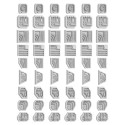
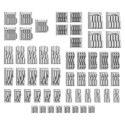
Before the October release, make sure your workstation is fully equipped. You will need a good pair of nippers to remove components cleanly. You can also use plastic cement if you want to reinforce joints or permanently fix poses, such as fusing armor plates without leaving visible seams, and a broad palette of acrylic paints to bring these iconic mecha to life. In addition, you can add details with Green Stuff World mecha detail parts. By combining tactical mastery on the hex board with top-tier modeling materials, your squad will be unstoppable.
Legal Notice
All trademarks, logos, and product names mentioned, including but not limited to Gundam, Gundam Assemble, and any other titles, are the property of their respective owners. The use of these names in this text is for informational and descriptive purposes only, with no intention of infringing intellectual property rights, copyrights, or registered trademarks.
This content is not sponsored, authorized, endorsed by, or affiliated with any of the owners of the trademarks mentioned, nor does it imply any commercial relationship with them. Any reference is made solely to facilitate the reader’s understanding within the context of informational content for miniature wargaming enthusiasts.
Furthermore, Green Stuff World is not associated with, licensed by, affiliated with, or authorized by the creators or owners of Gundam or any other trademark mentioned. The mention of Green Stuff World is provided solely as an example of a general supplier of accessories and materials for modeling and wargames.
This text is provided for informational purposes only and is not intended to replace, replicate, or compete with the official products or services of any registered trademark.
Share this content