


- Reduced price
- New product




Weights for modeling | Steel Modelling Weights | Miniature Counterweights
Steel modelling weights designed to balance miniatures, scale models, vehicles, scenery, and hobby projects by correcting weight distribution and centre of gravity. These compact steel counterweight discs measure 8 mm in diameter and 2 mm thick, making them easy to conceal underneath miniature bases or inside models where additional weight is required.
They can be used individually or combined to progressively increase the amount of ballast. Their small round format makes them especially useful when there is very little internal space available, allowing the modeller to position the weight exactly where it is needed instead of adding a single large counterweight.
They are particularly useful for wargaming miniatures with an off-centre centre of gravity, tall models, miniatures with large weapons, wings, banners or other elements that make the miniature prone to tipping over. Simply glue one or more steel discs underneath the miniature base to increase its stability without changing its external appearance.
They can also be placed inside scale aircraft, military vehicles, tanks, ships, railway models, slot cars, dioramas, scenery and 3D printed models to correct balance, increase stability or simply give a lightweight model a more substantial feel.
For permanent fixing, we recommend cyanoacrylate glue (CA/super glue) or epoxy adhesive.
Modelling weights are small pieces of dense material placed inside or underneath a model to modify its weight distribution, balance or centre of gravity.
Many scale models and miniatures are naturally unbalanced. A large weapon, extended arm, wing, banner, resin component or long overhanging section may move the centre of gravity away from the centre of the base. Adding a small amount of weight on the opposite side can compensate for this imbalance.
In other situations, the objective is simply to place additional mass as low as possible. This is useful for tall miniatures, gaming terrain, or models that are frequently handled, because a heavier lower section generally makes them less prone to accidental tipping.
| Application | Typical problem | Recommended placement |
| Wargaming miniatures | Tall or asymmetric miniature tips over easily | Under the miniature base, preferably towards the opposite side of the overhanging part |
| Large monsters and creatures | Wings, tails, or weapons move the centre of gravity | Under the base or inside the lower body |
| Busts and display figures | Lightweight base does not feel stable | Inside the plinth or display base |
| Dioramas | Tall trees, signs, walls or scenery elements are unstable | Inside or underneath the terrain base |
| Scale aircraft | Model becomes a tail sitter | Inside the nose section before final assembly |
| Tanks and AFVs | Model feels too light, or a metal barrel unbalances the turret | Inside the hull or opposite side of the turret |
| Static model ships | Lightweight hull or display model needs more mass | Low inside the hull |
| Slot cars | Weight distribution or centre of gravity requires tuning | Inside the chassis after testing different positions |
| Model railway rolling stock | Very light rolling stock may track poorly | Low and centrally positioned inside the vehicle |
| 3D printed models | Hollow prints can be extremely lightweight | Inside hollow sections before final assembly |
| Gaming scenery | Towers, street lights, signs, or vertical elements tip easily | Hidden inside the lowest available section |
Adding weight to the noses of airplanes, the hulls of armored vehicles, tank turrets, and diorama elements with moving parts may often require weight compensation as well.
✅ This product is for you if...
|
❌ This product is NOT for you if...
|
Which glue should I use?
Before permanently gluing the discs, determine where the model needs additional weight.
For a miniature that falls forward, temporarily position one or more discs towards the rear underside of the base. If it falls sideways, move the temporary weight towards the opposite side. Once the model remains stable, mark the location and glue the discs permanently.
For hollow scale models such as aircraft, tanks, or 3D prints, test the balance before closing the model permanently. It is much easier to add or reposition ballast while both halves of the model are still accessible.
For a stronger bond, make sure that both the steel disc and the surface are clean and free from dust, grease, or mould-release agents.
Tip: Use temporary Blu Tack putty first whenever balance is important. Move the weight around until the model behaves as required, then replace the temporary fixing with cyanoacrylate or epoxy.
What are the best weights for miniature bases?
Small steel discs are particularly convenient because they can be hidden underneath many miniature bases while adding mass exactly where it is needed. For a miniature with an uneven centre of gravity, the weights do not necessarily have to be placed in the exact centre of the base. Positioning them towards the lighter side can act as a counterweight and may require less total added mass than simply making the entire base heavier.
Where should I put weights on a miniature that keeps falling over?
Place the weight opposite the direction in which the miniature tends to fall and as low as possible. For example, if a miniature has a large sword extending forward and repeatedly tips towards the front, position one or more discs underneath the rear section of the base. Test the position before gluing permanently.
Can modelling weights prevent an aircraft model from tail-sitting?
Yes. Nose ballast is a common solution for scale aircraft whose landing-gear arrangement and rear-heavy construction cause the finished model to rest on its tail. Place the required amount of weight as far forward inside the nose as practical before closing the fuselage. The supplied reference tutorial demonstrates this exact application.
Can these steel weights be used in slot cars?
Yes, they can be used as slot-car ballast weights to experiment with weight distribution and centre of gravity. Where the weight is positioned can noticeably change vehicle behaviour. Slot-car builders commonly experiment with small amounts of weight at different points on the chassis rather than permanently installing a large amount immediately. Too much weight may also reduce acceleration and braking performance, so incremental testing is preferable.
If the slot car contains magnets, motors, or exposed electrical contacts, check that the steel disc does not interfere with them before permanent installation.
Can they be used for model railway trains?
Yes. Small concealed weights can be useful for model railway rolling stock, particularly lightweight wagons or cars. The NMRA notes that appropriate weighting can improve tracking and recommends positioning added mass low in the vehicle while avoiding unnecessary excess weight.
Can I stack several discs together?
Yes. Several discs can be positioned next to each other or stacked when sufficient space is available. This allows the amount and location of ballast to be adjusted progressively. For stacks or installations subject to frequent movement, epoxy adhesive is recommended for a strong permanent bond.
Content: x250

No customer reviews for the moment.
Reference: 8436554367221ES
Brand: Green Stuff World
Cyanocrylate Adhesive - GEL FORMULA
Reference: 8436554368143ES
Brand: Green Stuff World
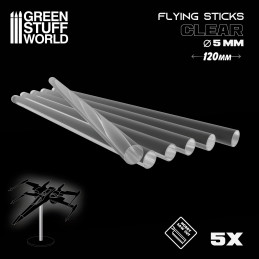
Acrylic Rods - Round 5 mm CLEAR
Reference: 8436574503210ES
Brand: Green Stuff World
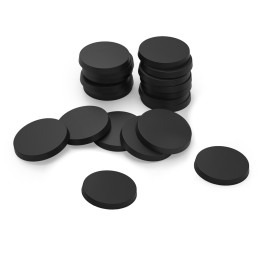
Plastic Bases - Round 32mm BLACK
Reference: 8435646516103ES
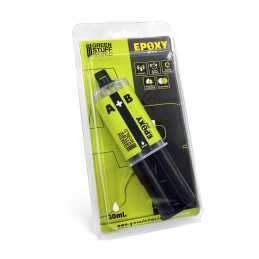
2-parts epoxy glue for Metal, Hard Plastic, Marble, Ceramic, Wood, etc.
Reference: 8436574503227ES
Brand: Green Stuff World
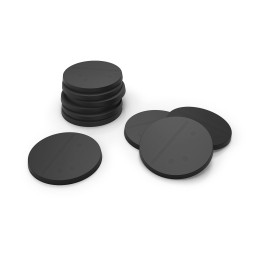
Plastic Bases - Round 40 mm BLACK
Reference: 8435646509600ES
Brand: Green Stuff World
Plastic Bases - Round 28.5mm BLACK
Reference: 8436574503272ES
Brand: Green Stuff World
20x Plastic Bases - Round Lip 40 mm BLACK
Reference: 8436574503234ES
Brand: Green Stuff World
Plastic Bases - Round 50 mm BLACK
Reference: 8435646508276ES
Brand: Green Stuff World
Plastic Bases
Reference: 8436574503210ES
Brand: Green Stuff World
Plastic Bases - Round 32mm BLACK
Reference: 8435646504018ES
Brand: Green Stuff World
Plastic Bases
Reference: 8435646504100ES
Brand: Green Stuff World
Plastic Bases
Reference: 8435646508269ES
Brand: Green Stuff World
Plastic Bases
Reference: 8435646509617ES
Brand: Green Stuff World
Plastic Bases
Reference: 8436574503241ES
Brand: Green Stuff World
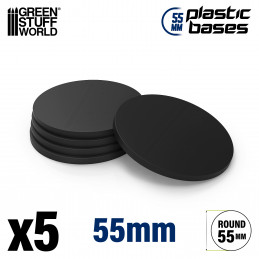
Plastic Bases - Round 55 mm BLACK
Reference: 8435646504117ES
Brand: Green Stuff World
Plastic Bases
Reference: 8436574503289ES
Brand: Green Stuff World
20x Plastic Bases - Round Lip 50 mm BLACK
Reference: 8435646504001ES
Brand: Green Stuff World
Plastic Bases
Reference: 8435646507743ES
Brand: Green Stuff World
Plastic Bases - Round 60 mm BLACK
Reference: 8436574503265ES
Brand: Green Stuff World
20x Plastic Bases - Round Lip 30 mm BLACK
Weights for modeling | Steel Modelling Weights | Miniature Counterweights