

Gundam and Gunpla: Origins, Scales and a Guide to Model Kits
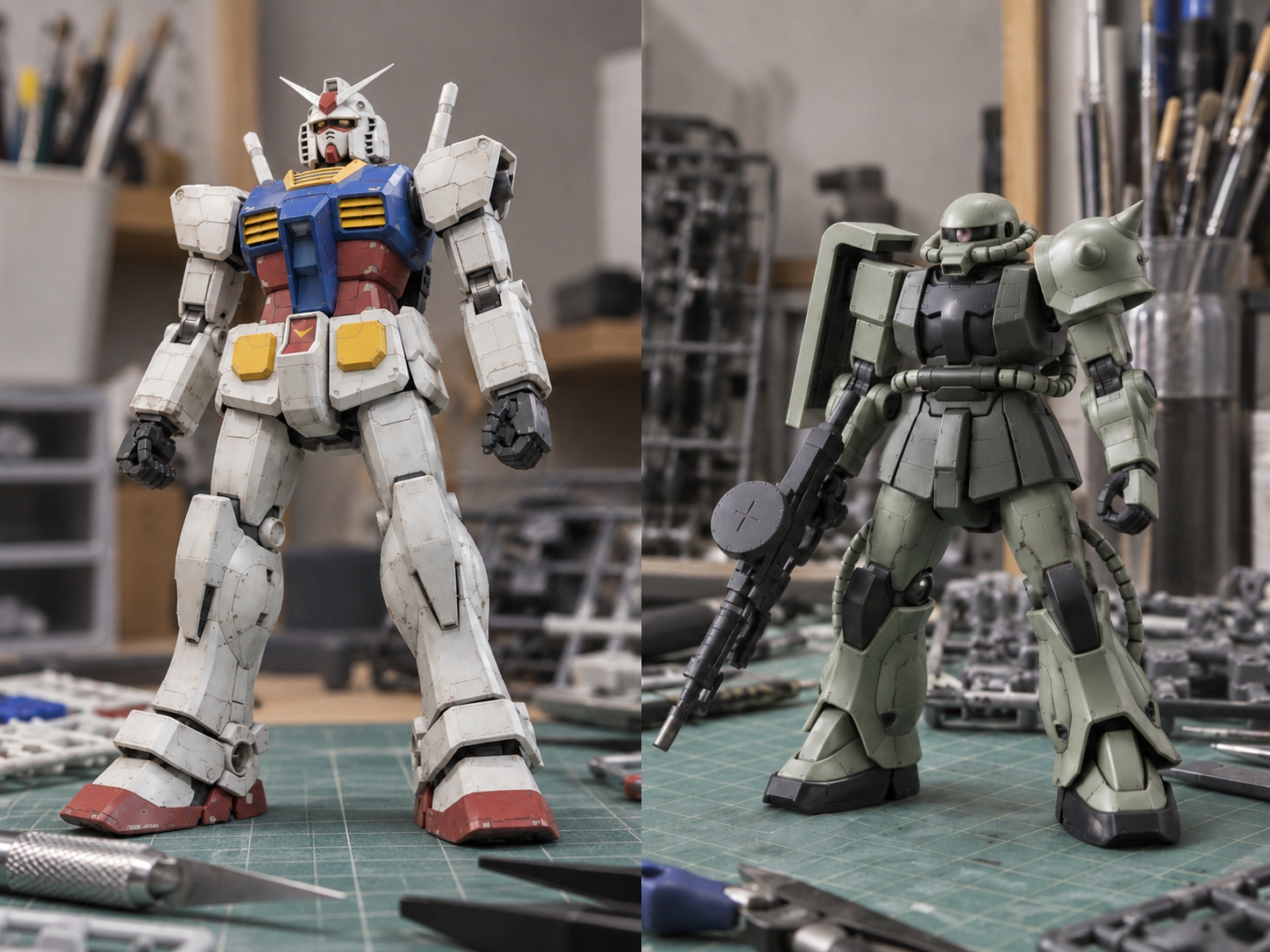
Gundam is the entertainment franchise; Gunpla is its plastic model hobby and product range. The first name covers fictional worlds, animated stories, characters, and merchandise. The second identifies the assembly kits associated with those worlds, rather than a separate franchise. A television episode, a video game and a finished collectible figure belong to the wider brand, but they are not interchangeable with a plastic construction kit.
For newcomers, the practical distinction is simple: decide whether you want to watch a story, collect a finished object, or build a model. This guide concentrates on that third activity.
What is a Gundam?
Within the fiction, a Gundam is a particular kind of mobile suit: generally a piloted humanoid machine, with its precise definition changing between settings. Not every robot in these stories carries that designation. Mobile suit is the broader category, while mecha describes fictional robots and machines more generally.
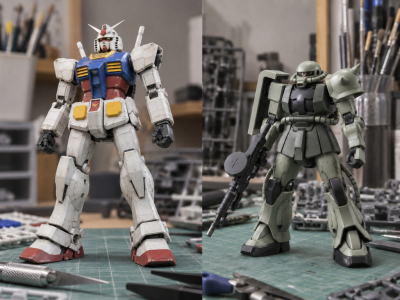
In the original story, Amuro Ray pilots the RX-78-2, fighting for the Earth Federation. His famous rival, Char Aznable, initially serves the Principality of Zeon and pilots a distinctive red Zaku II. Zaku is therefore a machine family, not the name of a villain. Characters, pilots and equipment should not be confused: opposing factions also contain people with differing motivations.
What is Gunpla?
The name combines Gundam and plastic model. A typical modern kit contains moulded plastic parts attached to frames called runners, together with illustrated assembly instructions. Builders remove the parts and join them to construct an articulated miniature. Many releases use coloured plastic and snap-fit connections, allowing an attractive basic finish without full painting or glue. Always check the individual instructions, particularly for older products.
The hobby can stop at straightforward assembly or extend into custom painting, detailing and scenic displays. Neither route requires watching every animated production first.
Where did the franchise and its model kits originate?
The original Mobile Suit Gundam television series premiered in Japan on 7 April 1979. Created by Yoshiyuki Tomino with Sunrise, it helped establish an approach to robot animation centred on military machinery, human conflict and the consequences of war. Its machines were equipment operated by people, rather than simply invincible mechanical superheroes. Wikipedia
Bandai launched the plastic model range in July 1980. Manufacturing subsequently developed through multicolour moulding and snap-fit construction, making assembly increasingly accessible. Later grade systems gave builders different combinations of size, mechanical detail and complexity. The arrival of High Grade in 1990, Master Grade in 1995, Perfect Grade in 1998 and Real Grade in 2010 illustrates that progression.
Today, understanding those labels is more useful when choosing a kit than assuming every box contains the same kind of building experience.
What are the main model scales?
Scale describes size; grade describes a product line and its design approach. Neither should be treated as a complete difficulty rating. Two boxes can share a scale while offering substantially different construction, articulation, and detail.
A ratio of 1/144 means that one unit on the miniature represents 144 units on the fictional full-sized machine. Divide the original height by the denominator to estimate the model’s height. Using an 18-metre machine gives these reference measurements:
| Scale | Common associated ranges | Calculated height for an 18-metre machine |
|---|---|---|
| 1/144 | Entry Grade, High Grade, Real Grade | 12.5 cm |
| 1/100 | Master Grade, Full Mechanics, RE/100 | 18 cm |
| 1/60 | Perfect Grade, PG Unleashed | 30 cm |
| 1/48 | Mega Size | 37.5 cm |
| Non-scale | SD families, including MGSD | Determined by stylised proportions |
These are scale calculations, not guaranteed product dimensions. Head height, antennae, backpacks, poses and display stands can change the space required. The official RG RX-78-2 Ver.2.0 provides a useful real example: its 18-metre subject becomes a model approximately 125 millimetres tall.
1/144: Compact models with very different building experiences
This scale brings together three important approaches. Entry Grade, or EG, is designed as an accessible introduction. Subjects include the original RX-78-2, Strike, and other leading machines. For a first project, an uncomplicated design lets you concentrate on reading diagrams, identifying parts, and making clean connections.
High Grade, or HG, offers wide subject variety. Besides lead machines, the range includes supporting units, enemy designs, and equipment from different stories. This makes it particularly useful for planning a squad, recreating a confrontation or collecting several designs without requiring a large cabinet. Contemporary releases are commonly 1/144, but the label has also appeared on other scales: read the ratio rather than relying on the initials alone.
Real Grade, or RG, pursues a more mechanically detailed interpretation at the same compact scale. The RX-78-2 Ver.2.0 demonstrates the approach with an intricate internal structure, layered armour and carefully engineered movement. Small size therefore does not mean simple construction. Choose this route when fine mechanical assembly is part of the attraction, rather than merely wanting a smaller finished object.
For painting, consider restrained contrast and small weathering marks. At this ratio, a one-millimetre scratch represents 144 millimetres on the imagined machine. Large paint chips can work as a deliberate artistic effect, but tiny marks better support the illusion of a towering vehicle.
1/100: Larger surfaces and a strong display presence
Master Grade, or MG, is closely associated with 1/100. Many kits feature detailed internal structures, articulated mechanisms and armour built around a supporting frame. However, features vary with the specific release and its engineering generation. Never assume that every box includes opening panels, individually moving fingers or identical joint arrangements.
From a painting perspective, the extra surface area offers room to explore colour modulation, warning markings and subtle differences between adjacent armour panels. A builder who enjoys finishing work may appreciate that space even without seeking the most complicated assembly.
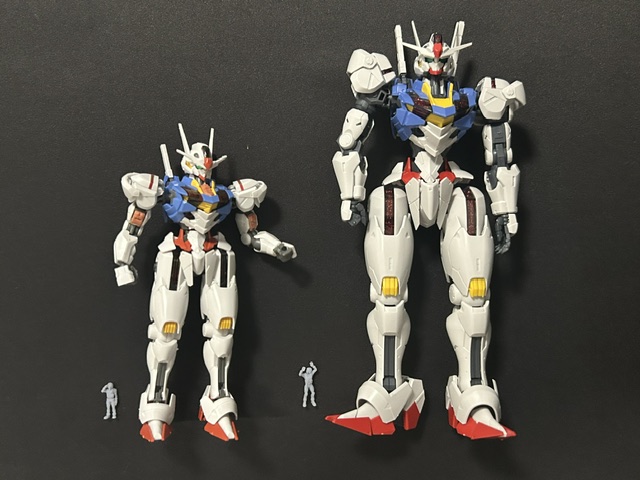
Full Mechanics is another important 1/100 range. The Aerial release from The Witch from Mercury is a clear example of why scale and grade must be read separately: it is a 1/100 model without being an MG. RE/100 is another label encountered at this size. Compare individual construction features rather than treating all three names as synonyms.
For a coherent display, start with the same ratio, then check the subjects’ fictional dimensions. Two 1/100 machines need not stand equally tall. Likewise, an unusually large 1/144 subject can exceed a smaller 1/100 one.
1/60: Perfect Grade and ambitious centrepieces
Perfect Grade, or PG, brings the main range to 1/60, while PG Unleashed offers a further interpretation of premium construction. These are substantial projects intended to showcase engineering and presentation. Exact mechanisms, lighting provisions, and accessories depend on the product; illumination should never be assumed to be included merely because a kit carries a premium label.
At this size, plan the display before beginning assembly. Measure the intended pose, not just the upright body. A rifle extended sideways, an open backpack, or a raised support arm can determine whether the finished piece fits.
Larger panels also reward deliberate finishing choices. A restrained palette, consistent metallic treatment, and carefully positioned markings may produce a more convincing result than applying every available weathering effect.
1/48 and specialist scales: Size is not a grade
Mega Size models use 1/48 for an oversized presentation. Their larger dimensions do not automatically mean more intricate engineering than a smaller premium kit. Decide whether your priority is visual impact, detailed construction, or a broad canvas for painting.
Specialist releases also exist outside the familiar ratios. Consequently, accessories should be selected for the exact product rather than for the franchise name alone. A scenic vehicle, replacement hand or mechanical platform that suits one ratio can look conspicuously wrong beside another.
SD and MGSD: Stylised proportions without a conventional scale
SD means Super Deformed. These designs use enlarged heads and shortened bodies rather than maintaining realistic proportions. They should not be described as ordinary 1/144 models simply because they occupy a similar amount of shelf space.
Nor does the style guarantee a basic build. MGSD combines compressed proportions with sophisticated mechanical construction. The Freedom release, for example, includes an internal frame and extensive articulation. Its MG lettering does not turn it into a conventional 1/100 miniature.
Choose this format for its character and silhouette. When planning a base, aim for a visually coherent composition instead of forcing every surrounding object into a mathematical ratio that the main subject does not follow.
Do scenery and accessories need to match the scale?
For dioramas, use human figures and familiar objects as size references. A person represented as 1.8 metres tall becomes 12.5 millimetres at 1/144, 18 millimetres at 1/100 and 30 millimetres at 1/60. Doors, ladders and railings should follow the same logic.
Plan these elements before buying scenery. A giant machine can look unexpectedly small beside an oversized doorway, even when the painting is excellent. Abstract display bases allow freedom, while maintenance bays benefit from consistent proportions. Check mounting connections separately: matching scale does not guarantee mechanical compatibility.
What products and story settings can collectors explore?
Different stories, different mechanical designs
The Universal Century setting includes the original conflict and machines such as the RX-78-2 and Zaku II. Wing introduces a separate setting and designs associated with pilots, including Heero Yuy. SEED features Kira Yamato and machines such as Strike and Freedom. These are branches of the same wider franchise, not different meanings of the word Gunpla.
Other examples include Barbatos from Iron-Blooded Orphans and Aerial from The Witch from Mercury. The latter story centres on Suletta Mercury and has inspired both assembly kits and finished figures. Product coverage varies: finding a design in one range does not establish that it exists in every scale or grade.
Assembly kits, figures and supporting accessories
Bandai model kits are a broader expression than this particular hobby, because the manufacturer also produces models of other properties. Within this franchise, distinguish boxes requiring assembly from finished collectible ranges such as The Robot Spirits and Metal Build. Their dimensions should be checked individually rather than inferred from plastic kit grades.)
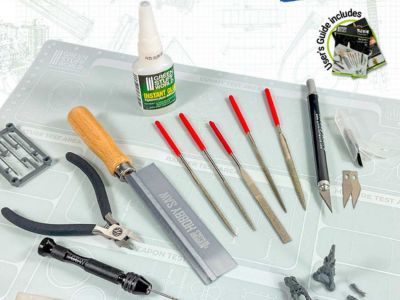
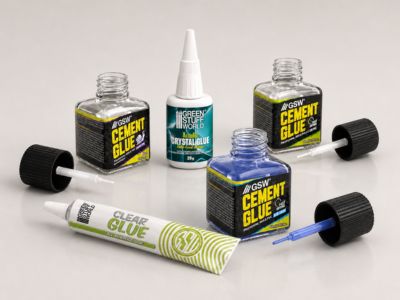
For building projects, Green Stuff World supplies general modelling materials such as cutting tools, abrasives, brushes, paints and detailing accessories. Match the tool to the operation: clean part preparation, controlled paint application, or finishing a display base.
Searches such as model Gundam or Gundam Gunpla kit can be useful starting points, but the actual listing should identify the subject, manufacturer, grade, scale, and contents. The broader phrase mecha kit can also lead to unrelated robot ranges. Check whether photographs show optional stands, painted examples, or accessories sold separately.
How many Gundam series are there?
There are dozens of animated productions, but an exact count depends on what series includes. Television programmes, films, direct-to-video stories, web animation, compilation editions and short spin-offs should not all be counted as identical entries. Counting seasons separately creates another different total.
The useful distinction for a newcomer is between continuing stories within one setting and alternative settings that offer their own starting points. A release catalogue helps establish what exists; a viewing guide helps establish an appropriate order. Neither requires treating every film edit or promotional short as a separate television series.
How many Gundam suits are there?
There are hundreds of mobile suit designs, but no single total answers every interpretation. As a documented reference, the official launch announcement for SD Gundam G Generation Eternal described more than 500 mobile suits from 70 works in April 2025. That is a game roster, not a definitive census of the entire franchise.
A meaningful count must decide whether to include prototypes, equipment changes, customised versions, and designs appearing only in print or games. It must also distinguish mobile suits generally from machines specifically designated as Gundams. Finally, model kit releases are not equivalent to unique designs: one subject can have several scales and editions.
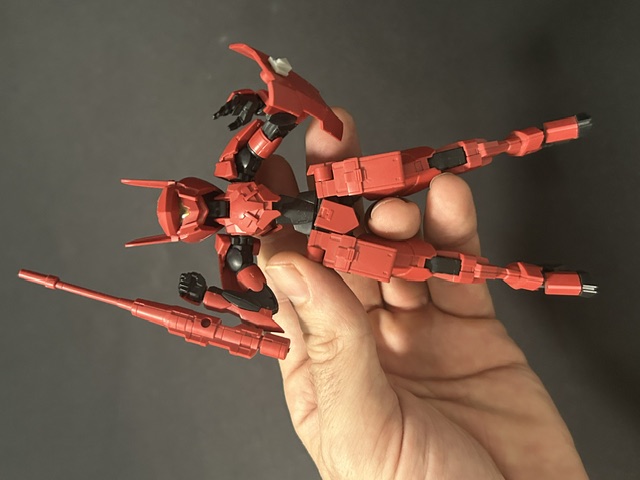
How to panel line Gunpla?
Panel lining emphasises recessed seams so that separate armour sections read more clearly. Instead of coating the whole model, the aim is to place a controlled dark accent inside selected details.
Prepare the surface and check compatibility
Remove dust and test your planned paint, varnish and solvent combination on spare material first. For an oil-based wash, a compatible, fully cured gloss barrier can help with controlled application and cleanup, but it is not a guarantee against damage.
Avoid flooding joints, stressed connections, or enclosed spaces where solvent could collect. Solvent-based detailing products can damage plastic or underlying finishes. Follow the kit and material manufacturers’ warnings, especially for sensitive components.
Use suitable Green Stuff World refillable markers
GSW offers refillable markers with different tip formats. Its guidance explains that some designs can accommodate diluted oil paint. That does not establish that every marker is compatible with every solvent. Confirm that the specific reservoir, seals, and tip tolerate your intended white spirit before filling it; otherwise, apply the mixture with a fine brush.
Mix a small amount of oil colour with modelling or artists’ white spirit in a separate container until it flows as a thin wash. White spirit is used to dilute oils and enamels; water or acrylic thinner is not an interchangeable substitute. As a colour choice, try grey for a subtle result on pale armour, brown for warmer tones, or black for stronger contrast.
Apply, clean and finish carefully
Prime the marker on scrap material, not on the model. Touch the tip gently to a recess and allow the fluid to travel along it. Use repeated small applications rather than pushing out a large quantity. With a brush, the same principle applies: guide the wash instead of soaking the part.
Once the pigment has settled, remove excess from surrounding surfaces with a barely damp, compatible swab or brush. Work gently across the seam so that you leave pigment inside it. Test the cleanup stage as carefully as the initial application.
Allow the oil detailing to dry fully before testing a compatible final clear coat. Clean the marker according to its instructions, recap it securely, and work with appropriate ventilation. A precise finish comes from controlling the amount of material, not from using the strongest solvent.
DISCLAIMER:
All third-party trademarks, logos, character names, product names and fictional designs mentioned in this article, including Gundam, Gunpla and Bandai, belong to their respective owners. References are made solely for identification and for informational, descriptive discussion in an independent modelling blog.
This article is not an official publication and is not sponsored, authorised, endorsed or approved by the owners of the third-party franchises mentioned. No affiliation, partnership or licensing relationship with those rights holders is claimed or implied.
Green Stuff World is referenced as an independent supplier of general modelling tools and materials, not as a manufacturer of officially licensed products associated with those franchises. Product mentions do not imply endorsement by their respective owners.
This content does not grant permission to reproduce protected artwork, logos, characters, or designs, and does not replace official product instructions or applicable safety guidance.
Share this content