



- Reduced price
- New product
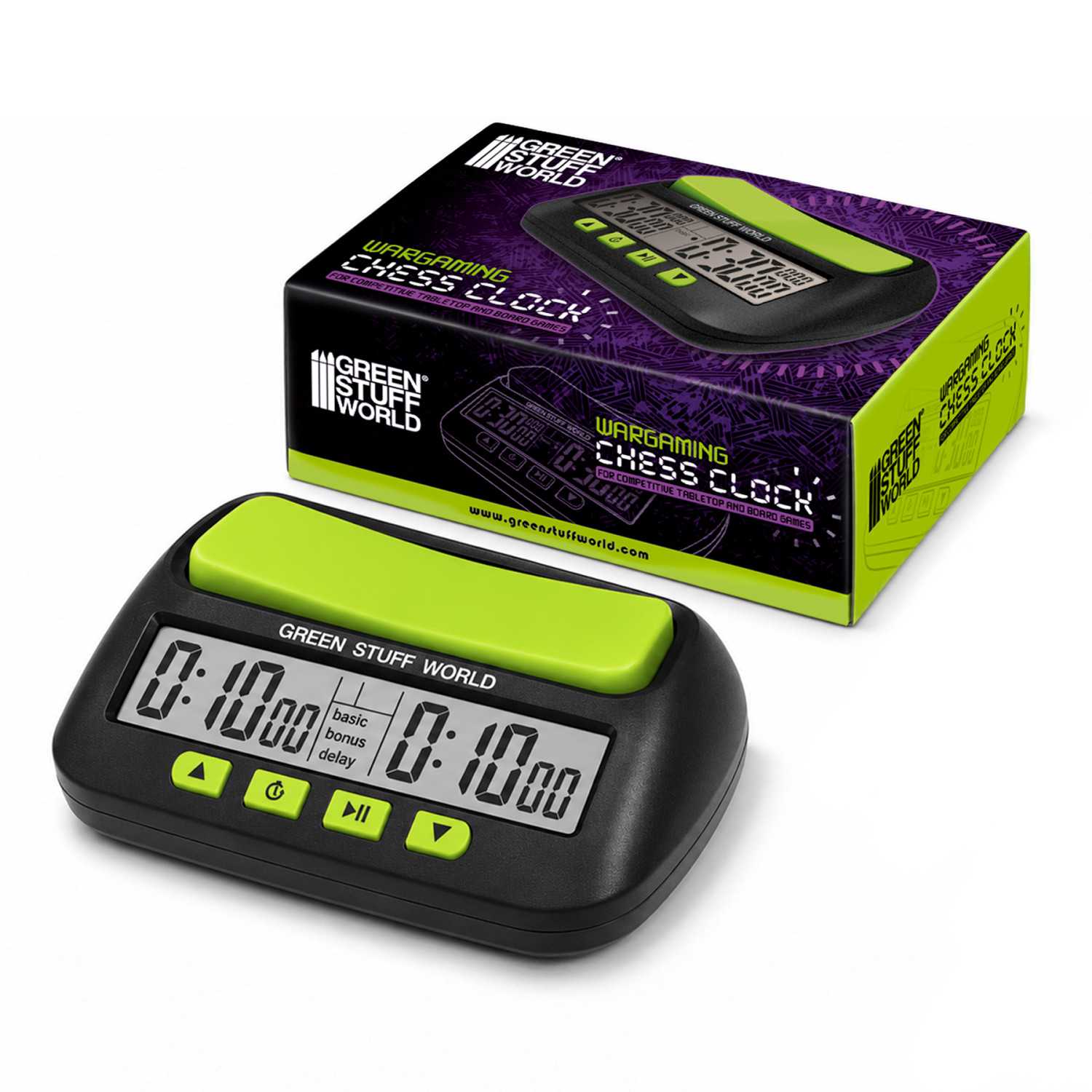

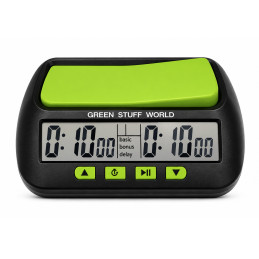
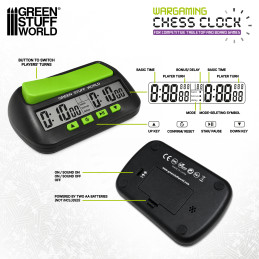
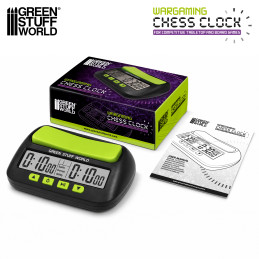
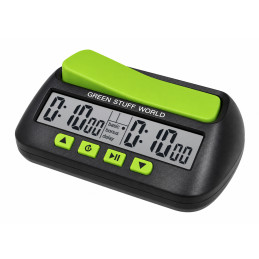
Chess Clock for competitive games, Wargames, and Warhammer 40k
The Chess Clock for Competitive Games from Green Stuff World gives each player a separate time allowance, helping keep matches fair and on schedule. Moving units, choosing targets, and checking objectives all take time. Seeing your remaining allowance makes it easier to judge when to think carefully and when to keep things moving.
This matters particularly in competitive Warhammer 40k 11th Edition and WTC games, where an unfinished game can leave important scoring opportunities unplayed. An army relying on later turns needs the chance to reach them. A tabletop gaming timer helps both opponents manage their pace and makes unequal use of the round easier to recognise.
That visibility is useful when a large force faces a smaller elite army. Both players can see their share of the available minutes, making it easier to discuss pacing calmly before frustration starts to affect an otherwise enjoyable competitive match.
A single chess clock is shared by both players, with a separate countdown for each side. It is used when either player requests it under the event rules, or whenever the organiser makes it compulsory, with both players sharing the same device. While you make decisions and resolve actions, your countdown runs. Switch the clock to your opponent when they need to act, then switch it back when play returns to you.
In miniature games, this can happen several times within a single turn. Saving throws, removing casualties, or considering a response may use the other player's allowance, depending on the tournament rules. Before starting, confirm how these situations will be handled and place the clock where both players can easily see and reach it. Both players should check that the correct countdown is running and remind each other if a switch is missed.
Use the allowance specified by the organiser. A tournament round may include preparation, army explanations, and other tasks, so its full duration is not necessarily available for playing. Check whether deployment and pregame actions count towards your allowance, and start the clock at the point specified by the event.
For a practice match, agree the playing time first and divide it equally. If you reserve 150 minutes for the game itself, each player receives 75 minutes. Set a realistic target for your army size and experience. When preparing for an event, copy its timing procedure so your rehearsal reflects the conditions you will actually face.
Preparing for Warhammer 40k 11th Edition
Regular timed practice is useful when learning an army or adjusting a list for Warhammer 40k 11th Edition. A strong plan must also be practical to carry out before the round ends.
Look for the tasks that repeatedly slow you down. These might include searching for weapon profiles, sorting dice, moving large units or revisiting decisions you have already made. Keep reference material close and organise your gaming accessories before deployment. Learning which choices deserve extra thought helps you preserve time for the difficult moments, especially when several units need to work together.
Can you use it for Age of Sigmar and The Old World?
Yes. A chess clock for competitive games can also help manage agreed timed games of Warhammer Age of Sigmar (AoS) and Warhammer: The Old World (TOW), alongside other Games Workshop systems and miniature wargames.
Whether you are positioning units around objectives or manoeuvring ranked regiments, a personal allowance encourages you to stay aware of the overall pace. Discuss how to handle decisions and actions during your opponent's turn, since these differ between systems. For organised play, follow the relevant event policy. At your club, agree the procedure together and practise until passing the timer feels as familiar as reaching for your dice.
Why choose a physical gaming timer?
A dedicated clock keeps timekeeping separate from your phone. You can consult army lists, check rules or record scores on your device while the match timer stays in one place.
Having a shared physical reference also helps both players check the remaining time without passing a handset across the battlefield. Place it within comfortable reach, away from terrain, movement paths and loose dice. Leave enough space around the controls so switching between players does not disturb nearby miniatures or interrupt the flow of combat.
Are chess clocks required at Warhammer tournaments?
Requirements depend on the event. Some major competitions, including the World Team Championship, require their use, while other organisers apply different policies. Check the tournament pack before attending, including the starting allowance, permitted pauses and procedure when a player runs out of time.
If a timing dispute arises, call a judge promptly; some events, including the WTC, allow only referees to pause the clock. Use the timer fairly throughout the match, allowing both players to complete their actions within their own allowance.
Practising with your own clock beforehand means you arrive familiar with its controls and with the habit of passing time correctly. That leaves one fewer thing to learn during a competitive match.
Can beginners practise with a chess clock?
Yes. Start with a generous allowance and use the timer to observe your pace. After the match, discuss which parts took the longest and choose one area to improve next time. You might practise deployment, prepare clearer reference notes, or learn the profiles you consult most often.
For teaching games, agree how explanations and rule lookups will be handled. Introduce tighter limits gradually as both players become more comfortable with their armies and the sequence of play.
Content: 1x
NOTE: This item does not include batteries. For proper operation, 2x AA batteries must be inserted.
Games Workshop, Warhammer, Warhammer 40,000, 40K, Warhammer Age of Sigmar and Warhammer: The Old World are trademarks or registered trademarks of Games Workshop Limited. All trademarks, trade names and associated intellectual property belong to their respective owners. These names are used solely for descriptive purposes to identify the games with which this clock may be used. This product is offered independently by Green Stuff World. Green Stuff World is not affiliated with Games Workshop Limited, and this product is not licensed, authorised, approved or endorsed by Games Workshop Limited.

No customer reviews for the moment.
Reference: 8435646500188ES
Brand: Green Stuff World
Set of gaming dice for RPGs, wargames and tabletops
Reference: 8436574502695ES
Brand: Green Stuff World
Laser Pointer for wargames
Reference: 8435646541464ES
Brand: Green Stuff World
Glasspack Footprints Set 11th Edition compatible with Warhammer 40k® | 40k Footprints
Reference: 8435646543475ES
Brand: Green Stuff World
WTC Token Set 11th Edition compatible with Warhammer 40k® | Warhammer 40k tokens
Reference: 8436574502695ES
Brand: Green Stuff World
Laser Pointer for wargames
Chess Clock for competitive games, Wargames, and Warhammer 40k