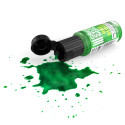



Best paints for miniatures: complete Green Stuff World guide
The world of scale modeling has evolved by leaps and bounds, and with it, the chemistry behind every bottle of color. There is no single answer to what the best paint for miniatures is, since it all depends on the finish you’re looking for, the time you have available, and your level of experience. However, at Green Stuff World, we have developed a range that covers everything from the basic needs of any painter to the most cutting-edge effects in the industry. For that reason, we dare to say that the best paint for miniatures is made by Green Stuff World.
Below, we take a tour through our catalog, organized from the most essential and commonly used paints for everyday work to more specific and technical options reserved for special projects.
Acrylic Paint: The Heart of Your Palette
Standard acrylic paint is, without a doubt, the most widely used option among modelers. It forms the foundation of most projects thanks to its composition, ease of use, and finish. It features a balanced pigment load and a flow that allows you to create anything from solid base coats to subtle gradients through glazing when properly thinned. It is usually the base upon which the design of any miniature is built, offering fast drying times and easy mixing with water or medium to adjust transparency according to the needs of each piece.
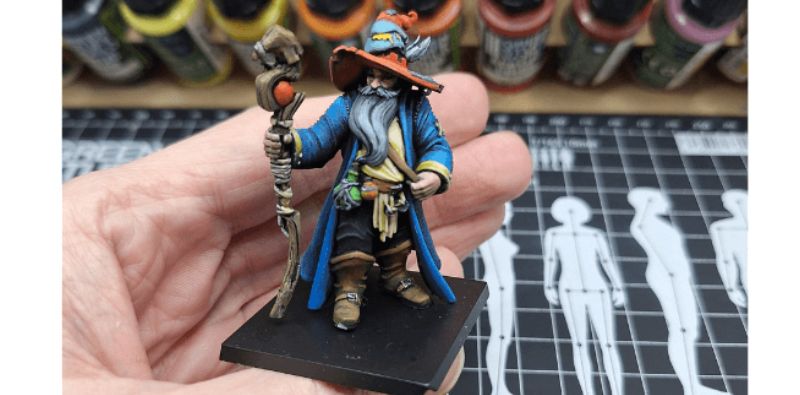
Our range stands out for its matte finish and excellent coverage, preventing sculpted details from being lost due to excessive layering. It is commonly used because it works equally well for painting a character’s skin—regardless of tone—as it does for the folds of a cloak or the blade of a pirate skeleton’s sword. In addition, its advanced formulation allows it to be used both with a brush and with an airbrush after thinning, making it essential for any hobbyist.
Since this is an everyday paint, it is useful to have accessories such as a wet palette to keep it hydrated during long painting sessions. This prevents the pigment from drying prematurely due to air exposure, allowing you to make the most of the paint.
Metallic Paints: Real Shine for Your Weapons and Armor
After basic acrylic colors, metallic paint is the most sought-after option among modeling artists. Every fantasy or science fiction army needs to convincingly represent steel, bronze, gold, or silver. These paints contain high-quality reflective particles that mimic the physical behavior of real metal under light, providing depth and shine that cannot be achieved using flat colors or gray blends alone.
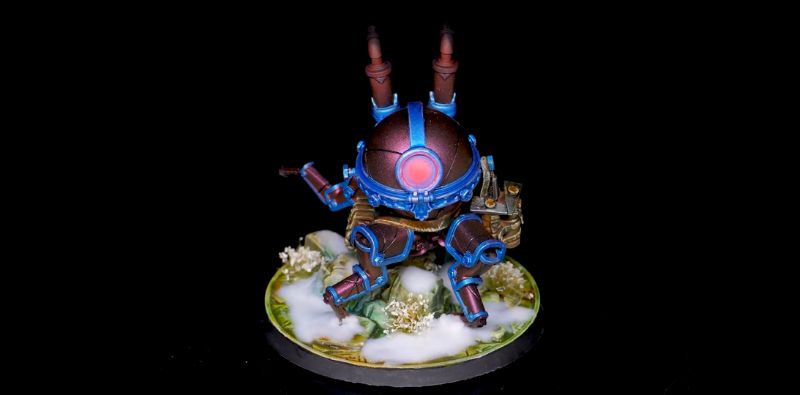
For many artists, these are considered the best paints for miniatures when it comes to battlefield realism. Their popularity has grown thanks to the major simplification they offer in the process of creating realistic-looking miniatures without requiring advanced technical knowledge. Instead of mastering the NMM (Non-Metallic Metal) technique—known for being labor-intensive and somewhat complex—our metallic paints allow you to achieve a professional finish in just minutes.
They are ideal for precisely edge-highlighting swords, painting the engines of war vehicles, or adding that regal and distinctive touch to a sovereign’s jewelry in a diorama.
Dipping Inks: The Speed of Speed Painting
Dipping Inks have positioned themselves among the most widely used paints in modeling thanks to the “speed painting” trend, which allows painters to complete figures—or even entire armies—in record time. These inks are designed with a specific surface tension that enables them to flow into the recesses of a miniature while leaving a pigmented and translucent color on the raised areas. In this way, they perform the work of base coating, shading, and highlighting in a single application over a light primer.
Their use has increased because they allow players to spend less time at the painting desk and much more time enjoying the gaming table. They are especially useful for painting large infantry regiments, zombie hordes, or creatures with rich organic textures, where the automatic contrast highlights every sculpted detail without the need for manual edge work.
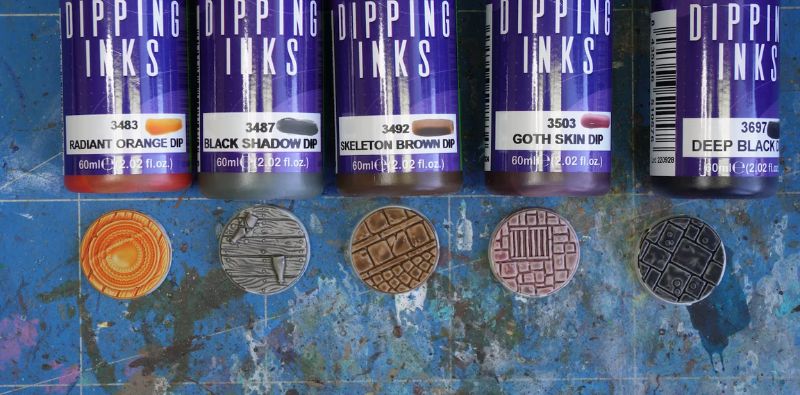
Unlike traditional wash inks, their viscosity and pigment density are calibrated to prevent pooling or unwanted staining, provided they are applied with controlled brush loading. This allows superior control over the final result, achieving a level of color saturation that conventional inks cannot match. They are the solution for those seeking “Tabletop Plus” level results in a simple, fast, and enjoyable way.
Dry Brush Paint: Instant Texture and Definition
Our dry brush paints have a much thicker and pastier consistency than standard acrylics, which greatly facilitates brush loading for the dry brushing technique. This is the quintessential method for highlighting edges and raised textures through controlled friction. It is often used on scenery elements such as stone bases, the fur of wild animals, or to simulate worn edges on war machinery like tank treads.
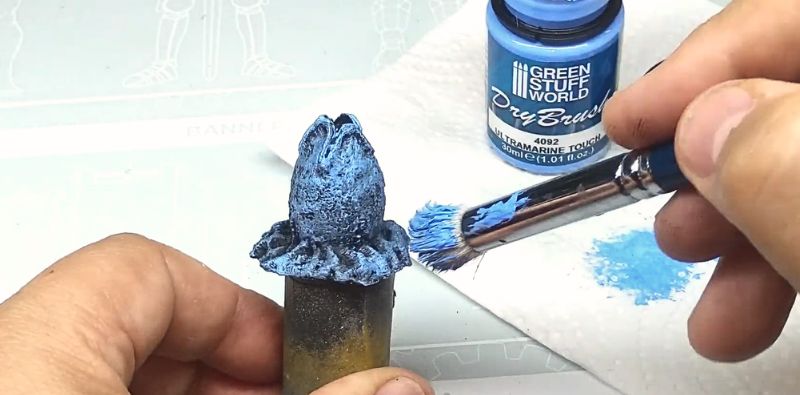
When planning a scenery project, it is essential to select the best paint for miniatures that can withstand friction and fulfill the function for which it was created. The way these paints are used is very different from conventional paints. In this case, you need a special dense dry brush or an old brush that should be loaded generously and then wiped off on a piece of paper towel or a textured palette, leaving only a small amount of paint on the bristles. The key is to avoid staining the shaded recesses. For this reason, it is also advisable to test the brush load on your hand or on a clean area of the palette.
In addition, this paint is specifically formulated to prevent a dusty effect and achieve a perfect finish. It has become a favorite among many artists due to how easily it creates a base for further highlighting while adding three-dimensional volume in just a few minutes.
Opaque Acrylic Paints: Maximum Coverage in a Single Pass
Although they are used less frequently than standard acrylic paints, opaque paints are especially useful for colors that are typically difficult to cover, such as bright yellows, intense reds, or pure whites. Their formulation contains a higher pigment density that increases their ability to block light, allowing them to cover dark colors or black primers with one or two thin coats. This prevents the need to apply many translucent layers over the same area.
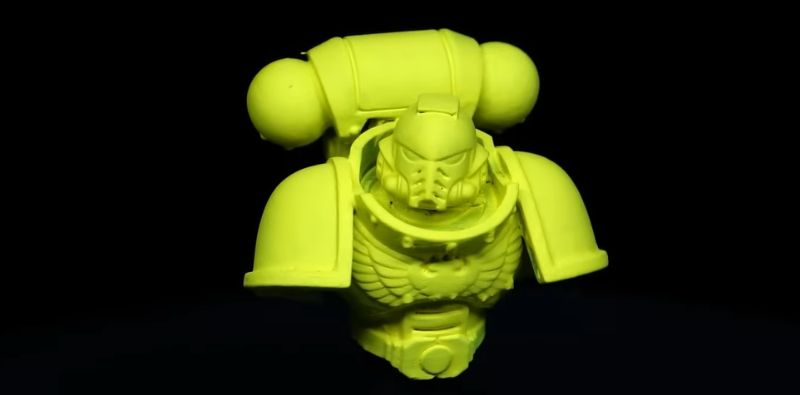
They are used both to save time and to achieve clean, precise strokes. They are particularly practical when working on small details such as symbols, banners, or any element that needs to stand out against a dark background. By covering in fewer layers, paint buildup on the miniature is reduced, preserving the fine details and delicate textures that are part of the original sculpture.
Acrylic Inks: Intensity and Chromatic Filters
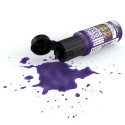
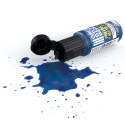
Acrylic inks serve a specific purpose, different from other paints. They are used by painters seeking transparency effects and intense saturation. Unlike acrylic paints, these are fluid and much more transparent, yet they contain a high pigment load. Their main function is to apply color filters that unify transitions, enrich shadows with complementary tones, or saturate areas that have become overly muted after the highlighting process with white, among other uses.
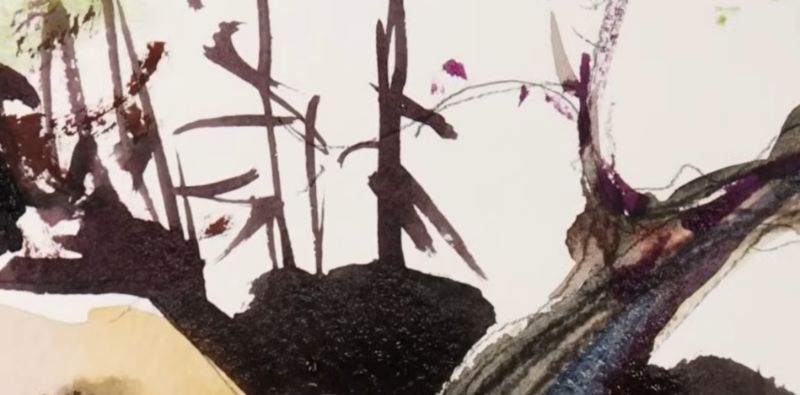
Many artists consider that for glazing effects, these are the best paint for miniatures currently available on the market. Their use is less frequent because they require greater precision during application to prevent running or excessive pooling. They are ideal for adding realistic organic nuances to skin, creating glowing energy effects on magical weapons, or even applying tonal variations over metallic armor without concealing the shine of the metallic pigment underneath.
Chameleon Paints: Science Fiction on Your Brush
Chameleon paints are one of our most iconic specialties. These pigments have the unique ability to change color depending on the viewing angle and the way light hits the miniature’s surface. Although their use is much more specific than that of a base paint, they are an excellent choice for giving a supernatural look to futuristic vehicles, elite unit armor, or exotic creatures from deep space.
For their optical properties to function properly, they must always be applied over a glossy black primer and preferably with an airbrush to achieve a thin and uniform coat. Due to their exclusive nature, they are used less frequently than other types of paint. Even so, they guarantee an immediate “wow” factor in any display case or gaming table, turning a standard piece into a kinetic work of art that captures every gaze.
Chrome Paints: The Perfect Mirror
Chrome paints achieve the highest possible level of reflectivity within the world of scale modeling. Unlike standard metallics that simply shine, these paints create a real and nearly flawless mirror effect. They are technical products that require a perfectly smooth surface and very careful application so as not to break the tension of the pigment, but the final result is simply unmatched when representing polished chrome.
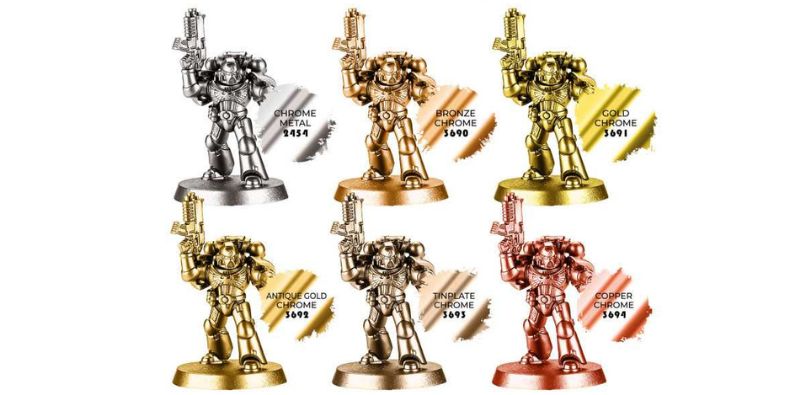
Their use is typically limited to very specific details such as classic scale car bumpers, futuristic cyber-style helmets, or high-level competition display pieces. Due to the delicacy of the finish, they are not usually applied broadly, but they remain an essential tool in the case of any modeler seeking absolute realism in reflective surfaces that must behave like real metal.
Fluorescent Paints and Inks: Light in the Dark
The fluorescent range, available in both paint and ink formats, is designed to glow intensely under black light (UV) and to provide striking neon brightness under normal lighting. They frequently represent magical effects, flowing lava rivers, plasma engines on spacecraft, or even alien vegetation that appears to emit its own light.
Although they are not usually used to paint an entire miniature, they are the ideal complement for bringing life and a focal point to specific details of the model. With their more fluid consistency, they are perfect for OSL (Object Source Lighting) techniques, allowing the color to “flow” into the cracks of a runic sword or magical staff, simulating a highly convincing internal illumination.
Crackle Paint: The Art of Cracking
Crackle paint is a product with a fascinating effect: during the drying process, it naturally contracts and cracks, revealing the color applied beneath it. It is the quintessential tool for creating arid desert bases, post-apocalyptic wastelands, or fractured ice.
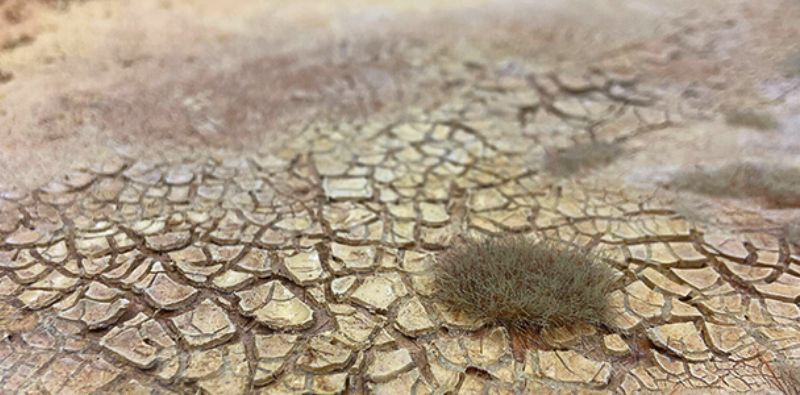
If you are looking for the best paint for miniatures intended for base creation in this context, the crackle range offers realistic dry and cracked earth results. Its use is not as frequent as other types of paint because it is applied in very specific contexts. However, the result is absolutely impressive, and it is an irreplaceable product when seeking that specific texture of dry soil, cracked mud, or broken ice, as it provides a natural finish that would be nearly impossible to sculpt by hand with such a high level of detail and realism.
Other Paints and Products: Special Effects
The types of paint listed so far form the chromatic foundation capable of bringing great realism to projects, but sometimes it is necessary to use other paints and products to add the final touch and achieve a professional result. All of this is accomplished through our special effects range. These products are not designed to cover surfaces broadly, but to complement them, add texture, and give meaning to the environment in which the figure is placed. They are the details that separate a well-painted miniature from one that looks as if it came straight out of real life.
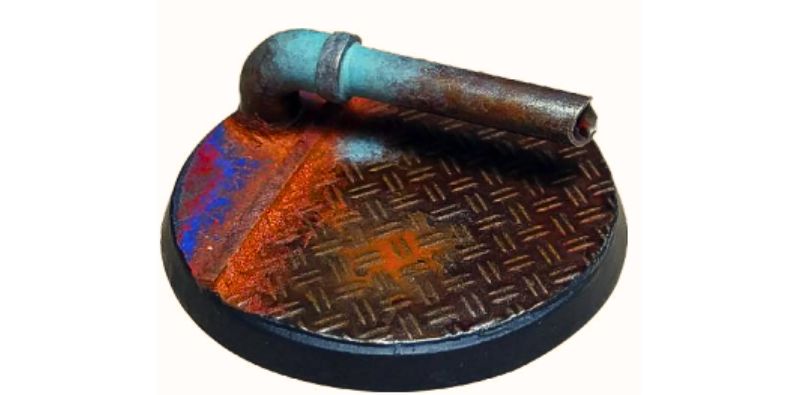
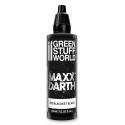
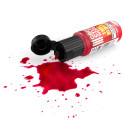
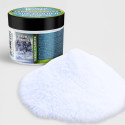
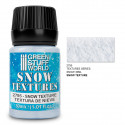
From the absolute and light-absorbing depth of Maxx Darth (the blackest black paint for modeling on the world) to the visceral realism of different blood effects (prince’s blood, orc blood, or coagulated blood), these effects help tell a story on the battlefield. You can also add snow texture to place your army in an extreme frozen climate, spider web serum to create atmosphere in ancient dungeons, or apply splash gel to create stunning moving water or splatter effects.
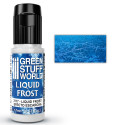
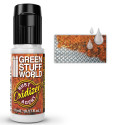
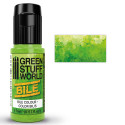
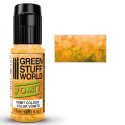
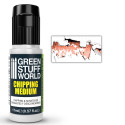
Technical products such as frost effect, oxidizer (oxcider) to simulate metals aged by time, or realistic bile and vomit textures allow your figures to stop looking like simple objects and become authentic, raw representations. Everything works in harmony: armor painted with our metallic range gains a new dimension of realism when you add strategic chipping effects or liquid pigment residues on boots to simulate road mud.
You can even go a step further by customizing your projects with real LED lights using conductive paint, or by using UV resin to encapsulate aquatic details or instantly create gems under a UV flashlight. Ultimately, experimenting with our full catalog of paints and special effects will help you discover for yourself which is the best paint for miniatures that will completely transform your hobby sessions.
Share this content