


Reference: 8435646522036ES
Brand: Green Stuff World
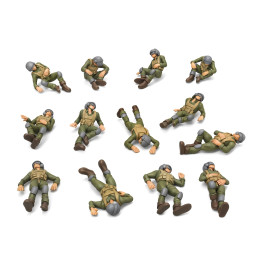
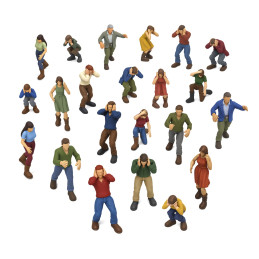
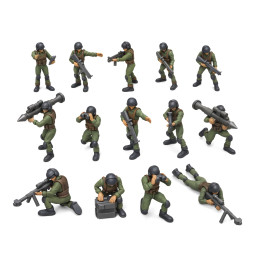
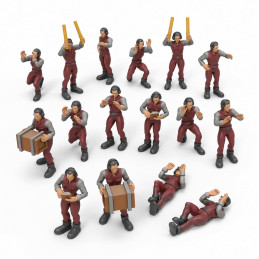
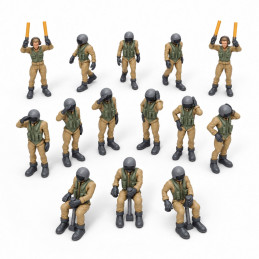
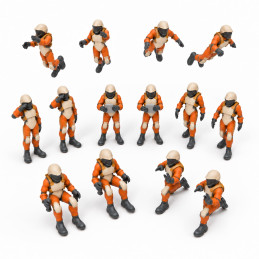
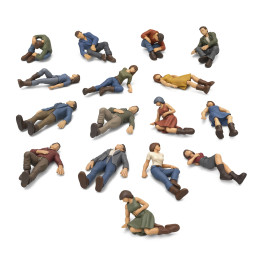
Civilian Casualties 1:100
Review(s): 0
Conversion kits for Gundam and Gunpla models, airplane models, and ship models.
Price €3.83 Regular price €4.25
In stock

There are 7 products.
Reference: 8435646522036ES
Brand: Green Stuff World
Conversion kits for Gundam and Gunpla models, airplane models, and ship models.
Reference: 8435646522029ES
Brand: Green Stuff World
Conversion kits for Gundam and Gunpla models, airplane models, and ship models.
Reference: 8435646522012ES
Brand: Green Stuff World
Conversion kits for Gundam and Gunpla models, airplane models, and ship models.
Reference: 8435646522005ES
Brand: Green Stuff World
Conversion kits for Gundam and Gunpla models, airplane models, and ship models.
Reference: 8435646539133ES
Brand: Green Stuff World
Conversion kits for Gundam and Gunpla models, airplane models, and ship models.
Reference: 8435646539126ES
Brand: Green Stuff World
Conversion kits for Gundam and Gunpla models, airplane models, and ship models.
Reference: 8435646539119ES
Brand: Green Stuff World
Conversion kits for Gundam and Gunpla models, airplane models, and ship models.
At 1:100 scale, every model measurement is one hundredth of its full-size equivalent: 10mm represents 1m. Divide the real measurement by 100 to find the model size. A 4.5m car should therefore be about 45mm long, a 2m doorway 20mm high, and a 12m building 120mm tall.
| Real-world subject | Approximate size at 1:100 |
| 1.70m person | 17mm |
| 1.80m person | 18mm |
| 2m door | 20mm |
| 4.5m car | 45mm |
| 8m armoured vehicle | 80mm |
| 18m mecha | 180mm |
Use these calculations when combining figures, vehicles, buildings and accessories. Measure everything in the same unit to avoid conversion errors. Stated scale is a starting point; listed dimensions provide the final check.
A 180cm adult becomes an 18mm-tall figure at strict 1:100 scale when measured from the soles of the feet to the top of the head. Shorter adults may measure approximately 16–17mm, while particularly tall characters may reach 19mm.
In practical modelling terms, the figure’s total height can approach 20mm when details such as hair, helmets, hats, raised equipment or the thickness of the integral base are included. For this reason, figures advertised as 18mm or 20mm may both be suitable for 1:100 scale scenes, although their proportions should be checked before combining products from different manufacturers. For the most accurate comparison, measure the figure from the soles to the top of the bare head and exclude the base, headgear and dynamic pose.
Not exactly. A literal 20mm-tall person at 1:100 would represent someone 2m tall. More importantly, wargaming sizes are not governed by one universal measuring convention. 20mm may refer to the distance from the feet to the eyes, the full height of the sculpt, or simply compatibility with an established gaming range. Many 20mm miniatures are associated with 1:72, 1:76 or approximately 1:87 models, whereas true 1:100 human figures are often sold within the broad 15mm-18mm gaming category.
The two descriptions can still appear together because hobby labels are practical rather than perfectly mathematical. Before mixing ranges, compare a standing figure, shoulder width, head size, weapon thickness and base height. This prevents a nominal 20mm figure from looking oversized next to a strict 1:100 pilot or doorway.
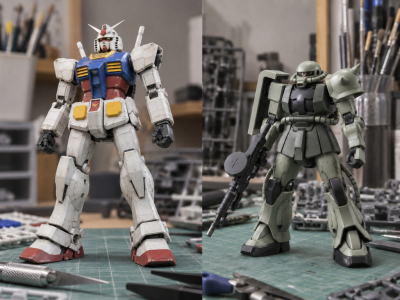
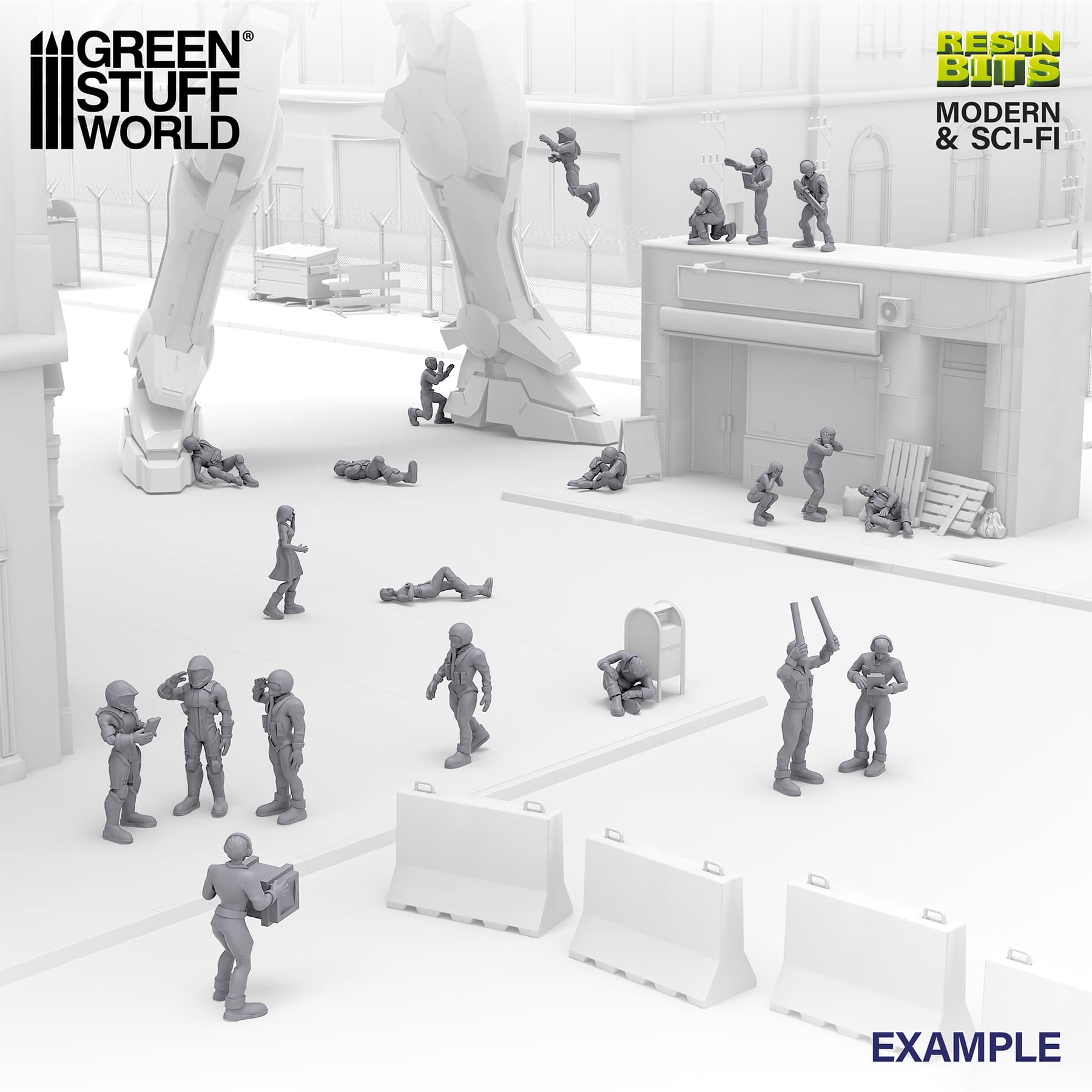
Many Master Grade and Full Mechanics Gunpla kits are produced in 1:100 scale. A pilot, technician, casualty, mechanic or security figure immediately communicates the mecha's mass and size.
Position figures beside a foot, on a maintenance platform, near an open cockpit or around ground-support equipment. A compact group creates a focal point without covering mechanical detail. Add ladders, cabinets, markings and cables to a hangar; use running personnel, barriers and debris to give a battlefield base urgency.
Scale consistency matters most around recognisable objects: people, stairs, handrails, seats and doors expose size errors quickly. If using 20mm figures beside a 1:100 mecha, keep all people from the same range and do not place an accurate cockpit figure directly beside them.
Clothing can be painted in faction-neutral colours, while a work crew can repeat the mecha's accent colour. Simple conversions - removing a weapon, changing an arm angle or adding a tool - can turn military figures into technicians, emergency teams or settlement defenders.
Figures for architectural models and vehicle dioramas
1:100 is widely used for architecture because 1m becomes 1cm. Figures communicate ceiling height, circulation, entrances, balconies and public spaces without written dimensions. Walking poses define routes, seated people clarify furniture size, and groups indicate gathering points.
Neutral grey or white figures keep attention on architectural form, while selected colours can identify users, activities or zones. Fully painted people add narrative to residential, commercial and urban scenes. Keep their bases thin or recess them into the ground surface.
Crew, infantry and civilians show the size of tanks, trucks, machinery and science-fiction transports. Strict 1:100 figures fit 1:100 vehicles; test-fit nominal 20mm figures because many suit larger 1:76 or 1:72 kits. If necessary, use perspective by placing larger figures toward the front and smaller subjects behind.
1:100 and 20mm miniatures in tabletop games
Smaller miniatures allow players to deploy larger forces, armoured columns and more varied terrain on a practical gaming table. Infantry units remain easy to identify, while roads, buildings and realistic manoeuvring areas require considerably less space than equivalent 28mm battlefields. Magnetised bases and storage trays can also make complete armies easier to transport and organise.
Historical and modern 1:100 collections are commonly associated with the 15mm wargaming category, although these two measurements are not always mathematically identical. Flames of War is one of the best-known examples, using 1:100 vehicles and 15mm infantry to recreate battles from the Second World War. World War III: Team Yankee uses the same general scale for modern and Cold War forces, allowing players to field tanks, infantry, helicopters, artillery and support vehicles on a compact battlefield.
Other games using 1:100 or approximately 15mm miniatures include World of Tanks: Miniatures Game, whose assembled and pre-painted tanks are produced at 1:100 scale. Clash of Steel also uses 1:100 armoured vehicles for fast tank battles based on historical and alternative Cold War scenarios. Battlefront titles such as ’Nam, set during the Vietnam War, and Fate of a Nation, based on the Arab–Israeli conflicts, use the same broad 15mm and 1:100 modelling format. This makes 1:100 tanks, vehicles, scenery and accessories useful across several historical gaming collections, although bases, unit organisation and game components must still follow the rules of each individual system.
Ancient and medieval rules such as DBA are also frequently played with 15mm armies, but they are not tied to a strict 1:100 ratio. In these systems, the dimensions and frontage of each base are generally more important than the exact height of an individual figure. The same distinction applies to other scale-flexible rules: a game may support 15mm miniatures without requiring every model to be manufactured at precisely 1:100 scale.
The 20mm miniature category has a stronger connection with 1:72 and 1:76 plastic kits, particularly for twentieth-century conflicts. Players commonly use 20mm collections with flexible rules such as Crossfire, Rapid Fire!, Chain of Command and Blitzkrieg Commander. These figures are normally too large to be treated as exact substitutes for 1:100 miniatures, even when both sizes are supported by the same rules. Always check the current requirements for base dimensions, unit frontage, vehicle scale and model count before combining different miniature ranges.
Choosing poses for gaming units
Use clear silhouettes for pieces viewed from above. Advancing, kneeling, firing and command poses make units easy to read. Officers, medics, casualties and weapon teams add variety or serve as markers and objectives. In mecha games, technicians and pilots can identify repair points or evacuation zones.
A consistent basing style will unify miniatures from different packs. Keep scenic additions within the required footprint so that rubble and wide poses do not obstruct nearby models or line-of-sight checks.
Preparing small resin or 3D-printed figures
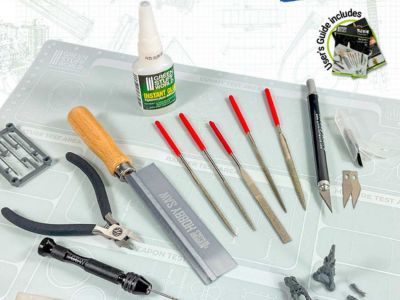
Inspect each miniature under strong, angled light. Remove supports with sharp flush cutters, using shallow cuts rather than twisting the figure from its framework. Brace thin ankles, rifles and raised arms while cutting, then smooth marks with a fine knife or sanding stick. Follow the material maker's safety instructions and avoid inhaling dust.
Test-fit each figure before permanent attachment to correct a thick base, adjust its pose or check its relationship with ladders, hatches and controls. Use an adhesive suited to the material; plastic cement does not bond every resin or printed polymer.
Build contrast before tiny detail
At this size, colour separation and value contrast matter more than microscopic facial detail. Distinguish clothing, equipment and skin with a limited palette. Give dark uniforms a lighter edge and pale clothing controlled shadows. On mecha displays, repeat a machine colour on a helmet, stripe or tool case.
Primer affects the workflow: black creates instant shadow, grey keeps colours balanced, and white makes bright uniforms easier. A zenithal spray - dark underneath and lighter from above - maps the volumes before the first base coat.
A practical painting sequence
1. Apply thin base colours instead of one heavy layer that may fill sculpted detail.
2. Place a controlled wash in folds, around straps and between equipment.
3. Restore the base colour on raised areas, leaving the darkest tone in recesses.
4. Highlight shoulders, helmets, knees, packs and upper folds.
5. Give weapons and tools distinct but subdued tones.
6. Finish the base and protect the model with matte or satin varnish.
A paintbrush with a reliable point is more useful than the smallest brush available. A very tiny brush can dry before the paint reaches the model, whereas a slightly larger belly holds enough moisture for controlled lines. Thin acrylic paint until it flows from the tip but still covers predictably.
An airbrush is useful for primer, uniform base colours and soft dust effects across a group, but it rarely replaces a brush. Spray thin layers at controlled pressure to protect shallow relief. Finish faces, straps, tools and sharp highlights by hand, and mask nearby surfaces when figures are already attached to vehicles or scenery.
Faces, uniforms and equipment at small scale
Eyes are optional or, let's even say, pretty much impossible to paint on a 17-20mm figure. A brow shadow and a small nose or cheek highlight often look more convincing than two oversized white dots. For bare skin, use a midtone, a warm shadow and one light accent.
Simplify camouflage so it remains visible: enlarge and separate the colour patches, then use straps and equipment to break up the surface. Suggest insignia with a short colour mark. On science-fiction crews, sharp colour blocking and one bright visor can create a strong result with little paint.
Weathering figures, vehicles and scenic bases together
Weathering should describe one shared environment. Dust boots, wheels and lower walls with the same earth colour. Use cool grey debris for an urban scene, ochre pigment for dry terrain or dark damp tones on an industrial base.
Keep damage proportional. A 1mm paint chip on a 1:100 model represents roughly 10cm on the real object, so dense, oversized chipping can quickly overwhelm a vehicle or mecha. Fine sponge marks, narrow streaks and localised pigments usually create a more credible effect. Apply the strongest contrast near the figure group or intended focal point, leaving quieter areas around it.
How big is a 1:100 scale model?
Divide every real-world dimension by 100. A real 5m object becomes 50mm, and an 18m machine becomes 180mm. Accessories should be converted from actual dimensions rather than guessed from the height of a figure.
Is 1:100 scale the same as 15mm scale?
They are commonly grouped in wargaming, but the labels are not perfectly interchangeable. A strict 1:100 adult is normally around 17-18mm tall from feet to head. A range sold as 15mm may measure to the eyes, use an older convention or feature slightly exaggerated proportions. Compare actual measurements whenever two ranges must stand together.
What scale are 20mm miniatures?
There is no single ratio for every 20mm range. Many historical 20mm figures are intended for 1:72 or 1:76 scenery and vehicles, while others sit closer to 1:87. Some are measured to eye level rather than the top of the head. The manufacturer's height and measurement method provide a better answer than the category name alone.
Can 20mm figures be used with 1:100 models?
They can work for gaming, stylised displays or forced-perspective scenes, but they may look large beside strict-scale doors, cockpits and crew. Use one figure range consistently, compare it against a recognisable feature, and test the composition before gluing. For precision scale modelling, choose figures specifically described as 1:100 and check their stated height.
Can these figures be used with 1:100 Gunpla?
Yes, correctly sized figures are useful beside 1:100 mecha kits, particularly in hangars, workshops, launch bays and battlefield dioramas. Check the kit's stated scale because not every mecha model has one. Pilot and maintenance figures should also be checked against ladders, hatches and cockpit details.
What is the difference between 1:100 and 1:144 scale?
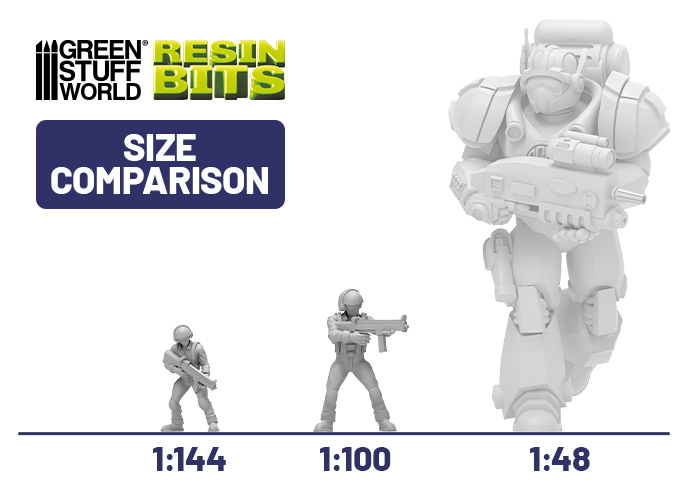
A 1:100 subject is 1.44 times longer, wider and taller than the same subject at 1:144. For example, an 18m mecha measures 180mm at 1:100 and 125mm at 1:144. Figures and scenery from the two scales should not normally be mixed in the same visual plane.
Can 20mm miniatures be painted with hobby markers?
Yes, 20mm miniatures can be painted with hobby markers, but only paint markers with a fine 1mm tip are suitable for figures at this scale. This narrow tip provides the control needed to paint small armour panels, uniforms, weapons and accessories without covering nearby details. For the best results, apply several thin layers and allow each coat to dry before adding another.
Which tabletop games use 1:100 miniatures?
Flames of War and Team Yankee are prominent examples of 15mm/approximately 1:100 gaming. Many historical rules can be played at several miniature sizes, including 15mm or 20mm, provided every player follows the same basing and distance conventions. Confirm the current edition's requirements before building an army.
What paint is best for 1:100 and 20mm figures?
Water-based miniature acrylics are a practical choice because they dry quickly, thin easily, and support layering, washes, and highlights. Primer improves adhesion, while a final varnish protects gaming pieces. Enamels and oils are valuable for filters and weathering, but their thinner and curing requirements differ from acrylic paint.
Should small figures be painted before attaching them to a diorama?
Usually yes. Painting on a temporary handle gives access to the inside of the legs, underside of arms, and equipment. Permanently attach the finished figure after the surrounding ground and large scenic elements are complete, then add a little matching dust or pigment to integrate it with the base.
Disclaimer: Green Stuff World is an independent manufacturer of hobby paints, modelling tools, miniatures, and accessories intended for use with a wide variety of scale models, architectural displays, dioramas, wargames, and tabletop gaming systems. Green Stuff World is not affiliated with, endorsed by, sponsored by, licensed by, or officially associated with Bandai, Bandai Spirits, Battlefront Miniatures, Gale Force Nine, Wargaming, or any other publisher, manufacturer, studio, or trademark owner mentioned on this page.
References to Gundam, Gunpla, Master Grade, Full Mechanics, Flames of War, World War III: Team Yankee, World of Tanks: Miniatures Game, Clash of Steel, ’Nam, Fate of a Nation, DBA, Crossfire, Rapid Fire!, Chain of Command, Blitzkrieg Commander, or any other third-party game, model range, or product are provided solely for informational purposes and to describe potential hobby applications or approximate compatibility based on scale, dimensions, or format. Scale designations such as 1:100, 15mm, 18mm, and 20mm do not guarantee exact compatibility between products from different manufacturers. All third-party names, product names, game names, logos, trademarks, and registered trademarks are the property of their respective owners. No official affiliation, sponsorship, endorsement, licensing arrangement, or commercial relationship is implied.