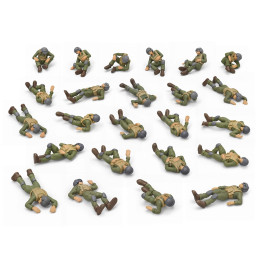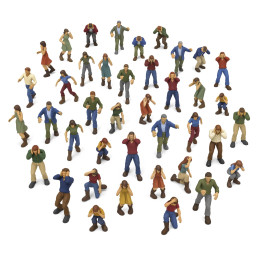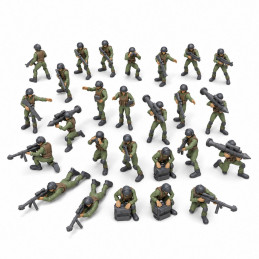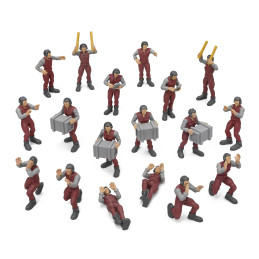


Reference: 8435646521992ES
Brand: Green Stuff World
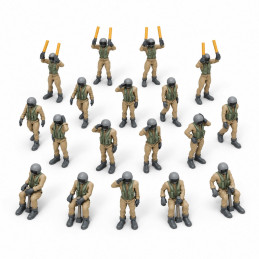
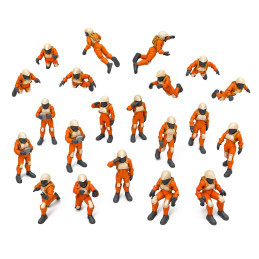
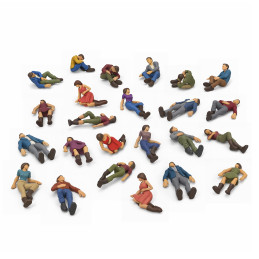
Civilian Casualties 1:144
Review(s): 0
Conversion kits for Gundam and Gunpla models, airplane models, and ship models.
Price €3.83 Regular price €4.25
In stock

There are 7 products.
Reference: 8435646521992ES
Brand: Green Stuff World
Conversion kits for Gundam and Gunpla models, airplane models, and ship models.
Reference: 8435646521985ES
Brand: Green Stuff World
Conversion kits for Gundam and Gunpla models, airplane models, and ship models.
Reference: 8435646521978ES
Brand: Green Stuff World
Conversion kits for Gundam and Gunpla models, airplane models, and ship models.
Reference: 8435646521961ES
Brand: Green Stuff World
Conversion kits for Gundam and Gunpla models, airplane models, and ship models.
Reference: 8435646539102ES
Brand: Green Stuff World
Conversion kits for Gundam and Gunpla models, airplane models, and ship models.
Reference: 8435646539096ES
Brand: Green Stuff World
Conversion kits for Gundam and Gunpla models, airplane models, and ship models.
Reference: 8435646522142ES
Brand: Green Stuff World
Conversion kits for Gundam and Gunpla models, airplane models, and ship models.
A 1:144 scale model is 144 times smaller than the full-size subject. To calculate a model dimension, divide the real measurement by 144. A person who is 1.80 metres tall would therefore be approximately 12.5mm tall in strict 1:144 scale, while an 18-metre mecha would stand about 125mm high.
The same calculation applies to scenery: a real 2.1-metre door becomes about 14.6mm. Allow for posture, footwear and headgear when checking a figure; compare a seated or crouching character by anatomical proportions, not total height.
Scale calculations are also useful when scratch-building accessories. A real 1.2-metre workbench becomes roughly 8.3mm, while a 90-centimetre safety barrier becomes 6.25mm. Checking dimensions before printing or cutting scenery prevents oversized details from weakening the illusion.
No, not exactly. The terms are related to small-scale modelling but are not mathematically identical.
Strict 1:144 scale produces an adult figure approximately 13mm tall. So, "15mm miniatures" follow a less rigid wargaming convention: manufacturers measure to the eyes or top of the head, or use 15mm as a general category.
A heroic 15mm figure may have enlarged heads, hands, and weapons for visibility and durability, making it look oversized, but given their tiny size, they're practically imperceptible.
Compare three features:
• Measure each standing figure in the same way, either to the eyes or top of the head.
• Compare doors, seats, handrails and vehicle hatches.
• Check body mass and sculpting style as well as height.
Small differences are less visible when figures occupy separate parts of a large diorama. They become much more obvious when two models stand shoulder to shoulder.
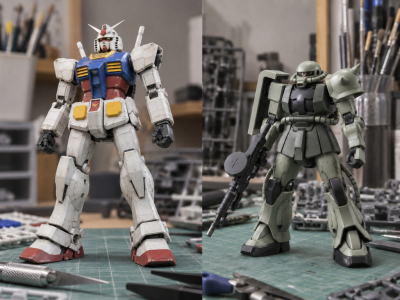
Many High Grade and Real Grade Gunpla kits are produced in 1:144, although the individual kit label should always be checked. A pilot, technician or pedestrian beside a mobile suit immediately communicates its enormous size.
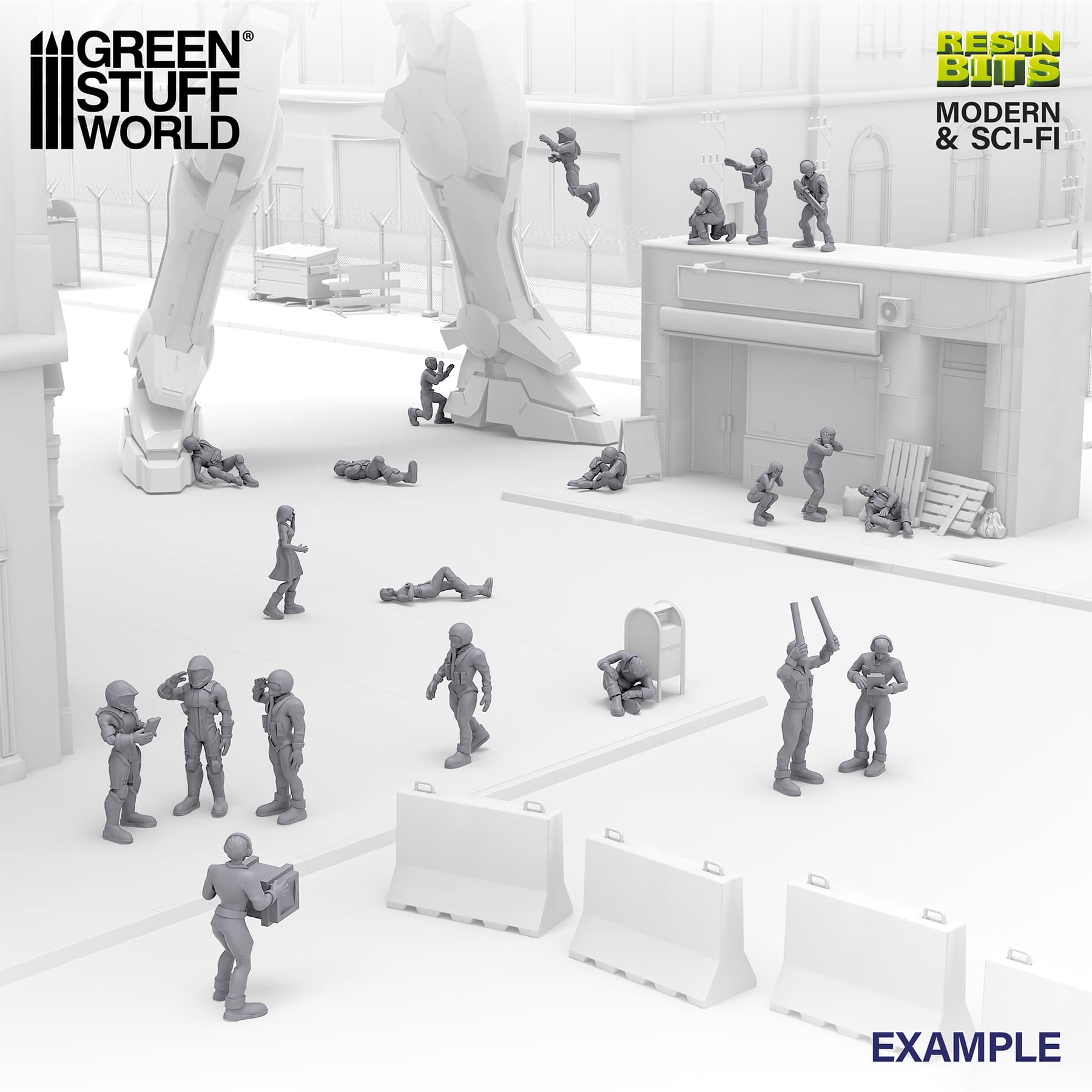
Miniatures suit maintenance bays, hangars, launch platforms, military bases and urban displays. Combine ground crews with open panels, carts and tools for repairs, or use civilians in streets and evacuation scenes.
Barriers, crates, cables, ladders and service platforms connect the figures to the model. Keep walkways, railings and steps proportionate to people, not the robot.
Human figures are particularly effective for foreground and mid-ground storytelling. A lone pilot suggests scale, while a coordinated crew explains what is happening around the machine. Leave some open space around them so their silhouettes remain readable against the base.
A 1:144 figure can customise a Gunpla base without altering the kit. A small group beside one foot is often more effective than characters scattered evenly across the base.
Not every Gundam-related model is 1:144. Master Grade is usually associated with 1:100, while some Super Deformed models lack a consistent ratio. Base compatibility on the kit label, not merely the franchise.
Aircraft models and airfield dioramas
The 1:144 format keeps aircraft collections compact. Pilots, mechanics, passengers and ground crews turn an isolated aircraft into an operational scene when combined with fuel equipment, baggage carts, ladders or service vehicles.
For cockpit miniatures, test the seated pilot against the seat, canopy, and fuselage before painting or gluing.
The First World War version of Wings of Glory uses 1:144 aircraft, making matching scenery and appropriately scaled accessories useful for custom gaming tables and display pieces. Rules, bases, and flight stands should still follow the requirements of the game.
Railway layouts and N scale scenery
1:144 is close to several versions of N scale, but it is not universally identical. British N scale is commonly around 1:148, Japanese models frequently use 1:150, and many other N scale systems use 1:160.
They may work in stations, industrial yards or forced-perspective layouts, but can look large beside 1:160 people, doors and vehicles. Separating the figures makes the difference less noticeable.
Ships, boats and maritime scenes
Full-size ships become large at 1:144, so this ratio particularly suits patrol boats, landing craft, lifeboats, submarines and partial deck scenes.
Crew give purpose to an empty deck and clarify the size of cranes, hatches and weapons. Check the vessel carefully because many ship kits use much smaller ratios, including 1:350 and 1:700.
Architectural models and compact dioramas
Small figures add scale to factories, warehouses, science-fiction facilities, streets and transport hubs. Use their poses to direct attention: a technician facing machinery or a group beside a vehicle creates a readable event. Vary repeated poses through colour and orientation.
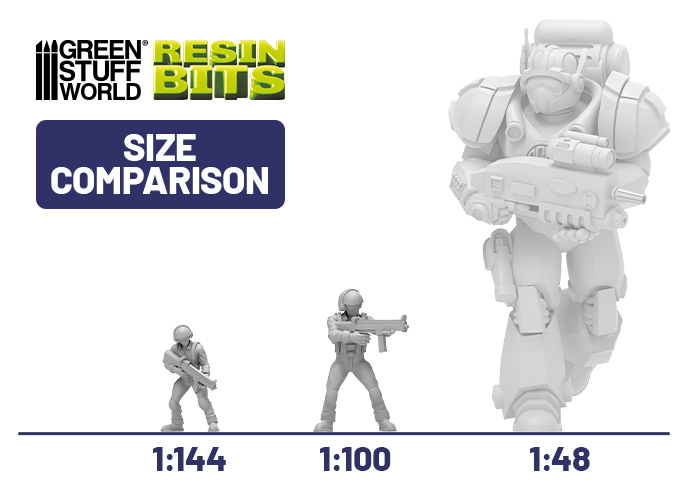
15mm miniatures suit historical mass battles because many infantry units, vehicles and terrain pieces fit on a manageable table.
Ancient, medieval, Napoleonic and twentieth-century systems may also support 15mm armies, while some independent fantasy and science-fiction rules are scale-agnostic.
For a game built specifically around 1:144 models, Heavy Gear Blitz uses this ratio for its miniature range. The matching human figure size is often described as roughly 12mm. WWI Wings of Glory also uses 1:144 aircraft, although its flight stands and accessories remain game-specific.
At 1:144, an urban gaming table can include roads, buildings and industrial zones without reducing every encounter to a few structures. Infantry and civilian figures can serve as scenario elements, crews or objective markers, provided their bases and profiles comply with the chosen rules.
Physical scale and gaming base size are separate. Compatible-looking figures may still require a particular footprint or number per stand, so check the current rules before rebasing.
True-scale and heroic 15mm miniatures
True-scale models aim to preserve realistic body proportions. Heroic miniatures enlarge delicate features such as faces, hands, weapons and equipment so they are easier to recognise, paint and handle.
Realistic figures suit scale vehicles and dioramas, while heroic models offer stronger silhouettes at gaming distance. When mixing manufacturers, compare equipment and body mass as well as height.
Building large armies at 15mm
The smaller format allows dense formations, armoured columns and broad battlefields without the space demanded by larger gaming figures. Batch preparation and painting make large forces practical.
Organise models before priming and keep one sample as a colour reference. Base rims, flags or unit markings can distinguish formations. Leave enough room for bases to move between buildings and roads.
Removing miniatures from supports
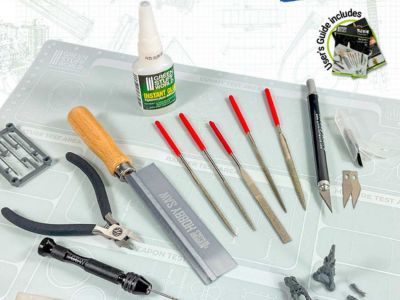
3D-printed figures may arrive on a support frame or attached to individual printing supports. Use sharp flush cutters on thick connections first, then trim smaller contact points. Place the flat side toward the miniature when this reduces stress.
Do not twist thin weapons, ankles, or arms from supports. Resin can be brittle; controlled cuts are safer than bending. Wear eye protection against flying fragments.
Clean remaining marks with a hobby knife or fine sanding tool. Avoid breathing resin dust and follow the manufacturer's handling instructions.
Cleaning, assembly and priming
Remove dust before painting. If washing is recommended, follow the manufacturer's method and let the figure dry.
Use an adhesive compatible with the material. Plastic cement works on suitable polystyrene; cyanoacrylate is normally used for cured resin, metal and mixed assemblies.
Prime in thin passes so facial features and straps remain clear. Grey is neutral, black creates deep shadows, and white or light grey supports bright colours.
At normal viewing distance, readability matters more than subtle transitions. Separate adjacent areas through brightness or colour; a dark jacket beside light trousers reads better than two similar mid-tones.
Block in uniform, skin, armour and equipment. Add a controlled wash, restore the raised base colour, then highlight the head, shoulders, arms and upper folds.
Faces rarely need painted eyes. A skin base, restrained shadow, and tiny forehead or nose highlight look more natural than oversized white dots.
Use colour to support the scene
Military colours can be lightened slightly for visibility. Differentiate straps and packs with related earth tones rather than painting everything identically.
In Gunpla and science-fiction dioramas, bright helmets, hazard suits or tools draw attention to workers. Repeating an accent from the mecha unifies the display.
Several thin coats are easier to control than one thick coat. Remove excess paint and use the side of the tip on raised surfaces.
Choose brushes for control, not only size
A tiny brush is not automatically best. A pointed brush with a larger body holds paint while reaching details; reserve the finest tip for faces, straps and corrections.
Temporarily mount figures on handles, spare bases or sticks to avoid rubbing the paint and to maintain a stable brush angle.
For a large group, finish one stage across every figure before changing colour. Arrange paints in working order and keep the first completed miniature nearby. This speeds up an army while keeping uniforms, highlights and equipment consistent from unit to unit.
Basing and weathering
Use fine sand, short grass, small rubble and thin texture pastes; coarse materials can resemble oversized rocks.
Match weathering across figures, vehicles and scenery. Use restrained grease in a hangar, pale dust in ruins and varied soil on a battlefield without burying the feet.
Varnish gaming pieces after the paint cures. A matte finish can also unify different paint sheens.
How tall is a person in 1:144 scale?
A 1.80-metre person is 12.5mm tall in exact 1:144. Actual figures vary with the character's height, pose, footwear and headgear.
Can I use 15mm figures with 1:144 models?
Normally, yes, you can, but a true 15mm person normally looks larger than a strict 1:144 figure. It can work for gaming or forced perspective, not exact scale modelling.
What scale figures should I use with 1:144 Gunpla?
Use figures labelled 1:144 and verify the kit itself, because not every Gunpla or Gundam product follows the same ratio.
Can 15mm miniatures be painted with hobby markers?
Yes, 15mm miniatures can be painted with hobby markers, but only paint markers with a fine 1mm tip are suitable for figures at this scale. This narrow tip provides the control needed to paint small armour panels, uniforms, weapons and accessories without covering nearby details. For the best results, apply several thin layers and allow each coat to dry before adding another.
Can 1:144 miniatures be used with N scale trains?
Often, particularly with British 1:148 and Japanese 1:150 scenes. Differences are clearer besides 1:160 people, doors, and vehicles, so test a sample first.
Which tabletop games use 1:144 models?
Heavy Gear Blitz uses 1:144 ground models, and WWI Wings of Glory uses 1:144 aircraft. Compatibility still depends on bases, stands, and rules; 15mm games are not automatically 1:144.
Do small miniatures need primer?
Primer improves adhesion and creates a consistent surface. Apply it lightly so shallow details remain visible.
What is the easiest way to paint 15mm miniatures?
Work assembly-line style: apply each main colour across the unit, wash, restore important mid-tones, and add a few bright highlights. Contrast matters more than numerous layers.
Should 1:144 figures have painted eyes?
Usually not. At this size, carefully shaded eye sockets and a small facial highlight often look more convincing. Painted whites can make eyes appear unnaturally large.
What glue is best for 3D-printed miniatures?
Cyanoacrylate glue is generally suitable for fully cured resin prints. Plastic cement will not bond most resin materials. Always check the product material and adhesive instructions first.
Disclaimer: Green Stuff World is an independent manufacturer of hobby paints, modelling tools, miniatures, and accessories intended for use with a wide variety of scale models, dioramas, wargames, and tabletop gaming systems. Green Stuff World is not affiliated with, endorsed by, sponsored by, licensed by, or officially associated with Bandai, Games Workshop, Gale Force Nine, Battlefront Miniatures, Wargaming, Dream Pod 9, Ares Games, or any other publisher, manufacturer, studio, or trademark owner mentioned on this page.
References to Gundam, Gunpla, High Grade, Real Grade, Master Grade, Full Mechanics, World of Tanks, Flames of War, Team Yankee, Heavy Gear Blitz, Wings of Glory, or any other third-party game, model range, or product are provided solely for informational purposes and to describe potential hobby applications or approximate compatibility based on scale, dimensions, or format. Scale designations such as 1:100, 1:144, 15mm, and 20mm do not guarantee exact compatibility between products from different manufacturers. All third-party names, product names, game names, logos, trademarks, and registered trademarks remain the property of their respective owners. No official affiliation, sponsorship, endorsement, licensing arrangement, or commercial relationship is implied.