Reference: 8435646543864ES
Brand: Green Stuff World
Green Stuff Kneadatite 2.0 - 120g
Review(s): 0
Green Stuff Kneadatite 2.0 | Modelling putty
Price €14.25 Regular price €15.00
In stock

There are 3 products.
Reference: 8435646543864ES
Brand: Green Stuff World
Green Stuff Kneadatite 2.0 | Modelling putty
Reference: 8435646543826ES
Brand: Green Stuff World
Green Stuff Kneadatite 2.0 | Modelling putty
Reference: 8436574506006ES
Brand: Green Stuff World
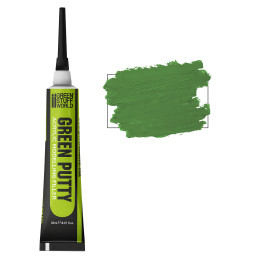
Green Putty | Liquid Green Stuff
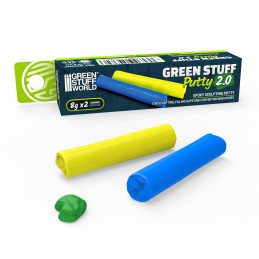
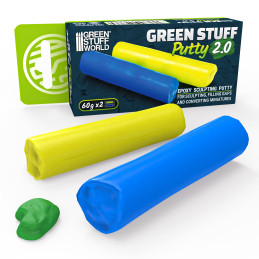
Green Stuff putty, also known as Kneadatite Blue/Yellow or Green Stuff epoxy putty, is a two-part epoxy sculpting putty used for modelling, sculpting, converting and customising miniatures. It cures at room temperature without requiring an oven or any special equipment. It consists of two components, one yellow and one blue, which, when mixed together, form a green, mouldable, adhesive putty that remains slightly flexible once fully cured.
It is one of the most widely used sculpting materials in scale modelling, tabletop wargaming, fantasy miniatures and science fiction modelling. It is particularly useful for sculpting fine details, filling gaps, repairing models, creating custom accessories and converting Warhammer, Dungeons & Dragons and other tabletop gaming miniatures.
Originally developed for industrial applications and repairs, it became increasingly popular among miniature sculptors and wargaming enthusiasts during the 1980s and 1990s, particularly through its use in sculpting and converting Games Workshop miniatures.
Today, Green Stuff World offers Green Stuff Kneadatite 2.0, an improved version of the original formula that retains virtually all its familiar sculpting properties while introducing improvements to its manufacturing process, packaging and storage stability. The traditional ribbon format has been discontinued and replaced with separate bars of the two components, individually packaged to improve their shelf life.
Unlike conventional gap-filling putties, this material allows hobbyists to build up shapes, reproduce textures and sculpt three-dimensional details with excellent precision. Its rubbery consistency makes it particularly suitable for sculpting fabric, muscles, hair, skin, tentacles, cloaks and organic shapes.
You can find tutorials, miniature conversion examples and sculpting techniques on our creative website.
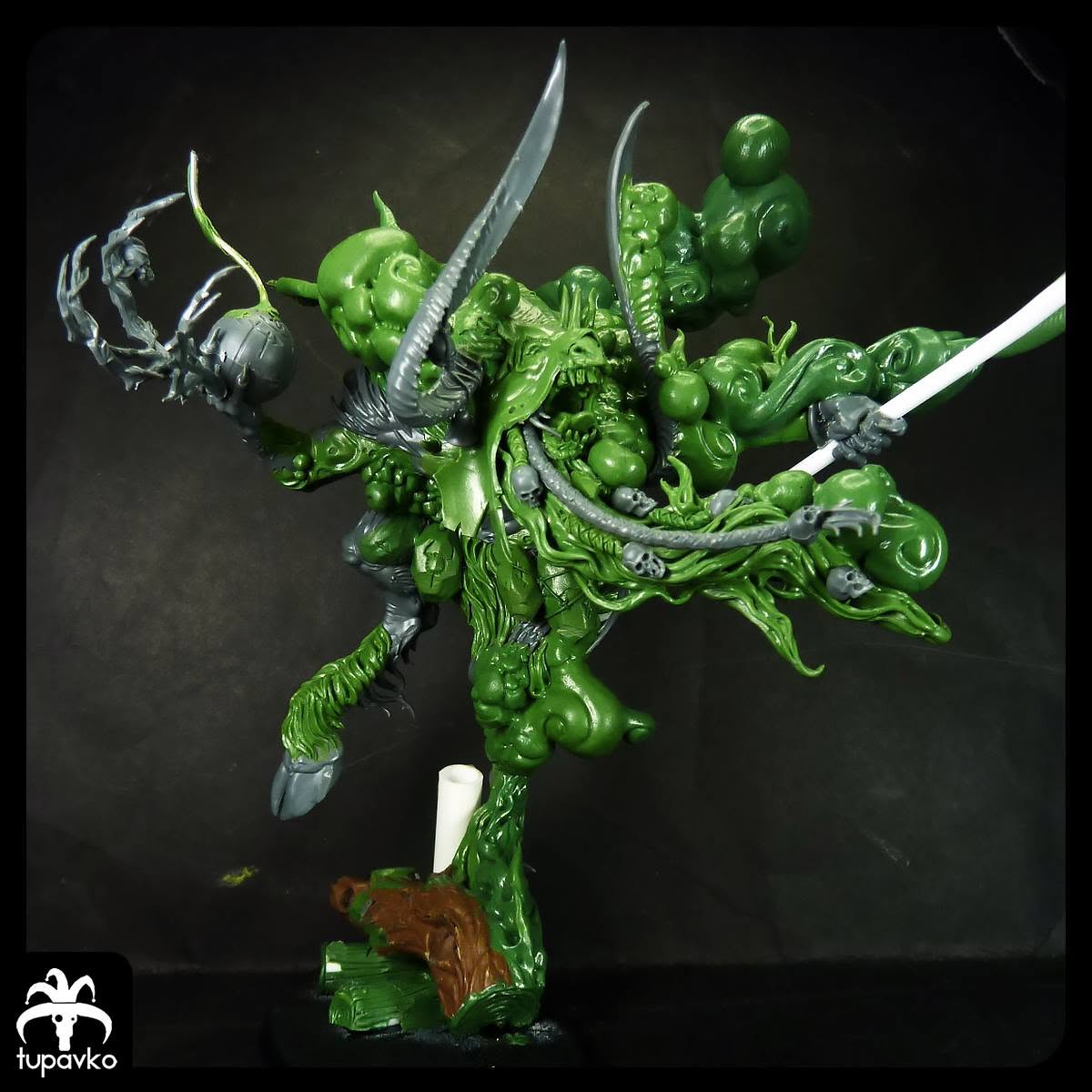
Epoxy putty for miniatures has a wide range of applications, from beginner hobby projects to professional miniature sculpting. Its combination of adhesion, flexibility and fine-detail retention makes it suitable for working on plastic, resin, and metal miniatures.
Its most common applications include:
Filling gaps and seams: conceals joints between multipart miniature components, particularly around arms, legs, torsos and accessories.
Miniature conversions and kitbashing: allows hobbyists to alter poses, add armour, replace equipment or transform existing models into unique characters.
Sculpting miniatures from scratch: enables the creation of anatomical features, clothing, skin, hair, scales and other three-dimensional shapes.
Creating custom details: ideal for sculpting belts, pouches, straps, insignia, tentacles, scrolls and decorative ornaments.
Repairing damaged miniatures: helps rebuild broken parts, corners, decorative features and missing small components.
Customising miniature bases and terrain: suitable for sculpting roots, rocks, organic surfaces, cables and decorative basing elements.
Converting Warhammer miniatures: widely used to personalise armies, create unique characters and customise models for painting, gaming and display projects.
One important advantage is that it requires no baking, special equipment or high temperatures. The curing process begins as soon as the two components are mixed and continues progressively until the putty reaches its final consistency.
At Green Stuff World, you can buy Green Stuff Kneadatite 2.0 in different pack sizes, suitable for everything from small miniature conversions to larger sculpting projects.
The current version comes in separate bars of yellow resin and blue hardener, which remain physically separated until they are ready to be mixed. This packaging replaces the traditional Green Stuff ribbon format, which was discontinued at the end of 2025.
We also offer an extensive range of epoxy sculpting putties, modelling tools and complementary hobby products for miniature painters, scale modellers, professional sculptors and specialist hobby retailers.
Green Stuff World ships internationally to numerous destinations, including Spain, France, Germany, Italy, the United Kingdom, the Netherlands, the United States, Canada and Australia, among many others. You can check available destinations, shipping conditions, and delivery charges on our shipping destinations and postage page.
If you are looking for Green Stuff Putty for Miniatures, Green Stuff Sculpting Putty or Two-Part Epoxy Putty, you will find the new 2.0 generation of this well-known miniature modelling material.
Green Stuff Kneadatite 2.0 retains approximately 95% of the characteristics of the original formula, providing an almost identical sculpting experience for hobbyists and professional sculptors familiar with the traditional material.
Its most recognisable properties have been preserved, including its green colour, texture, rubbery consistency, adhesion, characteristic smell, flexibility, working time and curing time.
The main improvements concern its manufacturing process and packaging. While the original version was supplied in ribbons with the yellow and blue components positioned side by side, Kneadatite 2.0 is manufactured directly as separate bars, sealed in plastic packaging that keeps the two components apart.
This new packaging prevents contact between the yellow and blue components during storage, reducing the risk of premature curing and helping preserve the material for longer.
In addition, the formulation has been slightly refined to improve the material's properties without significantly changing its familiar handling characteristics.
Experienced miniature sculptors may notice a very subtle difference when kneading the two components together. The new formula has a feel somewhat reminiscent of mixing traditional Green Stuff with a small amount of Milliput, although the difference is almost imperceptible to most users.
This comparison does not necessarily mean that the new formula contains Milliput; it simply describes a slight difference in the way the material feels during mixing and sculpting.
These improvements were developed to refine the original formula while preserving the qualities that have made Green Stuff one of the most popular materials for miniature sculpting.
Before its commercial release, Kneadatite 2.0 was tested by several professional artists and miniature sculptors who regularly work with this type of two-part epoxy sculpting putty. Their testing helped assess the material's familiar handling characteristics, its ability to capture fine details and its overall sculpting performance.
In short, anyone who previously used the original Green Stuff can continue working with the same tools and techniques while benefiting from more practical packaging and a slightly refined formula.
The original ribbon format had one disadvantage regarding long-term storage: the yellow and blue strips remained in direct contact inside the packaging.
Even without being deliberately mixed, the area where the two components touched could slowly begin reacting, creating a thin strip of hardened material. This was particularly noticeable when the putty had been stored for extended periods or exposed to unfavourable temperatures.
As a result, sculptors sometimes had to remove the hardened central section before using the putty, wasting a small amount of material.
Green Stuff World has permanently discontinued all ribbon formats, including versions with a gap between the two components, in favour of the new separate-bar presentation.
The updated packaging keeps both components completely separated from the manufacturing stage onwards, providing better protection and eliminating the problems associated with direct contact between the resin and hardener.
The new format offers practical benefits for occasional hobbyists and professional miniature sculptors who regularly use large amounts of epoxy putty.
Improved shelf life: the two components remain separated until they are needed.
Less waste: prevents partially cured sections caused by contact between the components.
Easy portioning: allows users to cut exactly the amount required from each bar.
Better protection: individually sealed plastic packaging helps protect the material during storage.
Flexible mixing ratios: makes it easier to adjust the proportions slightly when different sculpting properties are desired.
Familiar sculpting performance: retains virtually the same working characteristics as traditional Green Stuff.
The new packaging is particularly useful for hobbyists who do not sculpt every day and need to store their epoxy putty for extended periods.
Green Stuff Kneadatite 2.0 has an approximate working time of 90 minutes, although this may vary depending on room temperature, mixing ratios and the amount of material prepared.
Under normal conditions, the putty gradually begins to harden as soon as the two components are mixed and generally reaches its maximum hardness after approximately 24 hours.
It is important to distinguish between working time and curing time:
These times are approximate. Higher temperatures generally accelerate the curing process, while lower temperatures slow it down.
To prepare the epoxy putty, cut the required amounts from the yellow and blue bars and knead them together until you obtain a uniform green colour, with no remaining yellow or blue streaks.
The components are normally mixed by hand, although suitable sculpting tools can also be used to handle the material.
The standard mixing ratio is usually close to equal parts, although certain formulations and product versions may use slightly different proportions.
Adjusting the ratio of yellow and blue components allows you to modify some of the putty's working properties:
More blue component: generally produces a firmer, less sticky mixture that tends to cure more quickly.
More yellow component: usually results in a softer, stickier mixture with a longer working time.
Standard mixing ratio: provides a balanced combination of flexibility, adhesion, working time and fine-detail retention.
Excessive changes to the recommended proportions should be avoided, as they may affect the curing process and the final properties of the putty.
One of the best-known characteristics of this epoxy sculpting putty for miniatures is its high tackiness immediately after mixing.
This property makes it easy to attach the material directly to a miniature, but it can also cause the putty to stick to fingers and sculpting tools.
For easier handling, we recommend the following techniques:
Lightly moisten your fingers and sculpting tools with water to reduce sticking.
Use a small amount of sculptor's Vaseline when particularly smooth surfaces are required.
Allow the mixture to rest for a few minutes after mixing if it feels excessively sticky.
Work in small sections, adding new layers once the previous ones have hardened sufficiently.
Use precision sculpting tools to shape edges, folds, textures and fine details.
A common technique is to establish the main volume first and gradually add smaller details as the sculpt progresses.
For example, when sculpting a cloak on a miniature, begin by creating its overall shape, then define the fabric folds and finally refine the edges using slightly damp sculpting tools.
This method helps prevent accidental deformation and provides better control over the finished result.
Epoxy putty can be worked with stainless steel sculpting tools, spatulas, sculpting needles and silicone-tipped tools.
Metal tools are particularly useful for cutting, pressing, scoring lines and defining sharp edges. Silicone tips, on the other hand, are excellent for smoothing surfaces and creating soft transitions without leaving unwanted marks.
Clay Shapers are especially useful for sculpting muscles, fabric, faces and organic surfaces.
For small details such as straps, buttons or armour decorations, fine-tipped tools provide greater control over the pressure applied to the putty.
Fingerprints occur when the putty is pressed directly with bare fingers, particularly during the first few minutes after mixing.
To avoid them, keep your fingers slightly damp and use dedicated sculpting tools to finish visible surfaces.
A small amount of sculptor's Vaseline can also be applied to sculpting tools to reduce friction. Any remaining residue should be removed before painting, as it may interfere with primer adhesion.
Another useful technique is to allow the mixed putty to rest for a few minutes before sculpting delicate details.
Not all modelling putties have the same properties. Some are designed for sculpting flexible details, while others are better suited to creating rigid surfaces, filling larger gaps or building structural elements.
Green Stuff Kneadatite 2.0: a two-part epoxy putty with a rubbery consistency, strong adhesion and some flexibility after curing. Particularly suitable for organic details, miniature conversions and small decorative elements.
Milliput: an epoxy putty with a more clay-like consistency. It can be smoothed with water while uncured and is generally easier to sand, carve and file once fully hardened.
Maxx Putty: an excellent option for building larger volumes, structural elements, terrain and scenery that require a rigid finish.
Brown Stuff: produces a harder and more rigid finish than traditional Green Stuff, making it suitable for certain small parts that require defined edges and precise shapes.
Magic Sculpt: features a consistency suitable for sculpting and shaping rigid surfaces, making it a popular choice for larger figures, busts and display sculptures.
The best choice depends on the desired flexibility, level of detail, size of the project and whether the cured material needs to be sanded or carved.
Yes. Some miniature sculptors regularly combine Green Stuff and Milliput to create a mixture with properties somewhere between the two materials.
Green Stuff contributes adhesion, sculptability and some flexibility, while Milliput provides a more clay-like consistency and makes the cured mixture easier to sand.
This combination can be particularly useful for sculpting armour, relatively flat surfaces, decorative parts and certain terrain-building components.
Experienced sculptors may notice that Kneadatite 2.0 has a slightly similar feel to traditional Green Stuff mixed with a very small amount of Milliput, although the difference is extremely subtle.
It is also possible to experiment with Brown Stuff, Maxx Putty, Magic Sculpt and other compatible putties, although the results may vary depending on the formulation and mixing proportions.
Before applying an unfamiliar mixture to an important miniature, it is advisable to test a small amount and make sure it cures correctly.
The answer depends on the type of modelling work you need to carry out.
Green Stuff sculpting putty is better suited to creating three-dimensional shapes, rebuilding damaged parts, converting miniatures and adding details that require volume.
By contrast, liquid modelling putty or Liquid Green Putty is primarily intended for filling small surface imperfections, narrow seams and scratches, depending on the product's formulation.
Liquid fillers can usually be applied with a brush or spatula, making them convenient for correcting minor defects without needing to sculpt larger amounts of material.
As a general rule, if you need to sculpt a tentacle, cloak or arm, choose a two-part epoxy sculpting putty. If you only need to hide a small mould line or assembly gap, a suitable liquid filler may be more convenient.
No. Although these products may sometimes be used for similar repairs, their composition and working properties are different.
Kneadatite 2.0 is a two-part epoxy putty that cures through a chemical reaction when its two components are mixed.
Many plastic and acrylic modelling putties are single-component products that can be applied directly and harden as water or solvent evaporates, depending on their formulation.
This means that the different products are not always interchangeable.
Epoxy sculpting putty is particularly useful when building up volume and creating detailed shapes, whereas acrylic or plastic fillers may be more convenient for correcting minor surface imperfections.
How Should You Store the Bars to Prevent Premature Hardening?
To extend the shelf life of Green Stuff Kneadatite 2.0, it is important to keep the yellow and blue components separate and protect them from heat, moisture and direct sunlight.
The new individually packaged bar format was specifically designed to improve storage and prevent contact between the two components.
The material should be kept in its original, properly sealed packaging and stored in a cool, dry place, following the manufacturer's recommendations.
Lower temperatures slow down the curing reaction, while heat can accelerate it. If refrigeration is used, the material should be kept in an airtight container reserved exclusively for hobby materials, away from food and protected against condensation.
The 2.0 format eliminates one of the main disadvantages of the old ribbons: the slow reaction that could occur where the yellow and blue strips touched during storage.
Once the components have been mixed, the curing reaction has already started and cannot be permanently stopped by refrigeration.
How Do You Remove Epoxy Putty from a Miniature?
The easiest way to remove epoxy putty depends on whether it is still soft or has already cured.
Before curing: the material can be carefully removed with a spatula or sculpting tool. Any remaining residue should be cleaned according to the manufacturer's recommendations, taking the miniature's material into account.
After curing: it is generally necessary to cut, scrape or carefully sand the putty, taking care not to damage the original surface of the miniature.
Alcohol may alter or soften certain putties under specific conditions, but it should not be considered a guaranteed method for completely dissolving fully cured Green Stuff.
Before applying any chemical product to a miniature, test it on an inconspicuous area, particularly when working with resin, plastic or painted surfaces.
Can You Thin Epoxy Putty with Water or Alcohol?
Green epoxy sculpting putty is not water-soluble in the same way as an acrylic gap filler.
Water is mainly used to lubricate sculpting tools and smooth the surface while the mixture is still uncured, reducing its tendency to stick to fingers.
Certain alcohols may alter the consistency of freshly mixed putty, but they should be used with care and do not turn the material into a conventional liquid modelling putty.
Other clay-like epoxy putties, such as Milliput or Magic Sculpt, can be worked and smoothed with water before curing.
Once fully cured, these materials become much more resistant to water and cannot be made workable again simply by moistening them.
Is Two-Part Epoxy Sculpting Putty Toxic?
Green Stuff is a two-part epoxy putty, so the manufacturer's safety recommendations and the instructions in its Safety Data Sheet should always be followed.
Uncured components may cause skin irritation or allergic sensitisation in some individuals, particularly following repeated or prolonged exposure.
For this reason, the following precautions are recommended:
Wear suitable protective gloves, especially when working with the material frequently.
Avoid prolonged contact with skin and eyes.
Do not swallow the product, and keep it out of reach of children.
Wash your hands thoroughly after handling it.
Avoid breathing in dust produced when sanding cured pieces.
Dispose of waste according to the Safety Data Sheet and local regulations.
Always consult the Safety Data Sheet for the specific product to check its hazard classification, environmental precautions and disposal instructions.
What Is the Best Sculpting Putty for Warhammer Miniatures?
The best choice depends on the type of details you want to create. Green Stuff Kneadatite 2.0 is particularly well suited to Warhammer miniature conversions, especially for sculpting fabric, skin, muscles, hair, straps and organic details.
For very rigid surfaces or parts that need extensive sanding after curing, other putties such as Milliput, Brown Stuff or Maxx Putty may be more appropriate.
Can It Be Used on Plastic, Resin and Metal Miniatures?
Yes. This epoxy sculpting putty can be applied to plastic, resin and metal miniatures, provided the surfaces are clean and free from grease or dirt.
Its adhesive properties allow small details to be attached directly to many surfaces, although structural joints may require additional adhesives.
Can You Paint It Once Fully Cured?
Yes. Once the putty has fully cured, it can be primed and painted using standard miniature painting products.
For a consistent finish, clean the surface and apply a compatible primer before painting with acrylics, oils or other paints commonly used in miniature modelling.
Do You Need Glue to Attach Sculpted Details?
Not always. Freshly mixed epoxy putty has considerable tackiness, allowing small details to be positioned directly on miniatures.
However, heavier components, load-bearing joints or structural elements may require a suitable adhesive or reinforcement with metal pins.
Does It Shrink When It Cures?
The formula has low curing shrinkage, making it suitable for sculpting details that need to retain their original dimensions and shapes.
This is particularly useful when filling gaps, creating decorative elements and sculpting components that must fit precisely onto a miniature.
Can It Be Sanded or Cut After Curing?
Yes. Once fully cured, the material can be cut, scraped, and sanded using suitable modelling tools.
However, its slightly flexible nature makes sanding generally less convenient than with more rigid epoxy putties such as Milliput or Brown Stuff.
For this reason, achieving the cleanest possible finish during the sculpting stage is recommended, before the putty fully hardens.
Does It Need an Oven to Cure?
No. Kneadatite 2.0 is a room-temperature curing epoxy putty, so it does not require an oven, UV lamp or any special curing equipment.
This is one of its main differences compared with certain polymer clays and ultraviolet-curing modelling putties.
What Is the Difference Between Epoxy Putty and UV Putty?
The main difference is how each material hardens.
Green Stuff requires two separate components to be mixed together, initiating a chemical curing reaction.
By contrast, UV Putty is formulated to cure when exposed to suitable ultraviolet light, following the manufacturer's instructions.
Traditional epoxy putty offers a limited working time once mixed, whereas UV-curing products allow the user to control when the curing process begins by applying the appropriate light.
How Long Does Unused Epoxy Putty Last?
Shelf life depends on the manufacturing date, packaging and storage conditions.
Keeping the two components separate and protecting them from heat can significantly extend their usable life, potentially reaching 18-24 months under optimal storage conditions.
This period can be considerably reduced once the packaging has been opened or if the product is continuously exposed to temperatures above 25°C.
Kneadatite 2.0 features separate bars and sealed plastic packaging, reducing the risk of premature curing associated with traditional ribbon formats.
If the material contains hardened sections before mixing, these areas can make kneading more difficult and affect the quality of the finished sculpt.
Is It Suitable for Beginners?
Yes. Two-part epoxy sculpting putty is a good choice for beginners learning miniature conversions and sculpting techniques because it does not require complicated equipment.
Beginners can start by filling gaps, creating small accessories or modifying existing surfaces before attempting more complex sculpting projects.
Preparing small quantities at a time is recommended to avoid wasting material while learning to manage its working time.
Can It Be Used to Make Moulds?
This material can be used to sculpt original components or small reliefs that can subsequently serve as masters for mould making.
However, it is not silicone mould-making putty and should not be confused with materials specifically designed to produce flexible moulds and reproductions.
For reusable moulds, purpose-made mould-making silicones are generally more suitable.
What Is the Difference Between Sculpting Putty and Masking Putty?
These products are designed for completely different applications.
Green Stuff is an epoxy sculpting putty that cures permanently and is used to create, repair or modify miniature figures.
Masking putty, including airbrush masking putty, is used to temporarily protect selected areas during painting, particularly when airbrushing camouflage patterns or other colour schemes. It is designed to be removed once the painting process is complete.
They should therefore not be confused or used interchangeably.
Why Is It So Popular for Wargaming and Miniature Modelling?
Its popularity comes from its combination of ease of sculpting, adhesion, precision and flexibility after curing.
It allows hobbyists to customise existing miniatures without making new moulds and offers excellent control when creating small details.
These properties make it particularly popular for miniature conversions, custom characters, fantasy figures, science fiction models and original miniature sculpting projects.
Can I Still Use the Same Techniques as with the Original Formula?
Yes. Kneadatite 2.0 retains approximately 95% of the characteristics of the traditional version, meaning the same sculpting tools, mixing methods and techniques can still be used.
Its familiar working time, rubbery consistency, adhesion and flexibility have been maintained, so there is no need to learn a different sculpting process.
Experienced users may notice a very slight difference in texture during kneading, but its overall behaviour remains familiar and allows them to continue sculpting much as they did with the original formula.
Can the Epoxy Bars Be Used to Sculpt Entire Miniatures?
Yes. Although this material is particularly well known for miniature conversions and gap filling, it can also be used to sculpt complete figures from scratch.
For larger figures, sculptors commonly begin by building an internal wire armature and gradually add layers of putty until the desired volume is achieved.
This method provides better control over anatomy, proportions and the positioning of individual parts.
Combining a sturdy internal armature with successive layers of sculpting material creates a suitable foundation for original characters, monsters, fantasy creatures and custom miniatures.
What Types of Fine Details Can You Sculpt?
The consistency of this epoxy putty allows miniature sculptors to reproduce a wide variety of shapes and textures, ranging from smooth surfaces to sharply defined relief details.
Common applications include:
Hair, beards and individual hair strands.
Folds in cloaks, robes, tunics and other clothing.
Muscles, tendons and anatomical details.
Tentacles, scales, monstrous skin and organic textures.
Belts, straps, pouches and equipment accessories.
Armour ornaments, symbols and decorative elements.
Terrain textures, roots and scenic basing details.
For the best results, use sculpting tools suited to the size of the details and work progressively across the surface.
At Green Stuff World, you will find the new generation of Green Stuff Kneadatite 2.0 sculpting putty, available exclusively in separate-bar format, along with a wide range of epoxy sculpting putties, professional sculpting tools and miniature customisation materials.
The updated formula retains virtually all the qualities of the original material while introducing improved packaging for better storage and easier preparation of small quantities.
Whether you need to repair a miniature, carry out advanced conversions or sculpt your own original figures, Green Stuff Kneadatite 2.0 combines the familiar performance of the classic formula with improvements in manufacturing and storage, preserving the qualities that have made it a reference material among miniature sculptors and hobbyists.
Looking for something else? We also recommend our neodymium magnets, epoxy resin, hobby drills and clear epoxy resin.
Warhammer® is a registered trademark of Games Workshop Limited. The products offered are not affiliated with, authorised by, or endorsed by this company. Green Stuff World only manufactures and markets compatible products intended for use with this and other miniature ranges.